
8/10Hidden Gem

Blood+ Episode 1 review : First Kiss.
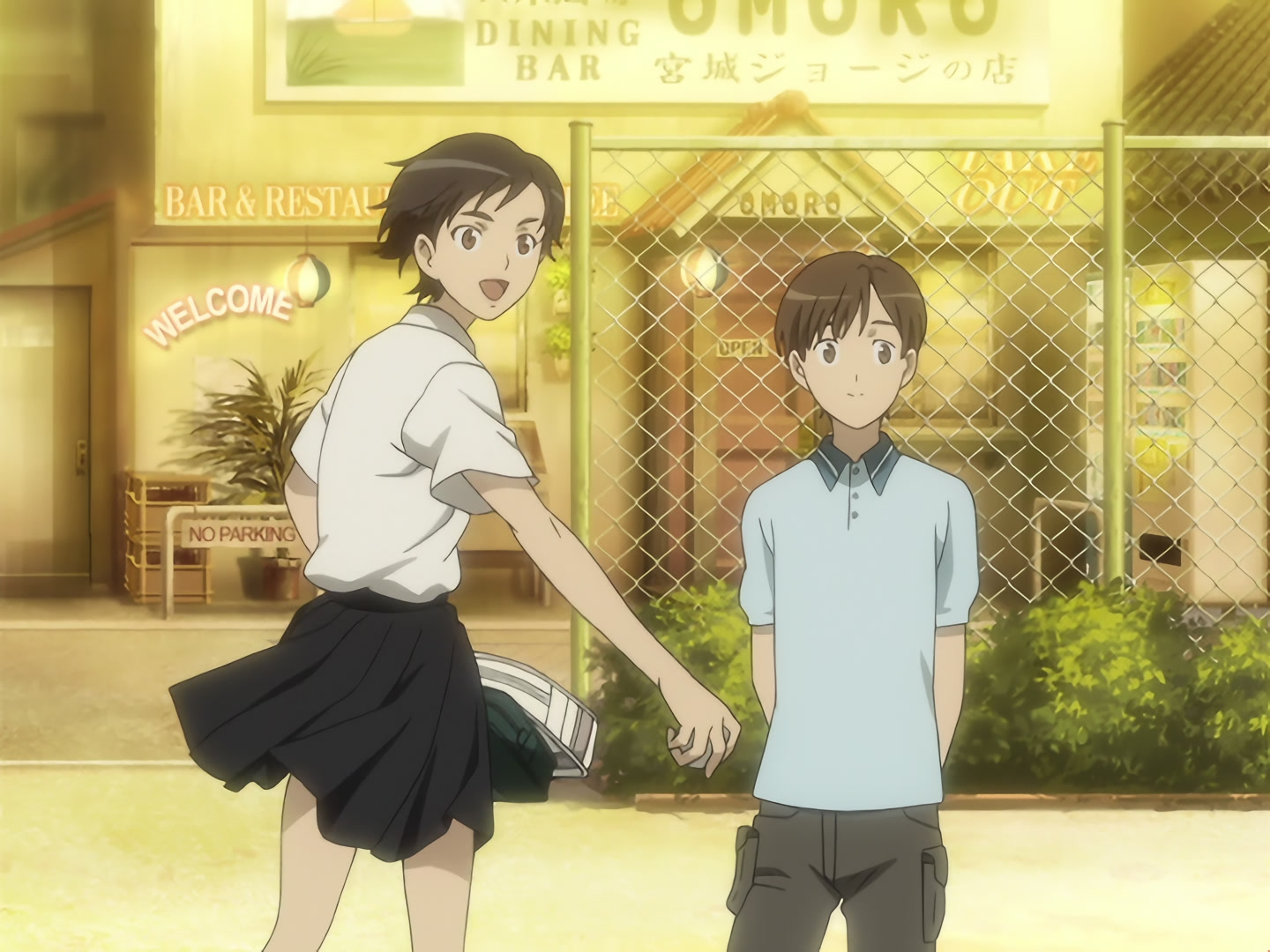
The first thing Blood+ shows you is a girl who can't clear the bar.Not a monster. Not a katana. Not a spray of blood across a classroom window. A high school track athlete in Okinawa, missing her jump, laughing it off, going home to her family's bar for dinner. If you came in off the back of Blood: The Last Vampire expecting the cold, feral Saya who opened that film by putting a blade through a man on a subway car, the premiere of "First Kiss" is a deliberate slap in the face. Saya Otonashi eats too much, sleeps too much, and needs regular blood transfusions she doesn't understand. She's sweet. She's goofy. She has no idea what she is.
That's the whole bet. Fifty episodes ride on it, and Episode 1 is where Production I.G puts the chips on the table.
Where it came from
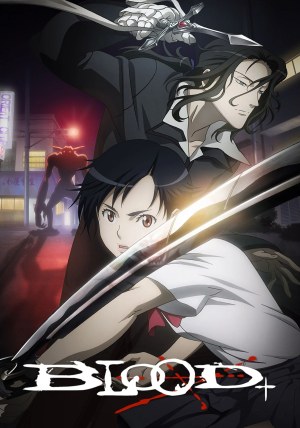
Blood+ is an anime original. No manga came first. Asuka Katsura's Blood+ manga launched in Monthly Shōnen Ace in July 2005, three months ahead of the broadcast, but it covers the same story events as the anime and ran as a companion, not a source. The show had no readership to serve and no blueprint to betray. Every choice in this episode is the studio's own.The ancestor is Blood: The Last Vampire, Production I.G's 2000 film. Blood+ borrows the name Saya, the chiropterans, the sword and the Okinawa setting near an American air base, then throws out almost everything else. It plays closer to a reinterpretation than a sequel, and the person standing in the middle of both is Junichi Fujisaku.
Fujisaku was one of the core members of Team Oshii at I.G. He helped create The Last Vampire alongside Kenji Kamiyama, directed its video game and wrote its novelization. He wrote seven scripts for Ghost in the Shell: Stand Alone Complex and three more for 2nd GIG. Blood+ was his first job as chief director of a TV series, and he didn't delegate the opening. Fujisaku is credited as director, series composition and scriptwriter on Episode 1 itself. The man who wrote the original Saya's novel sat down and wrote her replacement's first day.
Character work is split between Chizu Hashii, who drew the original designs, and Akiharu Ishii, who adapted them for animation and served as chief animation director. Ishii came up through Blue Seed and the Sakura Wars movie, and his softer, rounder Saya is the visual argument for the entire premiere. You cannot sell an amnesiac sweetheart with the hard-edged designs of the 2000 film. Ishii gives her a face built for stillness.
Then there's the score. Outside the opening and ending themes, the music came from Hans Zimmer's camp, with Mark Mancina composing under Zimmer's production. Blood+ was Mancina's first anime, and he said afterward the project turned him into an anime fan.
How it landed
First Kiss aired Saturday, October 8, 2005 at 6:00 p.m. on MBS and TBS, with Sony's satellite channel Animax carrying it alongside. That slot mattered. It had just finished a full year of Gundam SEED Destiny, and before that it was home to Fullmetal Alchemist. The audience sitting down that night expected mecha or shōnen adventure. They got a slow-burn vampire horror story whose first episode spends most of its runtime on family dinners and a forgotten pair of shoes. The ratings tell you how that went. The slot's numbers started dropping once Blood+ began, and the slide got steeper when NHK Educational launched the baseball anime Major against it. Blood+ was not a ratings monster in Japan. It was a slow grower in a slot built for fast hits.The critics noticed anyway. In December 2005, only eleven episodes in, the 9th Japan Media Arts Festival ↗https://www.animenewsnetwork.com/news/2005-12-22/9th-japanese-media-arts-festival-winners named Blood+ one of its recommended works. The following year it landed at #41 on TV Asahi's list of Japan's top 100 favorite anime. The audience it found was loyal, not massive, and that's a pattern this site keeps running into with the shows that age best.
The episode
Here's what First Kiss does that nobody remembers: Saya never fights.The title gives the ending away, and the ending is where the episode stops. Saya, with no memory past the last year, runs into a tall, silent stranger playing the cello, and the music pulls at something she can't name. That night she goes back to school for the shoes she left behind. The stranger shows up again with a blade in his hand. She runs, collides with a teacher, and a chiropteran tears him apart in front of her. She barricades herself inside the school. The door doesn't matter.
The stranger cuts in, drags her to a classroom and tells her what the thing is. Her brother Kai, sent after her when her friend Kaori drops the shoes off at the house, runs straight into the monster himself. And then the stranger kisses Saya, forces his blood into her mouth, and tells her she has to fight.
Credits.


The payoff, Saya coating the sword in her own blood and cutting the chiropteran down, belongs to Episode 2. Fujisaku wrote a premiere for a fifty-episode horror show and ended it before the heroine does a single heroic thing. In a 6 p.m. slot that had just run a year of Gundam. That's either confidence or recklessness, and twenty years later it reads as confidence.
It works because of everything before the school. Okinawa City, Koza, sitting in the shadow of Kadena Air Base, is drawn as a real place with real heat. George's bar is warm and loud. Kai is prickly and protective. Riku is all sunshine. You get enough of the Miyagusuku family to understand exactly what's about to be taken from them, and if you've seen the series, this episode is hard to watch for that reason alone. George is dead by Episode 6. Riku doesn't make it out of the Red Shield ship in Episode 32. Everything Saya stands to lose is on screen in the first half, laughing.
Haji is the other half of the episode's argument. He barely speaks. He doesn't explain himself. He shows up holding a blade, and the show lets you believe for a full sequence that he might be the threat. The cello is the tell. Fujisaku and Mancina use it as the only voice Haji has, and Furukawa's playing does more character work in thirty seconds than most premieres manage with a monologue.
The chiropteran sequence is short and nasty. The teacher's death is not played for spectacle. It's sudden, close and ugly, and the horror lands because the episode has spent fifteen minutes convincing you this is a show about a girl and her family.
The kiss that closes it is not romantic. It's an intrusion. A stranger forcing blood into a terrified kid's mouth, and the show frames it that way on purpose. The romance comes much later, and it's earned because of how wrong this first contact feels.
If First Kiss has a weakness, it's the one the ratings caught. As a standalone half hour it is mostly setup, and a viewer who bails before the school sequence leaves thinking they watched a slice-of-life show. Blood+ asks for trust it hasn't earned yet. Episode 1 is the down payment.
October 2005 and the fansub pipeline
The full story lives on the Blood+ Fansub & Scanlation History page, so here's the shape of it. Shinsen-Subs carried the weekly load across the full fifty-episode run, a second group, Your-Mom, jumped in during the final season with competing MKV releases, and years later THORA came back for archival Blu-ray restorations.The detail that frames this premiere: Sony's international arm licensed Blood+ in January 2006, while the show was still in its first season in Japan. The English dub didn't air until March 2007. For more than a year after the license, the only way an English speaker could watch Saya miss that high jump was a fansub. This episode's first Western audience found it on IRC and BitTorrent, not on cable.
License and legacy
Sony Pictures Television International handled the license, and First Kiss premiered in English on Adult Swim on March 11, 2007. The series ran uncut through March 23, 2008, which put this episode's teacher-killing chiropteran attack in front of a late-night American audience without trims.Home video was messier. The first Region 1 DVDs landed March 4, 2008, as a single five-episode volume and a twenty-five episode box set, Blood+ Part One. Sony kept releasing individual volumes for a while and then stopped, leaving the singles run for the first half incomplete. Part Two finally arrived as a box set on October 20, 2009. The whole series streamed free on Tubi from June 2020, then disappeared again in June 2022.
A beautifully made show with a major-studio license, and it keeps slipping back into the dark.
Why it still matters
"First Kiss" is the quietest premiere a horror show has any right to get away with, and it gets away with it. Fujisaku wrote his own opening, built a family worth losing, introduced the most devoted character in the series through a cello instead of dialogue, and stopped the episode the second before the sword came out.This is where the whole thing starts: a 6 p.m. Saturday slot, a license signed before the first season finished, a year of fansubs carrying it West, an uncut Adult Swim run, a second box set that took nineteen months to follow the first, and a show that keeps disappearing from legal streaming.
The story has an ending. So does Saya's.
And it all goes back to a girl in Okinawa who couldn't clear the bar.
Reviewing
Blood+
View anime detail →
~ edited Oct 2, 2026
