Featured

Anime of the Month

Blood+

October 2026

Dive into the archives! animeHistory's AOTM for October, 2026 Blood+ 🩸
Explore →

Reviews

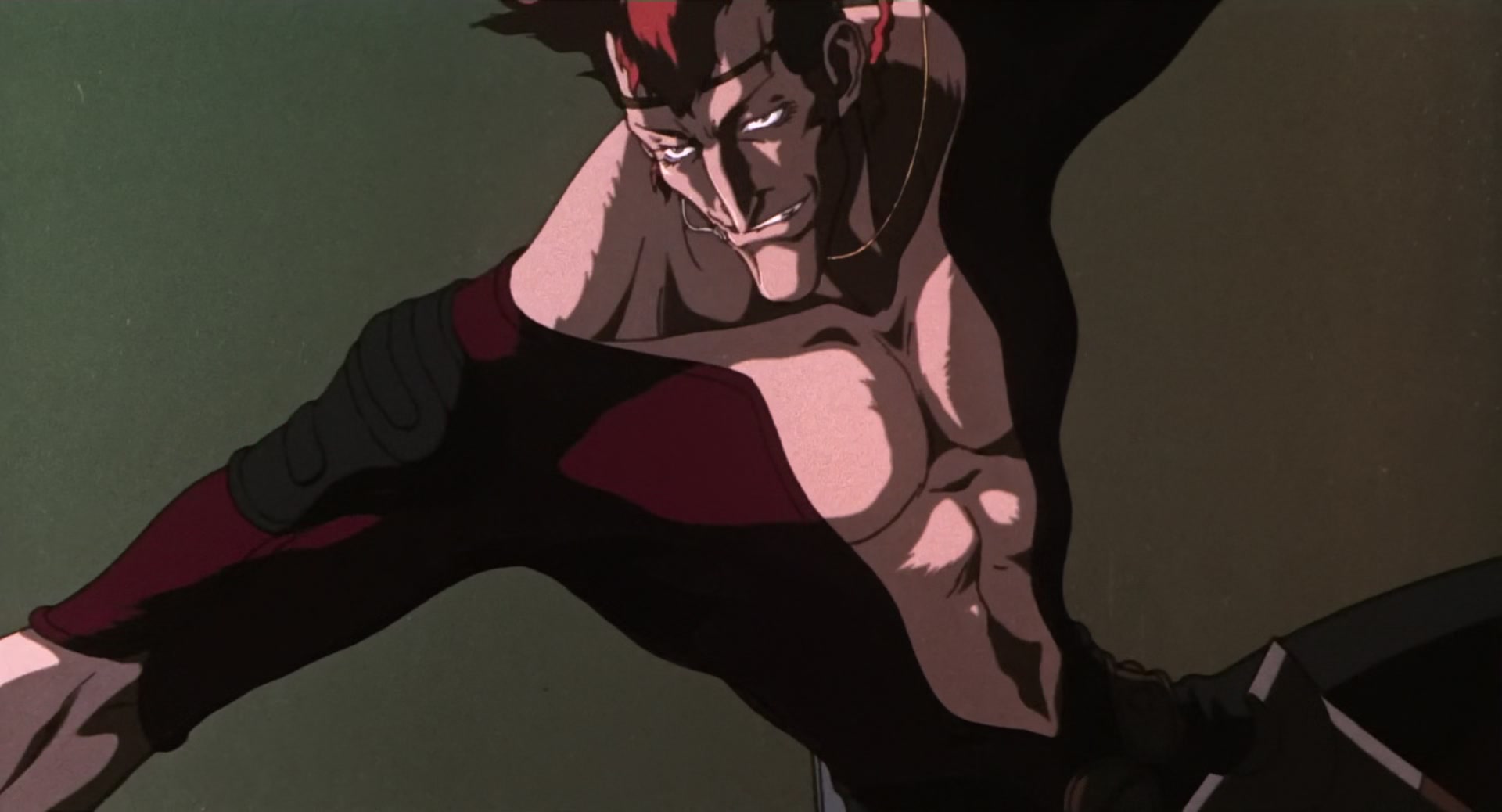
Animehistory Review's - Vampire Hunter D: Bloodlust.

Vampire Hunter D: Bloodlust begins like a kidnapping story and spends the next hundred minutes proving that almost everyone misread the kidnapping.

Charlotte Elbourne is gone. The vampire Meier Link took her from her home in the night, her wealthy family wants her back dead or alive, and they will pay an absurd sum to make it happen. The legendary hunter D takes the job, while the Marcus Brothers take the same bounty and turn the rescue into a race. That's the story everyone thinks they're in.

Then Charlotte throws herself into Meier's arms. She wasn't waiting to be rescued. She loves him.

That one complication turns what could have been a beautifully animated monster hunt into something far more interesting. Bloodlust is still full of vampires, mutant assassins, exploding bodies and haunted castles, but underneath the gothic machinery is a surprisingly simple tragedy about people who have already decided what a monster looks like.

From Demon Deathchase to Bloodlust

Bloodlust adapts Demon Deathchase, the third novel in Hideyuki Kikuchi's long-running Vampire Hunter D series. It wasn't the first attempt to animate D. The 1985 Vampire Hunter D film had already introduced anime audiences to Kikuchi's far-future frontier and the half-human, half-vampire hunter wandering through it. Fifteen years later, Madhouse came back with Yoshiaki Kawajiri, and that matters.

Kawajiri had directed Wicked City, another Kikuchi adaptation, and Ninja Scroll, and Kikuchi's world is almost perfectly built for his instincts. It is part Hammer horror, part Western, part post-apocalyptic science fiction. Ancient castles rise over wastelands crossed by mechanical horses. Vampires live beside machinery advanced enough to reach space. Mutants hide in shadows and fold their bodies into the scenery, while D rides through all of it looking like someone dropped a Yoshitaka Amano illustration into a Clint Eastwood movie.

Read more →

Naruto: Shippuden Ep. 85 Review: Terrifying Secret

There is a point in "The Terrifying Secret" where Kakuzu stops looking like a man.

Kakashi has already driven a Lightning Blade through his heart. That should have ended it. Instead, one of the masked creatures that crawled out of Kakuzu's back took the hit in his place, and Team 10 realizes it has been fighting something much stranger than an unusually tough shinobi. Under the cloak and the stitches, Kakuzu is a collection of other people.

Five hearts. Five lives. A body held together with black thread and borrowed organs.

Then Hidan walks into the forest, draws a ritual circle in blood and gets ready to murder Shikamaru by stabbing himself. Somewhere around here, Naruto: Shippuden apparently decided Episode 85 was a horror show.

Where it came from

"The Terrifying Secret" adapts Chapters 335 and 336 of Masashi Kishimoto's manga, deep in the Akatsuki Suppression Mission. Asuma is dead, Shikamaru has stopped grieving and started planning, and Kakashi has taken the surviving members of Team 10 out to hunt the two Akatsuki members responsible.

Kishimoto supplies the bones. Kakuzu's five hearts, the organs he harvests from the shinobi he kills, his offhand claim that he once fought the First Hokage, and Shikamaru splitting Hidan away from his partner are all on the page. What sets Episode 85 apart is how hard the studio works to make that material move.

Read more →

Death Note Episode 25 Review: Silence.

For twenty-four episodes, Death Note asks one question: which of these two men finally beats the other? Episode 25 answers it, and the answer is not a better deduction. Light never fools L into believing he is innocent. L is still suspicious, still pulling at the loose threads in the notebook's rules, and still moving toward the one experiment that would destroy Light's alibi. Light wins because he understands something L can never turn into evidence: Rem loves Misa enough to die for her.

So Light builds a situation where Rem has exactly two choices. Let L catch Misa, or kill him.

Where it came from

"Silence" adapts the end of the manga's first great Light-versus-L battle, reaching the events of Chapter 58. The outcome belongs to Tsugumi Ohba and Takeshi Obata: Light puts Misa back in danger on purpose, L moves to test the fake thirteen-day rule, Rem realizes she has been trapped, and Watari and L both die when she writes their names.

The anime does not simply copy those pages. Series composer Toshiki Inoue wrote the script, series director Tetsurō Araki storyboarded it himself, Mitsuyuki Masuhara directed at episode level, and Takahiro Kagami and Hideki Inoue handled animation direction. Araki takes the manga's abrupt turning point and builds a funeral around a man who is still alive.

It starts before anyone dies. The episode keeps returning to bells, rain and quiet, the sense that L knows something has shifted even if he cannot say how it ends.

Read more →

Blood+ Episode 1 review : First Kiss.

The first thing Blood+ shows you is a girl who can't clear the bar.

Not a monster. Not a katana. Not a spray of blood across a classroom window. A high school track athlete in Okinawa, missing her jump, laughing it off, going home to her family's bar for dinner. If you came in off the back of Blood: The Last Vampire expecting the cold, feral Saya who opened that film by putting a blade through a man on a subway car, the premiere of "First Kiss" is a deliberate slap in the face. Saya Otonashi eats too much, sleeps too much, and needs regular blood transfusions she doesn't understand. She's sweet. She's goofy. She has no idea what she is.

That's the whole bet. Fifty episodes ride on it, and Episode 1 is where Production I.G puts the chips on the table.

Where it came from

Blood+ is an anime original. No manga came first. Asuka Katsura's Blood+ manga launched in Monthly Shōnen Ace in July 2005, three months ahead of the broadcast, but it covers the same story events as the anime and ran as a companion, not a source. The show had no readership to serve and no blueprint to betray. Every choice in this episode is the studio's own.

The ancestor is Blood: The Last Vampire, Production I.G's 2000 film. Blood+ borrows the name Saya, the chiropterans, the sword and the Okinawa setting near an American air base, then throws out almost everything else. It plays closer to a reinterpretation than a sequel, and the person standing in the middle of both is Junichi Fujisaku.

Fujisaku was one of the core members of Team Oshii at I.G. He helped create The Last Vampire alongside Kenji Kamiyama, directed its video game and wrote its novelization. He wrote seven scripts for Ghost in the Shell: Stand Alone Complex and three more for 2nd GIG. Blood+ was his first job as chief director of a TV series, and he didn't delegate the opening. Fujisaku is credited as director, series composition and scriptwriter on Episode 1 itself. The man who wrote the original Saya's novel sat down and wrote her replacement's first day.

Read more →

Cowboy Bebop, Session 5: "Ballad of Fallen Angels"

The first four sessions of Cowboy Bebop show you what the series looks like. "Ballad of Fallen Angels" is the first to show you what it is hiding. Until now, Spike Spiegel has been easy to read. He is lazy, sarcastic, absurdly good in a fight and happy to drift wherever the next bounty points. Jet knows his partner does not talk about his past, but the show has given us little reason to push. Then the Red Dragon Crime Syndicate starts eating itself, and the lazy bounty hunter routine stops explaining Spike at all.

Originally broadcast on WOWOW on November 20, 1998, Session 5 was written by Michiko Yokote, storyboarded by series director Shinichirō Watanabe and directed by Tetsuya Watanabe, with Toshihiro Kawamoto serving as animation director. Those credits matter because this is the first episode where Cowboy Bebop's style stops being decoration and becomes character.

A bounty that isn't about money

Mao Yenrai, an important figure from Spike's old Red Dragon life, has arranged a truce with the rival White Tiger syndicate. Vicious has no interest in peace. The White Tiger delegation is wiped out and Mao is murdered. When the bounty reaches the Bebop, Spike recognizes the name immediately, and for once the money barely matters.

Jet notices. Their argument is one of the first times the series lets us see how little these two men actually know about one another. Jet asks what Mao meant to Spike, and Spike answers by asking Jet how he lost his arm. Message received: you keep your ghosts, I'll keep mine. Neither man explains himself, and that refusal matters. Cowboy Bebop is not interested in opening Spike's file and reading his biography aloud. It begins revealing him through the things he refuses to say.

A man who already died

Spike visits Annie, an old acquaintance from his Red Dragon days, and the mood shifts the moment he walks through her door. Annie does not greet him like an old friend who has come home. To her, Spike died years ago, and Spike has to insist that he is standing right in front of her. That small exchange gives "Ballad of Fallen Angels" its real subject: is Spike Spiegel actually alive?

Read more →