
The Digital Trail: Fansub Archaeology and the Evolution of Anime Distribution
Introduction
The global proliferation of Japanese animation during the late twentieth and early twenty-first centuries represents one of the most profound instances of transnational media migration in modern history. However, this cultural diffusion was not initially brokered by multinational entertainment conglomerates or streamlined commercial streaming platforms. Instead, it was catalyzed by a highly decentralized, legally ambiguous, and fiercely dedicated subculture of amateur preservationists and distributors known as fansubbers. The history of this community offers a rich archaeological trail of digital evolution, tracing the transformation of media consumption from physical tape-trading networks to early internet chat protocols, and finally to the decentralized swarming architecture of modern peer-to-peer file sharing.
Between the late 1990s and the mid-2000s, the western anime distribution landscape underwent a seismic epistemological and infrastructural shift. As broadband internet access penetrated residential markets, the grueling logistics of physical media exchange were rapidly supplanted by digital ecosystems. This digital migration birthed a competitive subculture of translation groups, each vying for prestige, influence, and audience share. Collectives such as Anime Junkies and the German-focused Generation: Anime Xtreme & Neo-Tokyo Fansubs (Anime-Xtreme) emerged as powerful regional and global gatekeepers, dictating not only what international audiences watched, but the linguistic and cultural lens through which they experienced it.1
This era was characterized by intense volatility. The technological leap from Internet Relay Chat (IRC) file servers—specifically the notorious #anime-junkies channel on the EFNet network—to the nascent BitTorrent protocol completely rewired the architecture of digital distribution.3 Coinciding with this infrastructural transition was the release of avant-garde masterpieces such as FLCL (Fooly Cooly) between 2000 and 2003, properties that acted as vital stress tests for emerging video codecs and peer-to-peer networks.3 Furthermore, as these digital communities matured, a parallel movement emerged to document and preserve the sprawling developmental history of these animations, culminating in massive fan-curated web repositories like the original "FLCL Archives," which would eventually bridge the gap between amateur internet curation and formalized physical publishing.8
By analyzing the reputations and controversies of seminal early fansub groups, documenting the architectural shift from IRC to BitTorrent, and tracing the archival history of FLCL's production materials, a comprehensive understanding of early internet archaeology is revealed. The artifacts left behind—ranging from infamous translation errors and volatile legal correspondence to oral histories recorded at the Anime or Die (A.O.D.) convention—provide a granular look at the friction between grassroots digital entitlement and global copyright frameworks.
The Sociological and Ethical Paradigm of Early Fansubbing
To contextualize the controversies that would later fracture the digital anime community, it is imperative to understand the foundational ethics and analog methodologies that governed the subculture prior to the proliferation of the internet. During the 1990s, western fansubbing was a labor-intensive, physical endeavor. The distribution infrastructure relied heavily on postal networks and VHS tape trading. According to oral histories recorded during retrospective panels at the Anime or Die (A.O.D.) convention, groups operated by seeking sponsors who would financially support the purchase of expensive imported Japanese VHS tapes or laserdiscs.9 In return, these sponsors received the first-generation copies of the newly translated and subtitled tapes.9
To acquire a fansubbed anime, a consumer was typically required to mail a blank VHS tape to a distributor, accompanied by a Self-Addressed Stamped Envelope (SASE) to cover the return postage.9 Distributors were highly specific about the brands of blank tapes they would accept, fearing that low-quality cassettes would cause excessive wear and tear on their duplication VCRs.9 This physical friction inherently limited the scale of distribution and fostered a tightly knit, highly communicative community that operated under a strict, self-imposed moral framework often referred to as the "unspoken rule."
This unspoken rule dictated that once a Japanese title was officially licensed for commercial release in a foreign territory, all amateur fansubbing and distribution of that specific property was expected to cease immediately.10 The logic underpinning this code was rooted in both self-preservation and a genuine desire to support the creators. Under international copyright law, specifically the Berne Convention to which Japan is a signatory, authors are granted the exclusive right to authorize translations of their work.10 Consequently, fansubs were universally classified as unauthorized derivative works, rendering the practice inherently illegal, particularly under the purview of United States copyright frameworks.10
Despite this illegality, Japanese copyright holders and domestic licensors frequently operated with a policy of benign neglect. Fansubbing functioned as free, highly targeted grassroots marketing, cultivating a dedicated consumer base for future commercial releases.10 Many legitimate industry entities, including Viz Media and publications such as Protoculture Addicts, actively traced their origins back to these early anime fanzine and tape-trading networks.10 As a result, early fansubbers generally did not view themselves as software pirates, but rather as archival ambassadors bridging a profound cultural divide.10 They provided access to culturally significant art that would otherwise remain unavailable outside of Japan, and in exchange, they strictly adhered to the unspoken rule to avoid provoking devastating legal crackdowns. However, as the turn of the millennium introduced rapid digital distribution protocols, this delicate ethical equilibrium began to collapse.
The Hegemony and Lingustic Notoriety of Anime Junkies
As the community transitioned from physical VHS tapes to digital video files encoded in early formats like MSMPEG4v3 and later DivX and XviD, the barriers to distribution vanished.9 This digital migration birthed a new breed of fansub group that prioritized velocity, download metrics, and brand visibility over the meticulous, preservationist ethos of the analog era. In the English-speaking digital sphere of the early 2000s, few groups wielded as much influence—or generated as much controversy—as Anime Junkies.
Rising to absolute prominence around 2002, Anime Junkies was a massive, highly industrialized operation that dominated the digital landscape by aggressively subbing high-profile, highly anticipated broadcast series such as Full Metal Panic! (FMP), Please Teacher! (Onegai Teacher), and Fruits Basket.1 For a significant portion of early digital adopters, Anime Junkies served as the definitive gateway into the modern era of fast-paced anime consumption.1 However, the group’s historical legacy is heavily scrutinized in contemporary linguistic and sociological analyses. They are frequently categorized as fundamentally detrimental to the craft of screen translation and are widely cited as the primary catalyst for the erosion of the fan community's ethical bedrock.9
The Pursuit of Speed and the "Protocol" of Mistranslation
Anime Junkies operated on a philosophy of absolute speed. In the highly competitive digital ecosystem, the release group that successfully distributed an episode first dictated the viewership traffic, thereby dominating IRC channels and early web trackers. To maintain this velocity, Anime Junkies routinely sacrificed quality control, leading to a sprawling reputation for producing substandard, error-ridden localization that demonstrated a profound lack of contextual awareness.12
Linguistic researchers and screen translation scholars frequently point to Anime Junkies when illustrating the dangers of amateur localization. Often, these errors were the result of utilizing "pivot" or intermediate languages.12 Rather than translating directly from Japanese to English, groups prioritizing speed would sometimes rely on Chinese-translated scripts, filtering the dialogue through an intermediate language before attempting an English localization.10 This game of digital telephone resulted in catastrophic semantic failures. In one of the most heavily documented errors in fansub archaeology, Anime Junkies translated a line describing "mass abductions… involving overseas mafia" as "mass naked child events".12 This specific mistranslation highlighted the extreme risks of industrialized speed-subbing, demonstrating how the lack of professional oversight could completely alter the narrative and tone of a commercial broadcast.
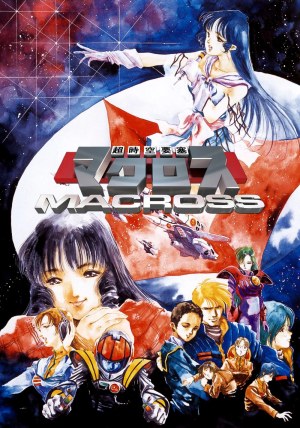
However, within the dedicated mecha and science-fiction fandoms, Anime Junkies is most infamous for their handling of the Macross franchise. The Macross universe relies on dense, recurring lore, the most foundational of which is the concept of "Protoculture." In the series, Protoculture refers to an ancient, highly advanced alien civilization whose technology and genetic manipulation serve as the driving catalyst for the entire overarching narrative.13 In an error that remains a staple of fandom mockery over two decades later, Anime Junkies inexplicably mistranslated this critical, universe-defining term as "Protocol".14
Archival forum discussions from platforms like Macross World Forums emphasize the egregious nature of this specific error. Users noted that the original spoken Japanese audio track was perfectly clear and unambiguous, rendering the translation failure entirely inexcusable.14 To substitute a bespoke, scientifically significant noun with a generic administrative term demonstrated that the translators possessed zero familiarity with the source material's history. This error was frequently cited alongside other notorious linguistic failures of the era, such as the group Lunar mistranslating the iconic "Inazuma Kick" (Lightning Kick) in the Gunbuster 2 (Diebuster) OVA as "Onee-sama Kick" (Big Sister Kick), and instances where the Dangaioh attack "Psychic Wave" was acoustically misheard and subtitled as "Sidekick Wave".14 Yet, while other groups were occasionally afforded leniency for isolated phonetic mistakes, Anime Junkies' blunders were viewed as symptomatic of an arrogant approach to piracy that fundamentally disrespected the art form.
Notorious Early Fansub Translation Errors (Early 2000s) | Responsible Group | Nature of Error / Linguistic Failure | Historical Context & Impact
"Protoculture" translated as "Protocol" | Anime Junkies | Severe semantic and lore mistranslation in the Macross franchise. | Permanently eroded the group's credibility among hardcore science-fiction fans; audio was historically noted as being entirely clear.14
"Mass naked child events" | Anime Junkies | Mistranslation of "mass abductions involving overseas mafia." | Cited by localization academics as evidence of the dangerous reliance on pivot-language (e.g., Chinese to English) translation methodologies.12
"Inazuma Kick" translated as "Onee-sama Kick" | Lunar | Semantic error in Gunbuster 2 (Diebuster). | Demonstrated a fundamental lack of historical familiarity with director Hideaki Anno's original 1988 Gunbuster OVA.14
"Psychic Wave" translated as "Sidekick Wave" | Unknown | Phonetic/acoustic mistranslation in the Dangaioh OVA. | Represented the common speed-subbing acoustic errors of the era, prioritizing rapid release over script verification.14
The Licensing Crisis: Urban Vision and Ninja Scroll
The structural fragility of the "unspoken rule" was violently exposed in 2003 during a high-profile dispute between Anime Junkies and the American media distribution company Urban Vision. This conflict centered around the television adaptation of Ninja Scroll, an intellectual property that held massive cultural cachet in western markets due to the overwhelming popularity of the 1993 theatrical film.11
When the Ninja Scroll TV series began its broadcast run in Japan, Anime Junkies immediately commenced the unauthorized translation and digital distribution of the title.11 Shortly thereafter, Urban Vision formally announced that they had acquired the official licensing rights for the North American market.11 Adhering to the standard industry practice of the early 2000s, Urban Vision opted for diplomacy over litigation. They contacted Anime Junkies directly via a politely worded email, informing the group of the legal acquisition and formally requesting that they halt all hosting, distribution, and translation of the licensed material.10
Under the established ethics of the community, Anime Junkies was expected to comply immediately. Previous legal actions in the analog and early digital eras had set clear precedents for this. In 1999, when SPE Visual Works Inc. sent a cease-and-desist letter regarding Rurouni Kenshin, the targeted group immediately pulled the series.10 Similarly, in 2002, when the president of Kyoto Animation requested the cessation of distribution for the Munto OVA, the fansub group complied without hesitation.10
Anime Junkies, however, flatly refused. The webmaster for the group responded to Urban Vision with a deeply antagonistic public statement, declaring: "Leave fansubs to fans or do it for free yourselves. All you're doing is getting rich off a series we helped [popularize]".15
This response was a watershed moment in digital media sociology. It signaled a permanent shift from the humble, preservationist ethos of the tape-trading era to a pervasive sense of digital entitlement.11 The webmaster's statement argued that the volunteer labor of fansubbers in popularizing the medium inherently granted them sovereign rights over the intellectual property itself, superseding international copyright law. The broader anime community reacted with intense backlash against this philosophical shift. Christopher Macdonald, a prominent editor at the Anime News Network (ANN), penned a highly critical editorial highlighting the strict ethics code of the fansubbing community.10 Macdonald explicitly called for a coordinated boycott of Anime Junkies, urging viewers to stop supporting the group and to cease downloading their releases, arguing that their actions threatened the commercial viability of the entire western industry.10
Despite widespread denunciation from peers and industry professionals, Anime Junkies managed to endure in some capacity until 2014.12 Denison (2011) suggests that the group's continued popularity despite their unethical behavior was highly indicative of a broader shift in fan culture, moving away from responsible stewardship and toward profligate, unapologetic piracy.12 This entitlement would ultimately force international licensors to abandon polite emails in favor of aggressive litigation, eventually leading to severe legal crackdowns, such as the arrests of manga scanlators by Japanese police across multiple prefectures for violating domestic copyright laws.10
Regional Gatekeepers and the Preservation of Memory
While groups like Anime Junkies dominated the English-speaking digital sphere, the architecture of fansubbing was inherently global. Non-English speaking regions developed their own distinct, fiercely competitive localized ecosystems. In the German-speaking community, the collective known as Generation: Anime Xtreme & Neo-Tokyo Fansubs (frequently abbreviated as or Anime-Xtreme) operated as a primary conduit for localized anime consumption.2
The archaeological record of Anime-Xtreme highlights the intense internal politics, quality debates, and consumer pressure that defined localized subgroups. Archival database comments from platforms like MyAnimeList reveal a highly polarized audience. A vast majority of users explicitly approved of the group's output, frequently defending their releases as "great and well worth it" despite consistent, frustrating delays in their release schedules.2 However, the group was not immune to the pervasive drama of the era. Historical snippets indicate that Anime-Xtreme faced heavy competition from alternative localization groups. The pressure was so intense that Anime-Xtreme's own leader allegedly conceded publicly that rival English-speaking groups, such as Eclipse, were producing superior quality work.2 Dissenting users frequently petitioned the group to drop highly anticipated, licensed properties—such as the massive 64-episode run of Fullmetal Alchemist: Brotherhood (FMA😎—in favor of faster or more accurate groups like Moshi Moshi Subs.2 This dynamic underscores the relentless, often toxic consumer pressure exerted upon unpaid volunteer translators, where community loyalty was highly transactional and dependent entirely on release velocity.
Concurrent with these digital battles for supremacy, elements of the community were actively attempting to codify and preserve the history of the medium before it was lost to the ephemeral nature of the internet. The "Anime or Die" (A.O.D.) convention circuit served as a critical physical nexus for this preservation effort.9 At events such as the A.O.D. convention, veteran fansubbers from legacy groups—such as the co-founders of Doremi Fansubs—hosted historical panels detailing the evolution of anime distribution.9
These physical gatherings were vital for recording the oral history of the medium. They provided a space to document the transition from the grueling analog logistics of VHS tape distribution to the early digital codecs.9 At A.O.D., historians detailed the ancient days when "no one knew what 'tsundere' meant," tracking the technological evolution from files like Kare Kano episode 05, encoded in MSMPEG4v3 at a resolution of 320x240 with a meager 86mb file size, to later digital benchmarks like Paranoia Agent episode 05, encoded in XviD at 640x352.9 The preservation of this history at conventions like Anime or Die served as a necessary counterweight to the volatile nature of the internet, ensuring that the legacy of the analog era was not entirely overwritten by the digital entitlement of groups like Anime Junkies.
The Infrastructural Shift: From IRC Fserve Bots to the BitTorrent Swarm
The rapid expansion and maturation of the anime subculture between 2001 and 2003 cannot be analyzed solely through the lens of the translating groups; it is inextricably linked to the underlying network protocols that facilitated distribution. During this critical window, the community transitioned from a highly centralized, gatekept architecture to a decentralized, peer-to-peer paradigm, permanently altering the velocity of global media consumption.
The Hegemony of IRC and #anime-junkies
Prior to 2002, the digital distribution of anime was almost exclusively managed through Internet Relay Chat (IRC) networks.4 Major IRC networks such as EFNet, Rizon, DALnet, and Undernet served as the central nervous systems of the subculture.4 To acquire an episode, users were required to navigate complex, text-based chat interfaces, join specific channels hosted by the release groups, and interface directly with automated file servers, commonly known as fserve bots or 😆CC (eXtended Direct Client-to-Client) bots.4
This architecture was inherently hierarchical and heavily centralized. The channel #anime-junkies, hosted on the massive EFNet network, serves as a prime historical example of this paradigm.4 To download an episode from #anime-junkies, a user could not simply click a hyperlink on a webpage. Instead, they had to type specific trigger commands into the chat interface (e.g., /ctcp [botname] xdcc send #1 or /msg [botname] xdcc send #1) to request a file transfer over the Direct Client-to-Client protocol.4
Because these IRC bots were hosted on personal computers or privately rented shell servers with strictly limited upload bandwidth, users were forced into digital queues. It was common to wait hours or even days simply to initiate a download, leaving IRC clients idling in the background.4 This severe bandwidth bottleneck centralized massive power into the hands of channel operators and server hosts. The administrators of #anime-junkies possessed absolute control over the flow of media; they could ban dissenting users, prioritize their own downloads, and utilize their distribution monopoly to shield themselves from criticism regarding their mistranslations and ethical violations. The IRC paradigm, while revolutionary compared to physical VHS distribution, was ultimately incapable of scaling to meet the exploding global demand for high-quality digital video.
The BitTorrent Revolution (2001–2003)
The structural limitations of IRC and 😆CC bots were violently dismantled by the introduction and rapid, widespread adoption of the BitTorrent protocol. Developed and first released in July 2001 by programmer Bram Cohen, BitTorrent reached functional maturity precisely as the digital anime community was hitting critical mass.3 Unlike the linear, one-to-one transfer mechanics of IRC, BitTorrent utilized a revolutionary swarming architecture. When a user downloaded a file via a BitTorrent client, the software simultaneously uploaded the pieces of the file they had already received to other users in the network.3 This tit-for-tat algorithm meant that the more popular a file was, the faster and more robust the distribution network became, entirely eliminating the server bottlenecks that plagued EFNet and Rizon.
By 2002 and 2003, the anime community aggressively migrated away from IRC toward this new protocol.5 Web-based trackers emerged to index these .torrent files, rendering the esoteric command-line interfaces of IRC obsolete. Early pioneers in the anime torrent indexing space, such as AnimeSuki, TokyoToshokan, and later Nyaa Torrents, democratized access to the medium.4 Concurrently, massive generalized public trackers such as The Pirate Bay, founded in late 2003 by Gottfrid Svartholm, Fredrik Neij, and Peter Sunde, further mainstreamed peer-to-peer file sharing.3
This technological transition stripped groups like Anime Junkies of their infrastructural monopoly. Users no longer needed to idle in #anime-junkies on EFNet, subjected to the whims of channel operators; they could simply download the torrent file from a public indexer and rely on the decentralized swarm. However, the shift to BitTorrent also introduced unprecedented legal exposure. Because the protocol inherently exposes the IP addresses of all peers participating in a swarm, anti-piracy firms began aggressively monitoring trackers.10
This visibility led to massive waves of legal threats and out-of-court settlements. In December 2004, a Tokyo law firm representing the publisher Media Factory sent targeted legal threats to the BitTorrent directory AnimeSuki, forcing the removal of indexed files.10 Even more controversially, the Singaporean licensing company Odex utilized exposed BitTorrent IP addresses to secure court orders against Internet Service Providers, leading to severe legal threats against individual downloaders. Odex pursued aggressive out-of-court settlements for at least $3,000 SGD (approximately $2,000 USD) per person, targeting individuals as young as nine years old, sparking massive outrage within the local and international anime communities.10
Evolution of Anime Distribution Protocols (1990s – Mid-2000s) | Distribution Mechanism | Architectural Structure | Primary Characteristics, Limitations, & Legal Risks
Analog Physical Era (Pre-2000) | VHS Tape Trading | Decentralized Postal Network | Relied on "sponsors," required blank tapes and SASEs; suffered from severe generational degradation of video/audio quality; low legal visibility.9
Early Digital Era (2000–2002) | IRC (😆CC / Fserve Bots) | Centralized Server Queues | Hosted on networks like EFNet (#anime-junkies); required specialized /msg commands; throttled by strict bandwidth limitations and long queue wait times.4
Peer-to-Peer Transition (2001–2003) | BitTorrent Protocol | Decentralized Swarming | Protocol released in 2001; eliminated bottlenecks by forcing downloaders to upload; democratized access via web trackers (AnimeSuki, TokyoToshokan) but exposed user IP addresses to aggressive legal tracking and settlements (e.g., Odex lawsuits).3
The Peak of the West: FLCL as the Digital Catalyst
The transition from IRC to BitTorrent between 2001 and 2003 perfectly coincided with the release and subsequent western explosion of FLCL (Fooly Cooly). Produced collaboratively by the legendary animation studios GAINAX and Production I.G., directed by Kazuya Tsurumaki, and featuring character designs by Yoshiyuki Sadamoto and scriptwriting by Youji Enokido, FLCL was a mesmerizing, avant-garde six-episode Original Video Animation (OVA) series that aggressively pushed the boundaries of traditional animation aesthetics.6
FLCL was fundamentally tailored for the emerging digital ecosystem. Its frantic, fluid animation, hyper-compressed 6-episode narrative structure, and profound integration of indie-rock music made it the ultimate test case for the new video encoding standards of the era. Digital archivists and encoding specialists utilized FLCL to push the limits of modern codecs like XviD and DivX, resulting in file sizes that maintained high visual fidelity while remaining small enough to be traded over IRC and later swarmed on early BitTorrent trackers.9 The series resonated deeply with western audiences, quickly establishing an entrenched, obsessive fandom that meticulously analyzed its deeply layered metaphors, frenetic pacing, and chaotic narrative involving giant destructive robots, pink-haired alien entities, and suburban coming-of-age anxieties.6
The massive, sudden demand for FLCL acted as a direct catalyst for the widespread adoption of BitTorrent within the anime subculture. The bottlenecked IRC servers on EFNet were entirely ill-equipped to handle the surging bandwidth requests for high-quality FLCL video encodings. Consequently, FLCL became one of the most highly seeded properties in the early days of anime torrenting, bridging the gap between niche tape-trading and mainstream digital consumption. The series cemented its status not just as an artistic masterpiece, but as a foundational pillar of early 2000s digital media distribution.
The "FLCL Archives": Preserving Digital and Production History
As the digital footprint of FLCL expanded exponentially across torrent trackers and fan forums, a parallel movement emerged to document and preserve the profound artistic labor that went into the series' creation. This effort manifested in the creation of the "FLCL Archives." The chronological history of this archive perfectly illustrates the lifecycle of internet media preservation, transitioning from a fragile, fan-curated Web 1.0 resource to a formalized, commercially published physical artifact.
The Original Web 1.0 Repository
Before the advent of official, localized artbooks in the western market, the "FLCL Archives" existed primarily as a digital repository and grassroots web resource [Prompt]. Maintained by dedicated fans and archivist communities, the original website served as a centralized clearinghouse for leaked, scanned, and translated production materials sourced from GAINAX and Production I.G.8
The digital FLCL Archives offered unprecedented insight into the chaotic and highly iterative creative process behind the OVA. The web repository was meticulously organized into sections hosting initial planning notes, multiple versions of project proposals, and extensive early episode drafts.8 These cached drafts revealed that the series underwent significant conceptual mutations before arriving at its final broadcast form. Documented early drafts hosted on the site included working titles such as "Fire Starter," "Fire Starter ver 2.0," and the highly provocative "FLCLimax".8
Furthermore, the web resource cataloged early characterizations that diverged drastically from the final product. The archive detailed evolutionary steps in character design and motivation, listing distinct conceptual entries for characters including: Harahara Haruko, Nandaba Naota, Naota Nandaba ver 2.0, Mamimi Samejima, Mamimi Samejima ver 2.0, Canti, Canti ver 2.0, Kamon Nandaba, Kamon Nandaba ver.20, Eri Ninamori, Shigekuni Nandaba, and Shigekuni Nandaba ver 2.0.8 Translation of the original draft notes hosted on the site revealed shockingly dark, scrapped narrative elements that fundamentally altered the perception of the cast. For instance, early proposals suggested that the character Mamimi was originally intended to drop out of school entirely, and early storyboards indicated a sequence where she nearly jumped to her death, adding profound psychological gravity to her character arc.20
Other archived notes hosted on the digital repository hinted at deeper lore continuity and character subtleties. Draft notes indicated early concepts where the protagonist, Naota, worked a job rather than solely attending school, and detailed his habit of doing homework under a bridge.20 The archives also contained deep continuity cuts, such as noting that Haruko's alien origin and the Galactic Space Police Brotherhood tied into themes of interdimensional manipulation, or referencing that the entity "Atomsk" derived its name from a Cold War-era spy novel of the same name.20
This digital repository was an invaluable asset to the early fandom, providing the raw textual evidence necessary for the sprawling analytical theories that defined early 2000s anime message boards. However, as is the nature of the internet, fan-hosted repositories are highly susceptible to link rot, server degradation, rights management takedowns, and general digital obsolescence.23 The permanent preservation of these culturally significant materials required a transition back to the physical realm.
Metamorphosis into the Physical Artbook (2016–2019)
Recognizing the immense cultural and historical value of the accumulated production materials, the disparate digital resources of the FLCL Archives were eventually formalized and synthesized into an official, commercial physical publication. In 2016, the Japanese publisher Anime Style's editorial department released The FLCL Archives, a massive physical artbook dedicated to permanently preserving the legacy of the original OVA.8
The physical iteration of the FLCL Archives was an exhaustive, B5-sized paperback volume spanning 248 total pages, consisting of 72 color pages and 176 monochromatic pages.18 It successfully codified the materials previously scattered across the early web, providing high-resolution prints of key promotional art, intricate character and mecha setting materials, environmental location designs, and raw, rough conceptual sketches.6 Crucially, the physical book retained the deeply historical text-based elements of the original web repository, officially publishing the early project proposal documents, scrapped concept notes, and the first-draft scripts for episodes one, two, and six.6
For several years, this comprehensive volume was only accessible to western fans via expensive importing and proxy services, maintaining a linguistic barrier to entry that ironically echoed the exclusivity of the early VHS tape-trading days.24 However, in March of 2019, the North American publisher UDON Entertainment Corporation released a fully translated, official English edition of The FLCL Archives.6
Retailing for approximately $39.99, the UDON release definitively bridged the gap between the original Japanese creators and the western fanbase.6 By professionally translating the extensive illustrator notes, animator commentary, and foundational planning documents, the physical release of the FLCL Archives secured the developmental legacy of the series against the persistent threat of digital decay. It transformed ephemeral web data into an enduring, tangible artifact, representing the ultimate triumph of media archaeology and closing the loop on a process that began in the chaotic chatrooms of the early 2000s.
The Evolution of the FLCL Archives Repository | Format / Era | Primary Contents & Preserved Materials
Original Web Resource | Fan-Curated Digital Repository (Early 2000s) | Hosted scanned storyboards, early characterization text files (e.g., Naota ver 2.0, Mamimi ver 2.0, Canti ver 2.0), initial project proposals (Fire Starter, FLCLimax), and fan translations of scrapped dark narrative elements (e.g., Mamimi jumping).8
Japanese Physical Release (2016) | B5 Paperback Book (Anime Style) | 248 total pages (72 color, 176 monochrome). Formalized collection of mecha/character setting materials, rough sketches, official promotional illustrations, and early scripts.8
English Localization (2019) | Translated Volume (UDON Entertainment) | Accessible English translations of the 2016 volume's illustrator notes, early scripts for episodes 1, 2, and 6, and creator commentary, permanently preserving the developmental history for the western market.6
Conclusion
The digital archaeology of the early 2000s anime distribution landscape reveals a profound technological and sociological metamorphosis. The medium's expansion into western markets was not orchestrated seamlessly by multinational corporate entities, but was instead forged in the chaotic, legally ambiguous, and highly innovative crucible of internet subcultures. The evolution of this landscape was driven by a constant friction between the desire for grassroots preservation and the demand for instantaneous access.
Groups like Anime Junkies, despite their eventual infamy for prioritizing sheer speed over linguistic accuracy—resulting in legendary failures like the "Protocol" mistranslation—and for shattering the delicate ethical agreements of the era, were instrumental in pressure-testing the commercial industry. Their blatant defiance of licensors like Urban Vision over properties such as Ninja Scroll signaled the inevitable death of localized gatekeeping. It proved definitively that digital media could no longer be contained by geographical licensing alone, forcing the commercial industry to adapt to the speed of the internet or face irrelevance.
This cultural shift was inextricably bound to the physical infrastructure of the internet itself. The migration from the hierarchical, queue-based bottlenecks of EFNet IRC channels and 😆CC bots to the democratized, decentralized swarms of the BitTorrent protocol completely revolutionized global media consumption. It was this specific technological inflection point that allowed monumental, highly compressed works of art like FLCL to bypass traditional distribution hurdles, propagating rapidly through the digital ether to find a massive, dedicated global audience.
Ultimately, the trajectory of the "FLCL Archives"—evolving from a fragile web repository of leaked storyboards, early character drafts, and scrapped project proposals into a meticulously curated, commercially translated physical artbook—serves as a perfect microcosm for the anime industry as a whole. It illustrates a definitive journey from the precarious, unregulated digital frontier into a formalized, globally integrated commercial landscape. The artifacts left behind in IRC chat logs, forum debates over mistranslated protocols, and the pages of preserved production history ensure that the origins of this digital revolution remain an enduring testament to the power, ingenuity, and chaotic energy of the early internet community.
Works cited
- About an anime fan, accessed April 9, 2026, https://bateszi.me/2008/08/22/about-an-anime-fan/ ↗https://bateszi.me/2008/08/22/about-an-anime-fan/
- AnimeStride/sandbox samples/sample_anime_page at master - GitHub, accessed April 9, 2026, https://github.com/Maytide/AnimeStride/blob/master/sandbox%20samples/sample_anime_page ↗https://github.com/Maytide/AnimeStride/blob/master/sandbox%20samples/sample_anime_page
- Timeline of file sharing - Wikipedia, accessed April 9, 2026, https://en.wikipedia.org/wiki/Timeline_of_file_sharing ↗https://en.wikipedia.org/wiki/Timeline_of_file_sharing
- Anime piracy in the early 2000s : r/NoStupidQuestions - Reddit, accessed April 9, 2026, https://www.reddit.com/r/NoStupidQuestions/comments/kudrkt/anime_piracy_in_the_early_2000s/ ↗https://www.reddit.com/r/NoStupidQuestions/comments/kudrkt/anime_piracy_in_the_early_2000s/
- What was the first private tracker? - Reddit, accessed April 9, 2026, https://www.reddit.com/r/trackers/comments/8fstrd/what_was_the_first_private_tracker/ ↗https://www.reddit.com/r/trackers/comments/8fstrd/what_was_the_first_private_tracker/
- The FLCL Archives / Gainax/ GAINAX (ILT) (9781772940916) - Books Kinokuniya, accessed April 9, 2026, https://united-states.kinokuniya.com/bw/9781772940916 ↗https://united-states.kinokuniya.com/bw/9781772940916
- The Art Of Miss Peregrines Home For Peculiar Children Miss Peregrines Peculiar Children, accessed April 9, 2026, https://lan-portal.uob.edu.ly/go/CHAPTER/V50U332933/the_art_of_miss__peregrines__home_for-peculiar-children_miss__peregrines__peculiar__children.pdf ↗https://lan-portal.uob.edu.ly/go/CHAPTER/V50U332933/the_art_of_miss__peregrines__home_for-peculiar-children_miss__peregrines__peculiar__children.pdf
- The FLCL Archives - FLCL Wiki - Fandom, accessed April 9, 2026, https://flcl.fandom.com/wiki/The_FLCL_Archives ↗https://flcl.fandom.com/wiki/The_FLCL_Archives
- anime fansubs 2000 to 2010 « Blog Archive « - blog好ã, accessed April 9, 2026, http://blogsuki.com/archives/2016/03/06/7053/ ↗http://blogsuki.com/archives/2016/03/06/7053/
- Fansub - Wikipedia, accessed April 9, 2026, https://en.wikipedia.org/wiki/Fansub ↗https://en.wikipedia.org/wiki/Fansub
- The Soul of Anime: Collaborative Creativity and Japan's Media Success Story 9780822353805, 9780822353942, 2012033721 - DOKUMEN.PUB, accessed April 9, 2026, https://dokumen.pub/the-soul-of-anime-collaborative-creativity-and-japans-media-success-story-9780822353805-9780822353942-2012033721.html ↗https://dokumen.pub/the-soul-of-anime-collaborative-creativity-and-japans-media-success-story-9780822353805-9780822353942-2012033721.html
- Speaking in Subtitles: Revaluing Screen Translation 9781474410953 - DOKUMEN.PUB, accessed April 9, 2026, https://dokumen.pub/speaking-in-subtitles-revaluing-screen-translation-9781474410953.html ↗https://dokumen.pub/speaking-in-subtitles-revaluing-screen-translation-9781474410953.html
- newsletter 10/13 - Laser Hotline, accessed April 9, 2026, http://www.laserhotline.de/newsletter/newsletter333.pdf ↗http://www.laserhotline.de/newsletter/newsletter333.pdf
- The Official Aim for the Top! Gunbuster Thread - Page 5 - Macross World, accessed April 9, 2026, https://www.macrossworld.com/mwf/topic/10410-the-official-aim-for-the-top-gunbuster-thread/page/5/ ↗https://www.macrossworld.com/mwf/topic/10410-the-official-aim-for-the-top-gunbuster-thread/page/5/
- Anime in America Podcast: Full Episode 1 Transcript - Crunchyroll News, accessed April 9, 2026, https://www.crunchyroll.com/news/features/2020/7/28/anime-in-america-podcast-full-episode-1-transcript ↗https://www.crunchyroll.com/news/features/2020/7/28/anime-in-america-podcast-full-episode-1-transcript
- Dark Energy: What Fansubs Reveal about the Copyright Wars - ResearchGate, accessed April 9, 2026, https://www.researchgate.net/publication/241897755_Dark_Energy_What_Fansubs_Reveal_about_the_Copyright_Wars ↗https://www.researchgate.net/publication/241897755_Dark_Energy_What_Fansubs_Reveal_about_the_Copyright_Wars
- does anyone know when private trackers were created? in 2000s? - Reddit, accessed April 9, 2026, https://www.reddit.com/r/trackers/comments/cdz0pz/does_anyone_know_when_private_trackers_were/ ↗https://www.reddit.com/r/trackers/comments/cdz0pz/does_anyone_know_when_private_trackers_were/
- New The FLCL Archives Art Work Illustration Book Fooly Cooly Anime Style Japan - eBay, accessed April 9, 2026, https://www.ebay.com/itm/127226405830 ↗https://www.ebay.com/itm/127226405830
- Absurd Singularity: Ben Archives - hitokiri.com, accessed April 9, 2026, https://www.hitokiri.com/blog/archives/ben/ ↗https://www.hitokiri.com/blog/archives/ben/
- The FLCL Iceberg Chart v3 (With Explanations) - Reddit, accessed April 9, 2026, https://www.reddit.com/r/FLCL/comments/m8a5f7/the_flcl_iceberg_chart_v3_with_explanations/ ↗https://www.reddit.com/r/FLCL/comments/m8a5f7/the_flcl_iceberg_chart_v3_with_explanations/
- FLCL 25th Anniversary Rewatch -- Overall Series Discussion Thread : r/anime - Reddit, accessed April 9, 2026, https://www.reddit.com/r/anime/comments/1letwvx/flcl_25th_anniversary_rewatch_overall_series/ ↗https://www.reddit.com/r/anime/comments/1letwvx/flcl_25th_anniversary_rewatch_overall_series/
- FLCL Iceberg Chart v2 - Reddit, accessed April 9, 2026, https://www.reddit.com/r/FLCL/comments/llnfly/flcl_iceberg_chart_v2/ ↗https://www.reddit.com/r/FLCL/comments/llnfly/flcl_iceberg_chart_v2/
- The Flcl Archives - hayderecho.expansion.com, accessed April 9, 2026, https://hayderecho.expansion.com/library/papersCollection/nXAoqU/TheFlclArchives.pdf ↗https://hayderecho.expansion.com/library/papersCollection/nXAoqU/TheFlclArchives.pdf
- Anime Questions, Recommendations, and Discussion - April 18, 2023 - Reddit, accessed April 9, 2026, https://www.reddit.com/r/anime/comments/12qi2tm/anime_questions_recommendations_and_discussion/ ↗https://www.reddit.com/r/anime/comments/12qi2tm/anime_questions_recommendations_and_discussion/
- A B C D E F G H I J K - Cartoon Research, accessed April 9, 2026, https://cartoonresearch.com/wp-content/uploads/2022/06/CRIndex.html ↗https://cartoonresearch.com/wp-content/uploads/2022/06/CRIndex.html
~ edited May 4, 2026