
8/10Watch

Naruto Ep 80 Review: The Third Hokage, Forever...
There is something deeply unfair about surviving a war and discovering that the person who kept everyone alive isn't coming home.That's where "The Third Hokage, Forever..." leaves us. The invasion is over. Orochimaru has retreated, Naruto has stopped Gaara, the Sand and Sound forces are pulling out, and the Hidden Leaf can finally start counting the cost. Among the dead is the Third Hokage, Hiruzen Sarutobi.
I already admitted in my Episode 79 review why that name means something to me, so I won't pretend I'm coming into this one neutral. 😛 Episode 79 gave Hiruzen a warrior's final stand. Episode 80 gives him something more important. It shows us what he left behind.
A victory that doesn't feel like one
The episode opens by finishing the battle. Orochimaru is alive, but the Third's Reaper Death Seal has robbed him of the use of his arms, leaving him unable to perform the hand signs his ninjutsu requires. The man who invaded Konoha, dragged the First and Second Hokage back from the grave, and tried to burn down the village his teacher protected is reduced to furious helplessness. He calls the retreat, the Sound Four drop the barrier, and the defenders of the Leaf are left standing. Hiruzen won that fight the only way he still could, and he died doing it.That distinction matters because Naruto is perfectly capable of turning a battle into a sporting event. Somebody finds a clever new technique, the music swells, the villain gets knocked across the landscape, and we all cheer. Honestly, I love that stuff. 😛 There's no victory celebration here. Orochimaru gets away, Konoha has lost people, and the shinobi sworn to protect everyone have to face the fact that even their strongest couldn't save their leader.
Winning doesn't mean everybody survives. Sometimes it only means there are people left to mourn the ones who didn't.
That's a hard lesson for a series built around a twelve-year-old who refuses to accept that anything is impossible, and it's one the story needs.
Gaara learns what Naruto already knows
Before the funeral, Episode 80 finishes the other fight that ran alongside the invasion. Shukaku and Gamabunta are gone, and what's left is two battered kids lying in the forest with nothing left to throw. Gaara wants to know where Naruto's strength comes from, and the answer has nothing to do with chakra reserves, the Nine-Tailed Fox, or a flashy jutsu. Naruto has people he wants to protect. That's it.The two boys share more than either understood. Both grew up carrying a monster inside them. Both were feared and rejected, and both spent their childhoods wondering why the people around them seemed determined to hate them. Naruto found Iruka, then Team 7, then people who gave him something worth fighting for beyond his own survival. Gaara went the other way and decided that if nobody would love him, he would live only for himself. Look where that got him.
Naruto doesn't deliver a magic friendship speech that erases the last few episodes. He understands Gaara's pain, and he makes it clear that if Gaara comes after the people he loves again, he'll stop him. Compassion doesn't mean letting somebody hurt your friends.
Then comes one of my favorite little details. When Temari and Kankuro carry Gaara away, he apologizes to them. Gaara apologizes. The boy who terrified everyone around him has just discovered that other people's lives might matter. It's tiny next to the battle that came before it, and it means more, because that is exactly the lesson the Third Hokage spent his life trying to teach.
Konohamaru lost his grandfather
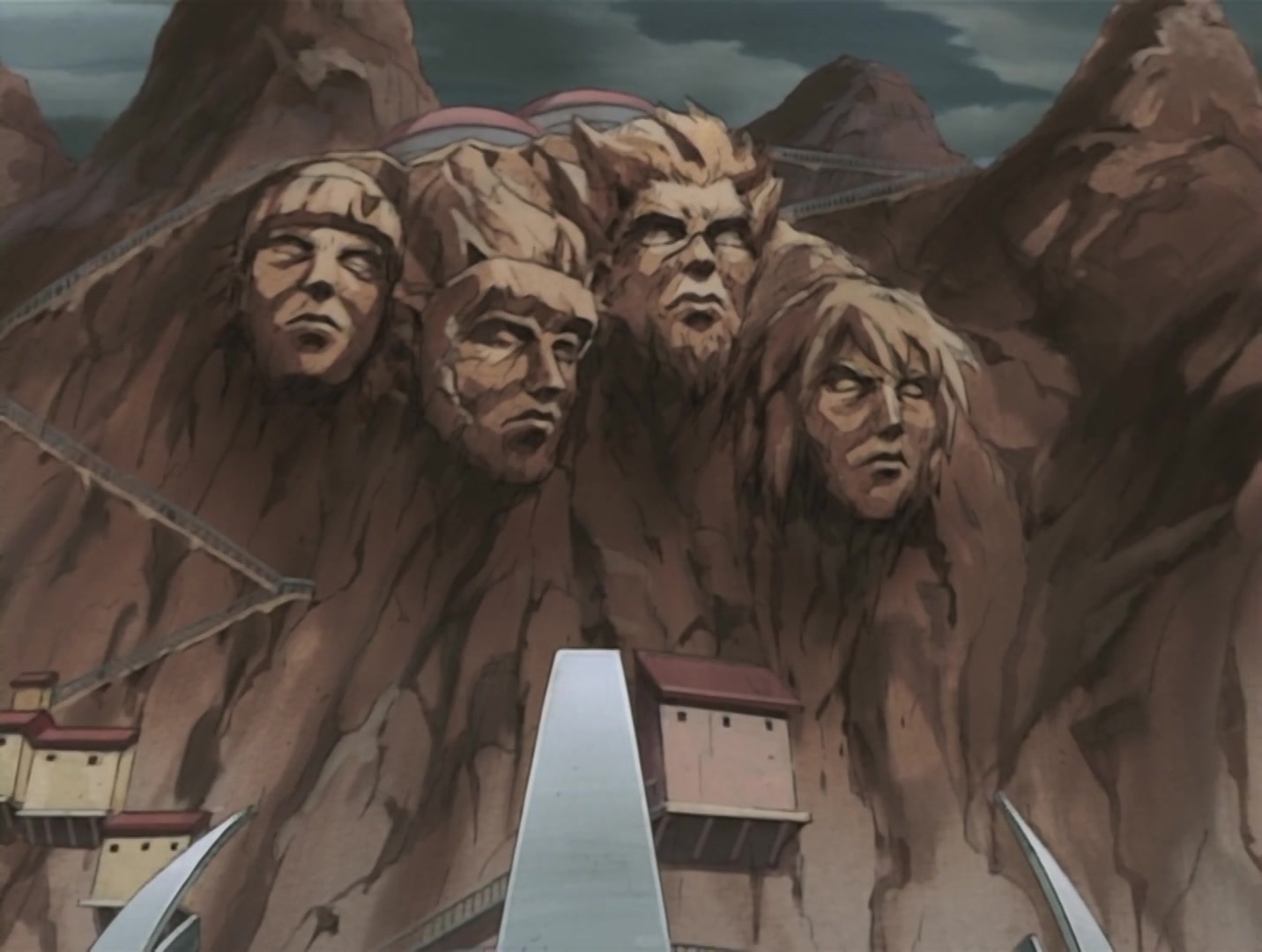
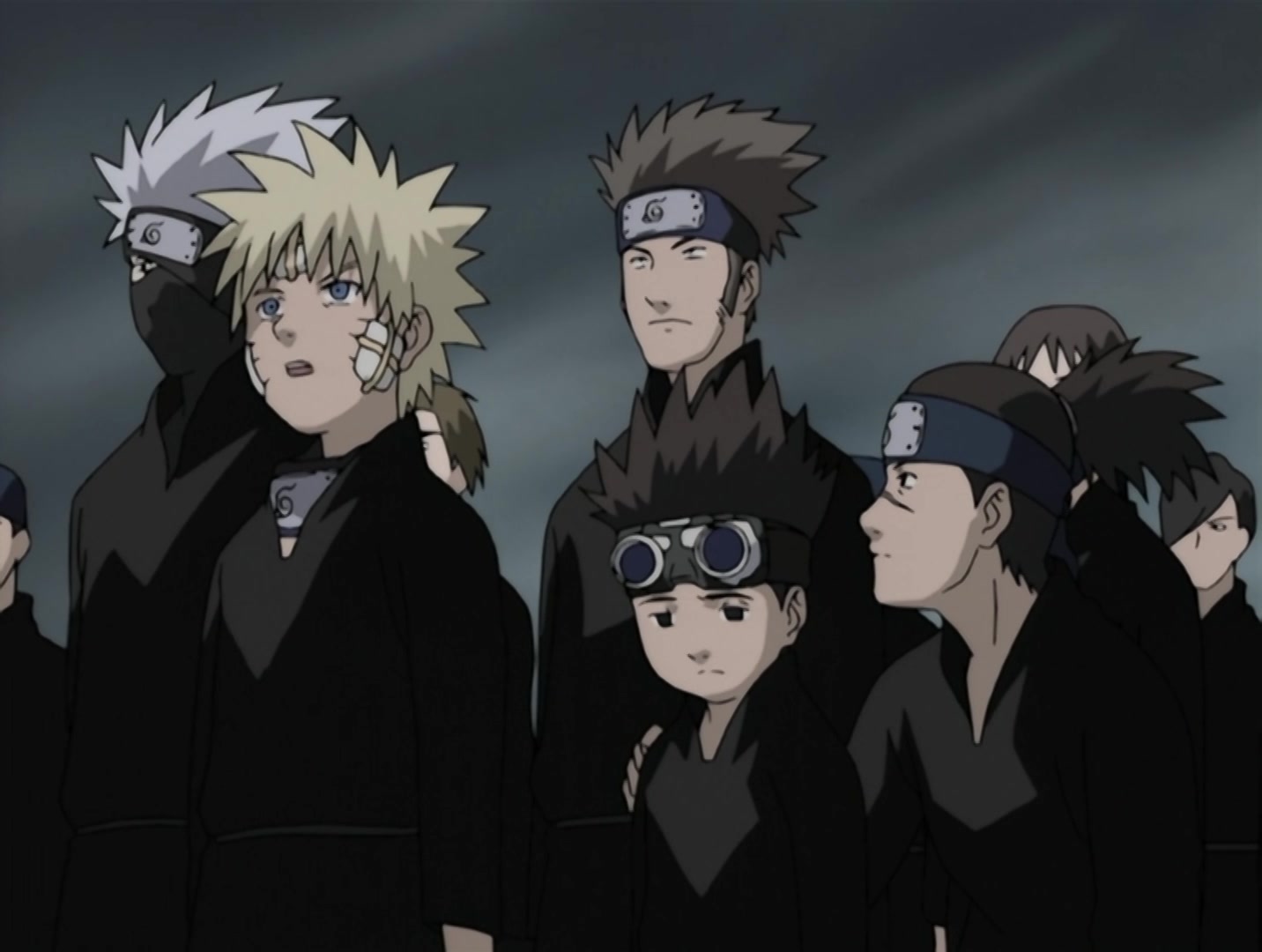
The funeral is where Episode 80 finds its real weight. Rain falls over the Hidden Leaf as the shinobi gather in black to honor the Third and the others killed in the invasion. To Konoha, Hiruzen was the Hokage: a leader, a teacher, the man who carried the village through decades of conflict. To Konohamaru, he was his grandfather.Konohamaru spent his introduction trying to escape the Third's shadow. He didn't want everyone bowing to him because of his grandfather's title. He wanted to be seen as Konohamaru, not the Hokage's grandson, and Naruto was one of the first people to treat him that way. Now the man whose name followed Konohamaru everywhere is gone. He doesn't have to escape that shadow anymore. He has to learn how to live without the person who cast it.
The village has lost a leader. Konohamaru has lost someone who was supposed to be there when he grew up.
That's the cruelty of war that casualty reports never capture. A village can count its dead. It can't count the birthdays, arguments, and ordinary afternoons those people won't be there for.
Iruka remembers the boy he used to be
This is where the episode gets me. Iruka sees Konohamaru struggling and remembers being a child in almost the same place. When the Nine-Tailed Fox attacked Konoha, Iruka lost both his parents. He grew up telling himself their sacrifice was honorable and that he should be proud instead of sad. He was proud. He was also a little boy who wanted his parents back, and both of those feelings can be true at once.The Third understood that. In Iruka's memory, Hiruzen finds him grieving and tells him he isn't alone: the people who die protecting the village live on for as long as the village does. What one generation protects, the next inherits. That's the Will of Fire, and it's a familiar enough shonen idea. Look at how Naruto arranges it, though. Hiruzen comforts Iruka after losing his parents. Years later, Iruka becomes the teacher who reaches Naruto when almost nobody else will. Now Hiruzen is dead, and Iruka holds back his own grief to put his arms around Konohamaru, the same way the old man once did for him.
The Third Hokage's lesson has survived the Third Hokage. Not the ceremony, not the title, not even the monument. The proof is that someone he helped grew into a person who can help somebody else.
The Will of Fire isn't something Hiruzen owned. It's something he passed on.
For all its ridiculousness, Naruto sometimes understands people better than shows that take themselves far more seriously. Love doesn't always announce itself with a speech. Sometimes it's a teacher noticing that a child is pretending not to cry.
Even the strongest carry ghosts
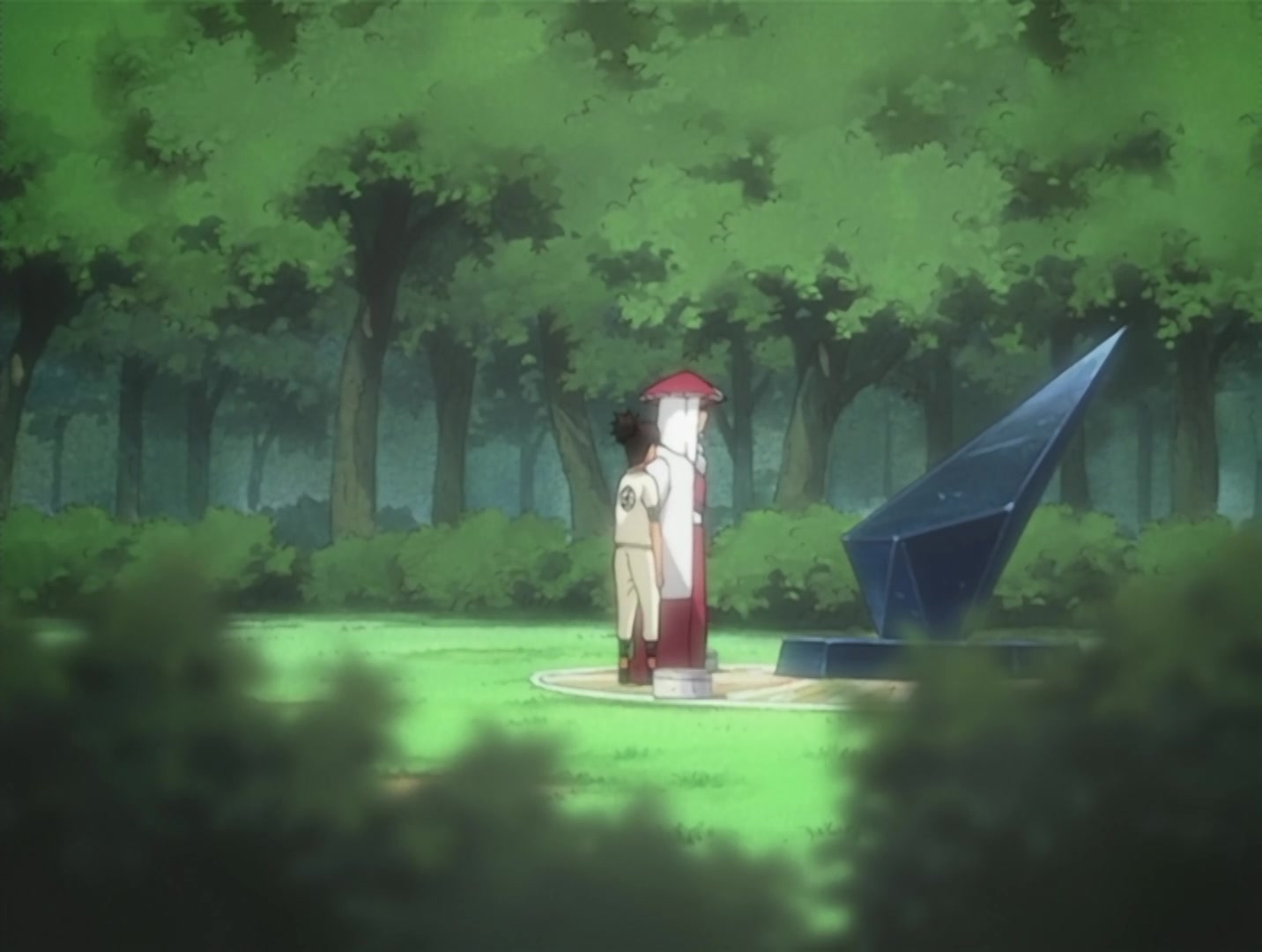
The funeral also reminds us that Hiruzen wasn't the only loss, and that the village's adults have been grieving for a long time. Kakashi isn't at the funeral at all. He's at the memorial stone, where Yugao arrives with flowers for Hayate and asks whether he's there for Obito. Kakashi tells her he's been there since dawn, because the place makes him think of the mistakes he's made. That's the man behind the perpetually late, effortlessly cool sensei act: someone who has spent years carrying people he couldn't save. Jiraiya, watching from a distance, thinks back to his own genin days under Hiruzen. The series has spent so long presenting its jonin as people who already know how the world works. Kakashi is cool, composed, and perpetually late. Jiraiya is the loud, shameless, enormously powerful old pervert. The Third was the wise old man behind the desk, usually worrying about whatever Naruto had done now. Behind those familiar personalities are years of war, regret, and people they've buried. Kakashi doesn't get less capable because he still mourns. Jiraiya doesn't get less ridiculous because losing his teacher hurts. And Hiruzen doesn't become less important because he made mistakes.That's worth talking about. The Third Hokage wasn't a perfect leader. He had the chance to stop Orochimaru years ago and let him go. He presided over a village that let Naruto grow up isolated and despised, and his personal kindness never fixed every injustice inside Konoha. The series doesn't erase those failures with a heroic death, and neither should we. But his failings don't erase the people he protected, the students he taught, or the sacrifice he made.
A legacy isn't proof that somebody never made mistakes. It's what the living choose to carry forward, including what they learned from those mistakes.
Naruto asks the right question
Finally, Naruto asks Iruka the question at the heart of the episode: why do people risk their lives for others? It's simple, and it's extraordinary coming from Naruto. This is a boy who has spent his whole life insisting he'll become Hokage. He wants the title, the recognition, and everyone in the village knowing his name, and after the Chunin Exams he's started to show he might have the strength to get there. Standing in the rain, he has to face the part of being Hokage that isn't about winning fights or earning applause. People will depend on him, and protecting them might cost more than he ever imagined.Iruka's answer ties the people who are gone to the people still here. Dreams don't vanish when the person carrying them dies. They become part of whoever remembers. That doesn't make death hurt less, and it doesn't mean everybody should rush off and sacrifice themselves to prove how heroic they are. The Will of Fire only means something if there are people left to protect.
Naruto just proved it against Gaara. He didn't get stronger because he hated Gaara more. He got stronger because he couldn't bear losing Sakura and Sasuke. Now he's learning that the Third's greatest strength was never just beating an enemy. It was knowing who he was fighting for.
A funeral in a battle anime
I appreciate Studio Pierrot giving this material room. Naruto can be incredibly loud: outrageous techniques, giant monsters, wild reactions, and kids yelling attack names that should be a lot shorter. 😛 Its most memorable moments usually involve somebody finding new power just as defeat looks certain. Episode 80 doesn't need any of that. Its strongest scenes are conversations, memories, and people standing quietly together.The rain is an obvious emotional device, and the episode leans hard on flashbacks and solemnity to tell us how to feel. It isn't subtle. It earns the pause anyway. We just spent an arc watching the village torn apart, and if the show jumped straight into the next adventure, the invasion would shrink into another tournament obstacle. The funeral gives the battle consequences. I especially like that Hiruzen's death doesn't become an excuse for an immediate revenge mission. That's not what Iruka teaches Naruto. The story asks what kind of person he wants to become because Hiruzen lived, and that's a far more useful question.
From the manga to the fansub era
Masashi Kishimoto's manga began in Weekly Shonen Jump in 1999, and Studio Pierrot, under series director Hayato Date, brought it to TV Tokyo on October 3, 2002. Episode 80 adapts Chapters 138 and 139, closing the Konoha Crush arc and burying the Third in the same half hour. It aired on April 21, 2004, while the series was becoming one of the defining shows of English digital fansubbing.The Western fansub audience was watching all of this well over a year before Naruto's American TV premiere on Toonami, September 10, 2005. Our Naruto Fansub & Scanlation History page documents the scramble among translation groups and the ANBU-AonE joint, one of the most recognizable tags in the show's digital circulation. When this episode aired, that partnership was still running. It ended that August: AnimeOne announced the split on August 12, 2004, citing "Irreconcilable Differences," and ANBU followed on August 14 with a longer statement. Both said they would keep subbing Naruto on their own.
For anyone who remembers waiting on weekly AVI releases, that's part of the experience. You never knew how long a group would last, whether the next file would show up on time, or whether a different group would end up carrying the show. Somewhere in that messy, wonderful early-internet network, an episode went out in which a little boy asked why people kept giving their lives for one another. That sticks with you longer than the codec or the release tag.
The village never really gets to rest
Naruto is still Naruto, so the moment the Konoha Crush arc ends, the series starts setting up its next problem. Two cloaked strangers appear outside the Hidden Leaf, and the brief glimpse of a Sharingan tells us this isn't an ordinary visit. We don't know what they want yet. We only know Konoha's moment of peace is already being threatened.It's an effective teaser, and I have mixed feelings about where it sits. Part of me wishes Episode 80 had ended on the funeral and let its emotional conclusion stand without promising another fight. But that's the shinobi world. Konoha doesn't become safe because it held a memorial. Its enemies are still out there, its leaders are dead or exhausted, and the next generation will have to grow up faster than anyone wants. In that sense the ominous ending reinforces everything the episode has been saying. Hiruzen's work is finished. Konoha's isn't.
Why it matters
"The Third Hokage, Forever..." doesn't have the spectacle of the episode before it, and not every minute of its reflective pacing lands. The rain, the flashbacks, and the solemn speeches sometimes push harder than they need to. The character work underneath is excellent. Gaara starts to understand that caring about other people isn't weakness. Konohamaru faces the loss of the grandfather whose shadow he spent so long trying to escape. Iruka passes on the kindness he once received. And Naruto starts to understand that becoming Hokage means far more than being the strongest ninja in the village.The Third dies protecting Konoha, but what makes that sacrifice matter isn't how many enemies he beat. It's that the people he protected are still here to live, grow, make mistakes, and someday protect somebody else.
The Third Hokage's greatest legacy isn't the life he gave up. It's the lives he helped shape before he died.
For a series about a lonely kid who dreams of being recognized by his village, that's a remarkable way to close its first major invasion. And for once, I don't need another giant summoning battle to make the point.
Reviewing
Naruto
View anime detail →
