Naruto

Naruto

NARUTO -ナルト-
2002 -2007 Studio Pierrot TV Tokyo 220 episodes Completed
Action Adventure Martial Arts
Details & Synopsis
Naruto Uzumaki was born on the night the Fourth Hokage sealed the Nine-Tailed Fox inside him to save the village. The village watched the demon go in. It forgot to tell the child what it had done to him. What followed was twelve years of a boy growing up knowing he was hated and not knowing why, loud, relentless, failing every test, eating ramen alone, until the day he graduated dead last from the Academy and became a ninja anyway through sheer refusal to stay down.
That is the premise. What the series becomes is something larger.
Naruto ran for 220 episodes on TV Tokyo from 2002 to 2007, produced by Studio Pierrot from Masashi Kishimoto's manga. The Chunin Exam arc is one of the great tournament sequences in shonen history. Naruto vs. Neji is a thesis statement about fate and effort that the show earns through fifty episodes of buildup before it delivers. The Sasuke Retrieval arc ends on failure, the hero does not get his friend back, does not keep his promise, is found in the dirt by Kakashi while Sasuke walks away, and that failure is the most radical thing a shonen series had done to its protagonist in years.
In the West, Cartoon Network aired a version. That version was not this. The broadcast cut removed blood, altered dialogue, and softened the things the show was specifically built around. The fansub community knew it immediately. ANBU-AonE, the result of a merger between two of the era's most respected groups, became the definitive answer. Their karaoke openings. Their translation fidelity. The weekly releases that IRC rooms and BitTorrent trackers distributed before streaming existed as a concept. Before Crunchyroll. Before legal alternatives. Before anyone in the industry believed Western audiences would watch anime subtitled in volume.
This archive holds the complete ANBU-AonE fansub run, all 220 episodes, the version the community actually watched, the version that built the Western Naruto fandom from the ground up. Not the broadcast. Not the remaster. The original release, as it was distributed, as it was intended.
This is provenance. This is the record.
Alt Title NARUTO -ナルト-
Studio Studio Pierrot
Network TV Tokyo
Aired 2002 - 2007
Episodes 220
Genre Action, Adventure, Martial Arts
Status Completed

Fansub & Scanlation History

July 12, 2001: "Chapter 6-6 of Naruto is Up"

Confirmed via a Wayback Machine Capture of TW's Own Site

An archived July 12, 2001 post on Toriyama's World's own site, signed by a contributor named Tim, announces a new Naruto release, "Chapter 6-6," just over three months after the group's confirmed March 29, 2001 founding. The post also references an active "Toriyama World Forum," real evidence of a functioning community around the group this early. [UNCONFIRMED]: the "6-6" numbering does not match standard sequential Naruto chapter numbers and likely reflects TW's own internal release convention rather than in-story chapter 66; not asserted as such here.

The Manga Scene Got There First, and Fought Over It Longer

Two Groups, One Licensing Wave That Ended Both Runs

MangaScreener Was First

Founded by Izumi (Ian Smith)

MangaScreener, not Toriyama's World, holds the actual record here: it was the first group to scanlate Naruto, growing out of a fanscan section in the e-zine Ryokurin before Izumi spun it off as its own group. That's worth stating plainly, since Toriyama's World gets credited with it far more often in casual scene memory than the record actually supports.

Toriyama's World Showed Up and Took Over

Toriyama's World arrived in early 2001 as direct shounen competition to MangaScreener, and won that competition decisively enough that MangaScreener actually shifted its own focus away from shounen manga afterward, toward titles it considered more artistically significant. By the time most Western fans were reading Naruto scanlations, they were almost certainly reading Toriyama's World's, not the group that started it.

One Announcement Ended Both Runs

Toriyama's World dropped its Naruto scans in 2002 specifically because Viz licensed the series, an event founder AK of Troy called out directly in the group's own second-anniversary post as the biggest news of that year. It wasn't an isolated Naruto decision either: the same Viz announcement brought seven series into the launch lineup of the U.S. Shonen Jump magazine at once, Naruto, One Piece, Yu-Gi-Oh!, Shaman King, Sand Land, Yu Yu Hakusho, and Dragon Ball Z, meaning a single press release simultaneously ended multiple scanlation runs across multiple different shows this site now covers.

Viz Brought Them Back In, Officially

Toriyama's World didn't just get pushed aside by the license, Viz actually recruited the group as an official affiliate to help launch Shonen Jump, and TW went on to sign up more subscribers for that initial launch than any other affiliate program participant. A group that started by scanlating Naruto without permission ended up helping sell the official version of it.

Null: Built Specifically to Keep Naruto Going After Toriyama's World Bailed

Founded September 10, 2002 by kal-

Toriyama's World dropping its Naruto scans in 2002 did not end the demand, it just created a gap. A scanlator going by kal- founded Null on September 10, 2002 specifically to fill it, building the group as a sub-unit of Manga_Daisuki with help from staff at Manga-Sketchbook and MangaProject. Where Toriyama's World stepped aside out of respect for the new Viz license, Null was built for the opposite reason, to keep going regardless of it.

Null Moves On, Inane Takes Naruto From There

Null's own focus shifted to One Piece not long after it was founded, and the part of the group still working on Naruto split off entirely, joining other scanlators to form a new group called Inane. Inane became one of the recurring names in Naruto's manga scanlation scene through the mid-2000s, part of a lineage that runs directly from Toriyama's World's exit through Null's founding to Inane's takeover, three different groups across just a few years, all covering the same manga.

By 2008, More Than Half a Dozen Groups Were Racing the Same Chapter

Naruto's popularity by the late 2000s meant the manga scanlation field was unusually crowded even by Shonen Jump standards. Scene chroniclers place the number of groups actively scanlating Naruto simultaneously at more than half a dozen around 2008, competing for the same weekly raw and the same readership. That density is the direct backdrop for the SleepyFans and Binktopia era below, not an isolated rivalry but one crowded field among several running at the same time.

SleepyFans and Binktopia Were Both Racing Naruto Too

Weekly Speed vs. Editorial Liberties

Two of the more prominent names in that crowded field were SleepyFans, whose weekly reliability made them enough of a fixture that other fan communities set spoiler policy around their release schedule, and Binktopia, part of the MangaShare family, known for translators who took real liberties with dialogue rather than rendering it conservatively. Both groups also worked other Weekly Shonen Jump titles including Bleach during the same stretch.

The 2008 Raw-Leak Standoff That Actually Cost Naruto a Scanlation

SleepyFans Raw Leaked · MangaShare, Binktopia, Manyou Refuse to Fold

A SleepyFans raw was passed to a rival Chinese scanlation group as leverage, with the threat that leaking would continue unless the MangaShare crew, including Binktopia, cut ties with each other. MangaShare's public response was blunt and unambiguous: no. That standoff is directly cited as one of the reasons MangaShare and Binktopia dropped their Naruto scanlation later in 2008, before picking it back up again in early 2009, making this one of the few scanlation-scene conflicts that actually altered which group was covering Naruto week to week, rather than just scene drama on the sidelines.

Before ANBU and AonE, There Was a Scramble

Before ANBU and AonE settled into the joint release that would define the show's early fansub era, the first dozen or so episodes of Naruto were covered by a handful of early-wave IRC groups, including L33t-Fansubs, RNE, and Saiyan-STP, working from raw TV captures wrapped in DivX/XviD AVI. [UNCONFIRMED]: exact founding dates, member rosters, and complete release logs for these groups are not established here. This entry is sourced to period AnimeSuki forum discussion, not a group history page or an AniDB record, and should be treated as a lead for further digging.

Dattebayo [DB] & The Weekly Simul-Sub Era

TV Tokyo Captures · Speed-Sub Culture

Dattebayo completely upended standard fansub culture during the mid-2000s Naruto boom. Dropping episodes within hours of TV Tokyo broadcasts using BitTorrent infrastructure, they famously clashed with traditional groups by refusing to drop the series when licensed by Viz Media, forever shifting the landscape toward modern digital streaming.

Dattebayo Steps Back From Naruto, January 15, 2009

No Cease-and-Desist Ever Sent · Voluntary Stand-Down

Dattebayo announced it would stop fansubbing Naruto and Naruto Shippuden as of January 15, 2009, the same day Viz Media's official streams on Naruto.com, Hulu, Joost, and Crunchyroll caught up to the current Japanese broadcast episode. Founder Interactii was explicit on the point that gets misremembered most: Viz never sent a cease-and-desist letter and never formally asked Dattebayo to stop. The group chose to step back on its own once a free, legal, same-week alternative existed, reasoning that continuing past that point would only force Viz's hand publicly.

The 85-Episode Filler Wall & Group Burnout

In May 2005, after the Valley of the End battle between Naruto and Sasuke closed out the manga-adapted material available at the time, Studio Pierrot filled the resulting gap with 85 consecutive anime-original filler episodes, running from episode 136 through the series finale at episode 220 in February 2007. The wall tested every group covering the show. Several fansub outfits slowed or shifted focus during the stretch, while Dattebayo kept a weekly release pace going all the way through to Shippuden's premiere.

"Irreconcilable Differences": The ANBU / AnimeOne Breakup

August 12–14, 2004 · The Two Original Public Statements

For years the ANBU/AnimeOne Naruto breakup survived mostly as scene folklore because the phrase everyone remembered was almost designed to create rumors. On August 12, 2004, AnimeOne announced that its joint with Anbudom had been terminated because of "Irreconcilable Differences." AonE said it would continue Naruto independently, expected episodes 95–96 soon, and refused to disclose the specific reasons "in order to keep things civil."

Two days later ANBU published its own much longer statement. ANBU independently confirmed that the joint was over and said it would continue Naruto itself. In the accompanying FAQ, ANBU pointed to AnimeOne staff turnover, workflow and communication problems after translation/editing, inconsistent release timing, licensing-policy concerns, and the extent to which fans had begun treating ANBU and AonE as if they were one group.

THE IMPORTANT PART:
Those details are ANBU's contemporaneous account of the dispute, not a neutral ruling on what happened privately. AnimeOne deliberately chose not to publish its side beyond "Irreconcilable Differences." The surviving sources finally let us reconstruct the public breakup without pretending that every private argument is known.

Later AnimeSuki and AniDB records continue to carry ANBU & AonE joint attribution on archive batches and rows reaching episode 119. That does not automatically prove that the groups reconciled. ANBU's own surviving Episode/File Guide ends at 119, while later database attribution reaches 121, leaving the exact post-breakup file history as a narrower proof problem.

Dattebayo's Trail Leads to Anime-Heaven, Not the ANBU/AonE Breakup

[A-H STAFF IN NEW GROUP] · Naruto 105 · Direct Dattebayo Evidence

The old scene rumor often ties Dattebayo directly to the ANBU/AnimeOne breakup. The surviving primary source points somewhere else. Dattebayo's own archived yhbt.mine.nu page is visibly branded "dattebayo fansubs" and directly lists [DB] Naruto releases from episodes 105 through 122. Its Naruto 105 release carries the remarkable label [A-H STAFF IN NEW GROUP].

A contemporary AnimeSuki page for Anime-Heaven provides the missing expansion: on that same group page, joint credits are written as A-H & Animax and AonE & A-H. In other words, A-H was actually being used as an abbreviation for Anime-Heaven at the time.
Why it matters
That is much stronger evidence for Dattebayo's origin trail than later fan recollection. The new group included staff coming from Anime-Heaven. It was not simply the product of the ANBU/AonE breakup.

CAUTION:
[A-H STAFF IN NEW GROUP] proves a staff-origin relationship. It does not identify every founder, establish the exact organizational birth date, or tell us the private reason those staff left Anime-Heaven.

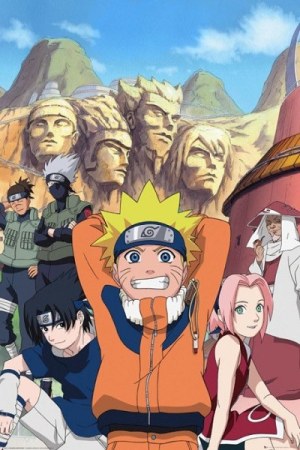
Viz Licenses Naruto in 2002, the Anime Doesn't Air in the US Until 2005

2002 Manga License · January 2003 Magazine Debut · September 2005 Toonami Premiere

Viz Media's manga license for Naruto was part of the same August 2002 announcement that brought seven Shonen Jump titles into the magazine's US launch lineup, with Naruto chapters actually running in English starting around January 2003. The anime took far longer to reach American television. It did not premiere on Cartoon Network's Toonami until September 10, 2005, nearly three years after the manga license and roughly three years after the anime had already been airing in Japan since October 2002. That gap between owning a license and actually delivering a legal version is the same pattern that shows up across this site's other fansub-scanlation pages, and it is the real explanation for why fansub demand for Naruto never had a reason to slow down.

Toonami's Naruto Ran Censored, DVD Sets Ran Uncut

Broadcast Edits vs. Home Video Restoration
Naruto's 2005 Toonami broadcast trimmed and altered violent content for its timeslot, consistent with standard broadcast-television editing practice of the era. Viz released uncut, bilingual DVD box sets alongside the edited broadcast version, giving fans who wanted the unedited cut a legal option, while the fansub community continued distributing releases sourced from the original, unedited Japanese broadcast.