Classic Arc
46 eps
12 canon 6 mixed 28 filler 📷 46
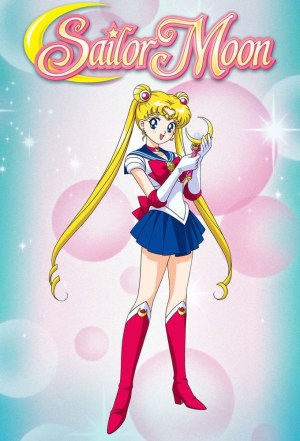
Usagi Tsukino starts the day as a fourteen-year-old who is late for school, bad at tests, and much more interested in snacks than saving anyone. After she rescues a strange black cat named Luna, Naru's mother is replaced by the youma Morga and her jewelry sale turns half the neighborhood into energy-drained puppets. Luna gives Usagi the brooch that transforms her into Sailor Moon, and despite spending most of her first battle terrified and crying, Usagi defeats Morga with a little encouragement from the mysterious Tuxedo Mask.
Umino develops a crush on Usagi and winds up at a new fortune-telling house that promises teenagers exactly the answers they want to hear. The place is one of Jadeite's traps, and the students who visit come back aggressive, reckless, and completely under the fortune teller's influence. Usagi follows the trail inside with Luna, transforms when the victims turn on her, and destroys the youma Balm before the entire school can be pulled into the same spell.
A late-night radio program called Line to the Heart becomes an overnight obsession after it starts reading love letters on the air and sending brooches to the girls who write in. Naru and Ms. Haruna both receive one and collapse into an unnatural sleep as Jadeite quietly drains their energy through the prizes. Usagi uses Luna's new Transformation Pen to sneak into the radio station as an adult, finds Jadeite and the youma Furau behind the broadcast, and shuts the whole operation down.
Usagi panics over gaining weight just as a new health club starts promising miraculous results to anyone willing to work hard enough. Ms. Haruna's sudden transformation convinces Usagi to sign up, but Luna discovers that Jadeite's club is exhausting its customers and siphoning away their energy rather than making them healthy. Sailor Moon finds the victims trapped below the gym, frees the bodybuilders Jadeite has been controlling, and wrecks another scheme built around telling people exactly what they are insecure enough to believe.
Usagi tries to get Luna accepted as a family pet, which is difficult enough before Shingo discovers a cute new creature called a Chanela at a local pet shop. The scented animals become an obsession for everyone who owns one, and Shingo quickly stops caring about his family, friends, or anything else. Usagi follows him back to the shop, discovers the Chanelas are another Dark Kingdom energy trap, and saves her brother before convincing him that maybe Luna is not so bad after all.
Jadeite tries using cassette tapes carrying energy-draining subliminal waves, but one of the tapes accidentally ends up with jazz pianist Yusuke Amade instead of its intended target. Usagi meets Yusuke while disguised as an adult and gets pulled into his unresolved feelings for Akiko, the woman whose melody inspired his music. The youma Kyurene eventually recovers the tape and attacks him, sending Usagi to the radio station for another fight before she nudges Yusuke toward being honest about the person he actually loves.
Usagi gets swept up in a city-wide talent craze when a television competition promises ordinary girls a shot at becoming stars. Jadeite has replaced one of the show's celebrities with the youma Derella, turning the auditions into a giant energy harvest while contestants abandon everything else to practice. Usagi wants the spotlight as badly as anyone until Luna drags her back to the real problem, and Sailor Moon survives being frozen solid long enough for Tuxedo Mask to give her the opening she needs.
Usagi befriends Ami Mizuno, the brilliant and painfully isolated top student everyone else assumes must be stuck-up because nobody can imagine grades like hers coming naturally. Luna initially suspects Ami herself may be connected to the Dark Kingdom when a suspicious cram-school disk carries an unnatural energy signature. The real enemy is the school: its program is brainwashing students for Jadeite, and when Ami is attacked she awakens as Sailor Mercury, giving Usagi her first true partner.
A bargain clock shop becomes the newest Dark Kingdom trap, with its clocks making everyone around them increasingly frantic and obsessed with getting things done faster. Usagi's mother brings one home, and Usagi is caught in the same spell until Ami and Luna trace the problem back to the shop. Sailor Moon and Sailor Mercury take on the time-manipulating youma Ramua together, and Tuxedo Mask's rose breaks the distortion long enough for them to finish the fight.
Girls begin disappearing on buses near Hikawa Shrine, and suspicion falls on Rei Hino, the sharp-tongued shrine maiden whose psychic ability already makes people uneasy around her. Usagi meets Rei while investigating and immediately discovers that the two of them can annoy each other on contact. Jadeite is the one behind the disappearances, sending his victims into another dimension, and when Rei is dragged in as well she awakens as Sailor Mars and helps Usagi and Ami bring everyone home.
Luna barely gets through the first serious meeting of the three Sailor Guardians before Usagi and Rei turn it into an argument over who should actually be in charge. Their bickering follows them to Dreamland, a new amusement park where visitors have been disappearing after accepting enchanted apples from the park's Princess of Dreams. Jadeite and the youma Murido are harvesting the guests' energy, and Usagi, Ami, and Rei have to work together despite the fact that Usagi and Rei still cannot go five minutes without fighting.
Rei wins two tickets for a romantic luxury cruise and takes Ami because neither of them has a boyfriend, leaving an offended Usagi to sneak aboard disguised as a photographer. The entire cruise is actually an energy trap created by Jadeite and the youma Thetis, who has packed the ship with couples to harvest the emotion of people in love. Once the illusion falls apart, the girls transform and stop the ship before Jadeite can turn one ridiculous night of jealousy into his biggest energy haul yet.
Queen Beryl gives Jadeite one last chance to destroy the Sailor Guardians, so he challenges them openly and draws Usagi, Ami, and Rei to an airport filled with sleeping police and clay soldiers. Jadeite nearly gets what he wants when he knocks Tuxedo Mask into the water and tries to turn the girls' panic against them, but by now the three Guardians are much harder to isolate than they were when Usagi started alone. They survive his trap and defeat him, and Beryl answers his final failure by sealing Jadeite away in eternal sleep.
Nephrite replaces Jadeite and immediately changes the Dark Kingdom's strategy, choosing one person at the height of their passion rather than draining crowds a little at a time. His first target is Naru's childhood friend Rui, a gifted tennis player whose racket becomes the focus of a youma and drives her talent into violent obsession. Disguised as wealthy businessman Masato Sanjouin, Nephrite enters Usagi and Naru's lives without either girl realizing just how close the enemy has gotten.
Rei decides to ask Mamoru out after discovering that the annoyingly handsome college student Usagi keeps running into is actually named Mamoru Chiba. Their date takes them to a park scheduled for redevelopment, where the caretaker's desperation to protect the trees makes him the perfect target for Nephrite. Possessed animals begin attacking the construction workers, forcing Sailor Moon and Mars to stop the youma while Usagi spends almost as much energy being jealous of Rei as she does fighting.
Usagi, Rei, and their home-economics teacher all get caught up in a handmade wedding-dress contest after Nephrite plants a youma in a bolt of silk. The teacher's excitement about her own upcoming wedding is twisted into an obsession that begins draining her energy and eventually turns her against the contestants. Sailor Moon breaks the possession at the contest, saving her teacher and proving that Usagi's dream of being a bride is still much easier for her than actually sewing the dress.
A talented young photographer becomes Nephrite's next target and announces a huge modeling contest after a youma is planted in his camera. Usagi leaps at the chance to be photographed, only to discover that the camera is literally trapping its subjects inside pictures. Sailor Moon escapes the same fate by turning the weapon back on itself with a mirror, freeing the captured models and ending Nephrite's latest attempt to turn somebody's ambition into an energy source.
Shingo has a crush on his classmate Mika, a gifted dollmaker, but embarrasses her by laughing at the doll she made especially for him. Nephrite senses how much emotion Mika pours into her work and targets one of her dolls, turning her hurt into the energy his youma needs. Usagi helps Shingo understand just how badly he handled the situation, then Sailor Moon defeats the monster and gives her little brother the chance to apologize properly.
Love letters supposedly written by Tuxedo Mask begin appearing all over town, and Usagi is far too excited to notice that every girl receiving one is being directed to the same place. Nephrite is using Sailor Moon's obvious crush to draw her out, but Naru follows the invitation because she has fallen for his Masato Sanjouin identity. Nephrite briefly mistakes Naru for Sailor Moon and drains her energy before the real Sailor Moon intervenes, leaving Naru even more emotionally tangled with a man Usagi knows is dangerous.
Usagi, Ami, and Rei head to the beach expecting boys, swimming, and a normal summer trip and instead wind up at a hotel run by a family obsessed with old monster movies. A frightened little girl staying there has genuine psychic power, and her father keeps hypnotizing her in an attempt to force that ability to grow. He succeeds too well: the ghostly presence she manifests turns on him, leaving the Sailor Guardians to stop a supernatural disaster that, for once, has absolutely nothing to do with the Dark Kingdom.
Usagi and Rei are thrilled to visit an animation studio working on a Sailor V movie, but the people actually drawing it are under far more pressure than the girls imagined. Nephrite targets Hiromi, an animator whose rivalry with her friend Kazuko has turned the work they both love into something bitter and exhausting. A possessed drawing tool feeds that jealousy until the friendship starts breaking apart, and the Guardians have to stop the youma before Hiromi destroys both the film and the person who once shared her dream.
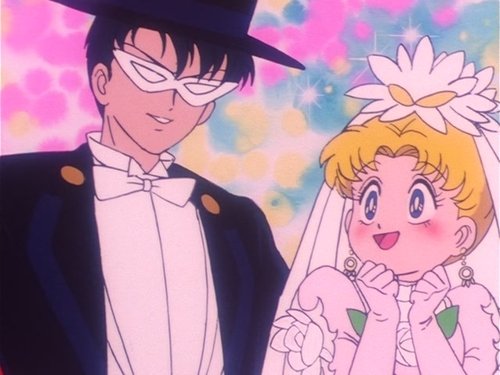
A foreign princess visiting Tokyo brings out both Luna's suspicion that she may be the missing Moon Princess and Nephrite's hope that her royal treasure could be the Silver Crystal. Usagi, Ami, and Rei infiltrate the formal ball, where Usagi gets very drunk on punch she does not realize contains alcohol and Mamoru begins connecting his strange dreams to Tuxedo Mask. Nephrite's attack fails, and the night ends with Tuxedo Mask kissing a half-conscious Usagi under the moonlight, which is considerably more romantic to Usagi than it is useful to Luna.
Nephrite creates the Black Crystal to locate the Silver Crystal, but its strongest reaction keeps leading him toward Naru instead. Naru refuses to believe Usagi's warning that Masato Sanjouin is using her and even steals a jewel from her mother's store when Nephrite convinces her it may be the crystal he needs. Nephrite finally realizes the Black Crystal is responding to Naru's feelings for him, not to the Silver Crystal, forcing him to confront an emotion he has spent the entire arc treating as nothing more than another source of energy.
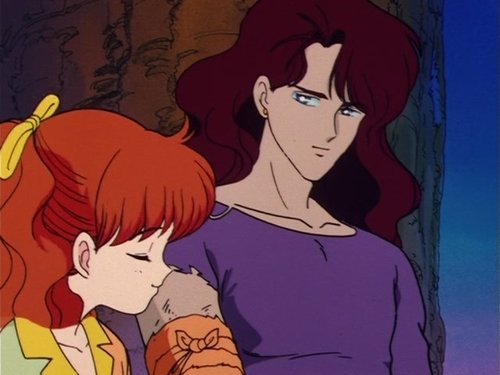
Nephrite decides Naru may know Sailor Moon's identity and uses her feelings one last time, only to follow her and witness Usagi transform. Before he can act on what he learned, Zoisite kidnaps Naru and demands the Black Crystal in exchange for her life. Nephrite chooses Naru over the Dark Kingdom, rescues her, and finally allows himself one quiet moment with the girl who believed there was something human in him; Zoisite's youma ambush them moments later, and Nephrite dies protecting Naru while Usagi, Ami, and Rei can do nothing but watch her lose him.
Queen Beryl gives Zoisite a new mission: find the seven Rainbow Crystals hidden inside ordinary people, each one sealing one of the Seven Great Monsters and together forming the Silver Crystal. At school, Usagi befriends transfer student Makoto Kino, a tall, strong girl everyone else is too intimidated to approach. Zoisite targets arcade champion Crane-Game Joe for his Rainbow Crystal, and when the monster inside him awakens Makoto reveals herself as Sailor Jupiter, joining the team while Sailor Moon gains the power to restore the transformed victims to human form.
Naru is still grieving Nephrite, so Usagi and Umino take her to Yokohama hoping a day away from everything will help her smile again. Zoisite attacks a kindly priest carrying another Rainbow Crystal and releases the monster hidden inside him, bringing the Dark Kingdom into what was supposed to be a quiet day with friends. Tuxedo Mask takes the crystal before Zoisite can escape with it, and Mamoru finally realizes that the missing pieces of his memory and the masked man he keeps becoming are the same person; afterward Usagi finds the star locket he drops.
Ami meets Ryo Urawa, the first student to beat her on an exam and one of the few people who seems comfortable talking to her without treating her like a walking report card. Ryo has another secret: he can see flashes of the future and already knows that a Rainbow Crystal is hidden inside him. Zoisite forces the crystal out and awakens the monster Bunbo, but Ami reaches Ryo through the transformation long enough for him to fight back and help Sailor Moon restore him.
Reclusive artist Yumemi Yumeno asks Usagi and Mamoru to model together for a romantic painting after seeing the two of them argue in public. Forced to sit still beside each other, Usagi and Mamoru spend enough time talking for the hostility between them to soften into something neither is quite ready to name. Zoisite targets Yumemi for another Rainbow Crystal and turns her into a monster, while Sailor Moon discovers that the star locket she found belongs to Tuxedo Mask.
Makoto falls for Motoki for exactly the same reason she falls for half the boys she meets: he reminds her of the senpai who broke her heart. Usagi refuses to back off just because her friend likes him too, only for both girls to discover that Motoki already has a girlfriend, Reika. Reika turns out to be another Rainbow Crystal carrier, putting the girls' silly rivalry on hold when Zoisite and Kunzite attack and Tuxedo Mask enters the fight for the crystal.
Zoisite discovers that the next Rainbow Crystal is inside Rei's grandfather and begins aggravating its power before he is ready to transform. The normally eccentric old man becomes completely uncontrollable just as a wandering young man named Y?ichir? arrives at Hikawa Shrine, falls almost instantly for Rei, and asks to train there. When the monster inside Grandpa finally awakens, Rei has to fight someone she loves while Zoisite gets away with the crystal.
Luna's dignity takes a serious hit when a huge neighborhood cat named Rhett Butler decides he is in love with her and starts following her everywhere. The joke becomes Dark Kingdom business when both sides detect the final Rainbow Crystal near Rhett's owner and assume the little girl is carrying it. The crystal is actually inside Rhett himself, and after Zoisite awakens the monster hidden in him, Tuxedo Mask manages to escape with the last crystal.
Luna finally tells the girls that she and Artemis come from the Moon and that finding the missing princess has been their real mission from the beginning. Meanwhile Umino decides the best way to win Naru's heart is to imitate Tuxedo Mask, which goes about as gracefully as expected but becomes unexpectedly sincere when Zoisite attacks. When Naru is threatened, Usagi gives up the Rainbow Crystal Ami recovered rather than let her friend die, and Umino's hopeless attempt to protect Naru is enough to make her see him differently.
Zoisite disguises himself as Sailor Moon to lure Tuxedo Mask into a trap and force the remaining Rainbow Crystals into the open. Mamoru is wounded during the ambush and his identity is exposed, while Kunzite moves in to finish the Sailor Guardians before they can help him. The rescue comes from the person everyone has been looking for almost from the beginning: Sailor Venus, the real Sailor V, who arrives with Artemis and finally brings all five Guardians together.
Minako introduces herself properly to the group, but Zoisite wastes no time challenging Mamoru for the Rainbow Crystals and tricks him into a showdown at Starlight Tower. Usagi follows, and the two finally discover each other's secret identities when they are forced to transform in front of one another. Zoisite mortally wounds Mamoru, and Usagi's grief draws the seven Rainbow Crystals together into the Silver Crystal, awakening her as Princess Serenity and revealing the Moon Princess was Usagi all along.
The Silver Crystal restores the memories Usagi and Mamoru carried from their former lives as Princess Serenity of the Moon Kingdom and Prince Endymion of Earth. Before Usagi can save the wounded Mamoru, the Dark Kingdom takes him away, leaving her with the truth about the love she had already been falling into again. Queen Beryl kills Zoisite for disobeying her order not to harm Endymion, and Luna and Artemis fill in the rest of the tragedy that destroyed the Silver Millennium.
Usagi is barely functioning after losing Mamoru, so Minako takes her out for a haircut and tries to give the new princess one normal afternoon. Kunzite's youma attacks the salon after mistaking Minako for Sailor Moon, forcing the girls back into the fight before Usagi has had any time to recover. Then Mamoru appears alive, dressed as Tuxedo Mask but calling himself Endymion and fighting for the Dark Kingdom, turning Usagi's relief into something much worse.
After learning that she really is Princess Serenity, Usagi decides she should probably start acting like one and enrolls in a ridiculous finishing course teaching everything from manners to dancing. The training is exactly as hopeless as Luna expects, but it gives Usagi something harmless to focus on while Mamoru remains under Beryl's control. Kunzite and Endymion, meanwhile, start openly competing over how to deal with Sailor Moon, one wanting the Silver Crystal and the other determined to confront her directly.
Y?ichir? invites the girls to a ski resort, where a local Moon Princess contest immediately turns Usagi and Rei's usual rivalry into a full competition. Kunzite uses the event to set another trap, and the possessed Endymion appears as an enemy instead of the ally Usagi still desperately wants him to be. When Usagi and Rei are isolated in the snow, all the arguing falls away and the two remind each other that the friendship underneath it has always been real.
Kunzite learns that Princess Serenity was known as a graceful ice skater and turns a skating rink into a trap designed to expose Sailor Moon. Usagi is predictably terrible on the ice, while Makoto turns out to be astonishingly good and ends up paired with one of the rink's star skaters. The skaters are transformed into monsters, and even brainwashed Endymion refuses to let Kunzite endanger innocent people just to get at Sailor Moon, giving the Guardians enough room to save them.
Usagi goes with her family to a hot-spring resort built beside a lake with an old legend about a monster sealed beneath the water. Endymion releases what he believes is another weapon for the Dark Kingdom, only to discover that the creature is not evil at all and has been protecting its mate. With Usagi's family caught in the middle, the battle becomes less about defeating a monster than undoing another mess created by the Dark Kingdom's willingness to treat anything powerful as something to control.
Queen Beryl orders Endymion to find the people who once carried the Rainbow Crystals so the Seven Great Monsters can be awakened again and combined into a single weapon. That puts Ryo Urawa back in danger, and Ami refuses to let the boy who cared about her be used a second time. While the other Guardians protect the remaining crystal holders, Ami confronts Endymion herself and Usagi tries once again to break through the brainwashing instead of simply treating Mamoru as an enemy.
Minako is shaken when Katarina, the Interpol officer who once worked beside Sailor V in London, suddenly appears in Tokyo. She finally tells Usagi about her life before joining the other Guardians: Katarina was like an older sister to her, while Minako quietly fell in love with a young man named Alan and later discovered that Alan and Katarina loved each other. Minako let them believe she had died and returned to Japan rather than stand between them, but Kunzite turns Katarina into a monster and forces Minako to face a piece of her old life she thought she had already buried.
The Guardians stage an ugly public breakup, with Rei going so far as to attack Sailor Moon and demand the Silver Crystal, hoping Kunzite will believe Usagi has been abandoned by her own team. The performance works almost too well, drawing a suspicious reporter close and eventually convincing the Dark Kingdom that Sailor Moon might be willing to defect in exchange for Endymion. Usagi walks into the trap alone, but when Kunzite moves to kill her the others abandon the act and reveal that the entire fight was meant to get them closer to the Dark Kingdom.
With the entrance to the Dark Kingdom finally located, the five Guardians enter the caverns and run straight into Kunzite. His attack throws them into the ruins of the Moon Kingdom instead, where the lingering image of Queen Serenity shows them the final days of the Silver Millennium and the war that separated Serenity and Endymion. Armed with the full truth of their past, they return to the present and combine their power behind Sailor Moon, who turns Kunzite's own attack back on him and kills the last of Beryl's Four Heavenly Kings.
The Guardians travel to D-Point knowing that this time they are not walking into another weekly Dark Kingdom trap but directly toward Queen Beryl herself. The DD Girls ambush them before they can reach the fortress, and one by one Makoto, Ami, Minako, and Rei stay behind to destroy the monsters threatening Usagi. Each of them dies buying Sailor Moon another few steps forward, leaving Usagi alone in the snow with the Silver Crystal and no choice but to keep walking after the friends who just gave everything to get her there.
Usagi reaches Queen Beryl alone and finds Mamoru still under the Dark Kingdom's control. Her attacks cannot restore him, but the star locket finally reaches the part of Mamoru that remembers her; he turns on Beryl and is mortally wounded protecting Usagi. Metalia possesses Beryl for the final battle, and Usagi becomes Princess Serenity, drawing on the Silver Crystal and the spirits of Ami, Rei, Makoto, and Minako to destroy them both. Usagi's last wish is not for a kingdom or a crown but for everyone to have their ordinary lives back, and the Silver Crystal answers by reincarnating the girls and Mamoru with their memories of the battle gone.
Makaiju Arc
13 eps
13 filler 📷 13
Months after the Dark Kingdom falls, Usagi and the others are living ordinary lives with no memory of being Sailor Guardians. That peace ends when two aliens, Ail and An, arrive on Earth disguised as siblings Seijuro and Natsumi Ginga and begin feeding human energy to the dying Makaiju. Luna tries to protect Usagi without dragging her back into the life she sacrificed everything to escape, but when a Cardian attacks Naru she has no choice but to restore Usagi's memories and awaken Sailor Moon again.
Usagi is back to being Sailor Moon, but Ami, Rei, Makoto, and Minako still remember none of their old lives together. The four girls happen to reunite at a movie audition just as Ail and An send another Cardian to drain the contestants' energy. Sailor Moon cannot handle the monster alone, and Luna finally restores the others' memories and powers, bringing the five Guardians back together even though it means giving up the normal lives they earned at D-Point.
Usagi tries to pick up where she left off with Mamoru and discovers the cruelest part of everyone's restored memories: Mamoru still does not remember loving her at all. Meanwhile Makoto's old friend Shinozaki is injured protecting her from a Cardian attack, leaving Makoto weakened after donating blood to him. Just when the Guardians are in trouble, a mysterious man in white appears with roses and speeches suspiciously familiar to anyone who remembers Tuxedo Mask, introducing himself as the Moonlight Knight.
Usagi joins Mamoru, Shingo, and her father at a virtual-reality arcade and spends most of the day trying to make Mamoru remember a romance he genuinely cannot recall. Ail and An turn the arcade into another energy harvest, but Sailor Moon's tiara suddenly fails in the middle of the fight and her old attack will not work at all. The Moonlight Knight helps the Guardians survive, but Usagi is left shaken by the realization that even the powers she regained may not have come back unchanged.
At a cherry-blossom viewing, another Cardian attacks and Sailor Moon's failing powers finally give out completely when her transformation brooch is shattered. Queen Serenity appears to Usagi and fuses the Silver Crystal into the broken brooch, creating the Crystal Star and restoring her ability to transform. Usagi returns to battle with the Cutie Moon Rod and Moon Princess Halation, giving Sailor Moon the new power she needs for enemies her old tiara can no longer handle.
Minako befriends a little boy who idolizes Sailor Moon and keeps trying to prove that he is brave enough to protect people himself. Ail and An target his kindergarten for energy, turning what should have been a harmless school outing into Minako's chance to step forward without Usagi carrying the whole fight. Sailor Venus protects the children and awakens Crescent Beam Shower, giving the boy a much better example of courage than throwing himself at danger alone.
A Cardian attack at a nursery leaves Usagi and Mamoru unexpectedly responsible for a baby together, which would be romantic under almost any circumstances except that Mamoru still remembers none of their relationship. Usagi swings between enjoying the accidental family scene and getting frustrated that she is the only one who knows what the two of them once meant to each other. When the Cardian returns, Sailor Mercury develops Bubble Spray Freezing and helps the team stop the attack.
Rei throws herself into planning her school festival, writing and performing her own song while insisting she can handle nearly every part of the event herself. Ail and An show up in civilian form and get dragged into the festivities before their Cardian turns the festival into an energy raid. Sailor Mars answers with a new attack, Fire Soul Bird, and the episode lets Rei be something she rarely gets to be during a crisis: a normal teenage girl openly proud of something she created.
Makoto starts wondering whether Seijuro might secretly be the Moonlight Knight and, because this is Makoto, the investigation rapidly becomes another crush. She brings him homemade food and gives An every reason to be jealous, while neither girl realizes they are competing over someone who is literally feeding on human energy to survive. A Cardian attack draws out both Sailor Jupiter and the real Moonlight Knight, disproving Makoto's theory while Jupiter gains the stronger Supreme Thunder Dragon.
An learns that Mamoru is appearing as the prince in a production of Snow White and rigs the casting so she can play the heroine and finally steal the kiss she has been chasing. Usagi ends up as the Evil Queen, which makes sitting through rehearsals almost physically painful for her, while Ail becomes just as jealous watching An pursue Mamoru. Ail's Cardian crashes the performance, and the Guardians somehow manage to fight the monster while keeping the audience convinced the chaos is still part of the show.
Usagi and An land in detention together and, for once, spend enough time alone to see something in each other beyond romantic competition. An's growing affection for Mamoru and her curiosity about ordinary human relationships are colliding with the fact that she and Ail still need energy to survive. When Ail sends a Cardian after Usagi and it stops obeying him, An is forced to confront the possibility that the Makaiju and their stolen-energy system are falling apart faster than either alien wants to admit.
The Makaiju begins dying despite all the energy Ail and An have fed it, while jealousy and mistrust turn the two aliens against each other. Usagi discovers the hidden tree inside their apartment building, and the Makaiju reacts violently, trapping Usagi and Mamoru as its roots tear through the structure. The Guardians cannot simply destroy it, and Ail and An finally have to face the obvious truth that something is wrong with the way they have been keeping the tree alive.
The Makaiju reveals that it once lived on the love shared by its people, not on energy stolen from unwilling victims, and that Ail and An forgot the very thing their world needed to survive. Sailor Moon purifies the tree with the Cutie Moon Rod, reducing it to a healthy sapling that the two aliens can raise properly somewhere new. The Moonlight Knight is revealed as the part of Mamoru's heart that remembered and protected Usagi even while his conscious memories were gone, and when the knight returns to him Mamoru finally remembers Usagi again.
Black Moon Arc
30 eps
15 canon 5 mixed 10 filler 📷 30
Usagi and Mamoru have barely gotten their relationship back when a pink-haired little girl drops out of the sky directly onto them, pulls a fake gun on Usagi, and demands the Silver Crystal. The child somehow hypnotizes the Tsukino family into believing she is Usagi's cousin and moves into their house under the nickname Chibiusa. At the same time, a new enemy called the Black Moon Clan arrives in the present looking for the same girl, making it obvious that Chibiusa's appearance is not the random disaster Usagi would like it to be.
Mamoru begins having terrifying visions in which staying with Usagi leads directly to her death, and he decides the only way to protect her is to end their relationship without telling her why. Usagi is completely blindsided and keeps trying to understand what she did wrong while Chibiusa quietly searches for the Silver Crystal she believes can save someone important to her. The Black Moon Clan begins targeting Crystal Points in Tokyo, turning Mamoru's private attempt to protect Usagi into the emotional backdrop for an entirely new war.
Ami receives an invitation to study medicine in Germany and decides to accept, convinced that becoming a doctor is the future she has always worked toward. Her friends try to support her even though none of them want her to go, but a Black Moon attack at the airport forces Ami to choose between the plane and the people fighting without her. She turns back, rejoins the Guardians, and awakens a stronger Mercury transformation and attack, deciding that her dream can wait until the friends who helped her find one are safe.
Rei's grandfather decides Hikawa Shrine needs more visitors and begins recruiting young women with an enthusiasm that embarrasses Rei almost beyond recovery. Koan of the Spectre Sisters targets the shrine because it sits on one of the Crystal Points the Black Moon Clan wants to corrupt. Rei protects her home and everyone in it, developing Mars Burning Mandala and proving that the shrine is considerably safer with her around than Grandpa's recruitment strategy suggests.
Chibiusa becomes more desperate to find the Silver Crystal and tries to steal Usagi's brooch, convinced the crystal is the only thing that can save her mother. Her fear and homesickness trigger a burst of power strong enough to distort gravity around the city and send a signal the Black Moon Clan can track. Usagi still does not know who Chibiusa really is, but it becomes impossible to pretend she is simply an irritating child who appeared from nowhere.
Makoto and Minako get into a ridiculous argument over romance that keeps escalating until the two friends are barely speaking to each other. Calaveras and Petz open a charm shop at another Crystal Point and are more than happy to exploit the tension between them. When the attack becomes real, Makoto and Minako drop the argument immediately and fight side by side, remembering that whatever they disagree about, neither of them is going to let the other stand alone.
Chibiusa's school assignment requires her to make curry, and Usagi decides this is her chance to prove she can be the responsible older-sister figure nobody has ever accused her of being. Mamoru gets pulled into the shopping trip, which only makes Usagi's breakup pain harder to hide while Chibiusa enjoys having both of them around. Petz and Calaveras attack the supermarket at another Crystal Point, turning Usagi's very domestic attempt to care for Chibiusa into another reminder that the child is being actively hunted.
The girls take Chibiusa on a seaside vacation and finally get an episode where the Black Moon Clan is not waiting behind the nearest vending machine. Chibiusa wanders off and befriends a baby plesiosaur living near the island, only for a volcanic eruption to put both the creature and its mother in danger. The Guardians spend their supposed day off rescuing Chibiusa and the animals, giving the child one small adventure that is not about the future, the Silver Crystal, or somebody trying to capture her.
Feeling unwanted in the present, Chibiusa tries to return to the future on her own and is ambushed by Koan and Berthier before escaping back to Usagi and the others. Rubeus then brings all four Spectre Sisters into the fight, turning the hunt for one little girl into a full confrontation with Sailor Moon, Mercury, Mars, Jupiter, and Venus. The Guardians finally understand that Chibiusa is not simply causing their problems; she is terrified, stranded, and being hunted by enemies powerful enough to send an entire team after her.
Mamoru is still keeping Usagi at a distance because of the nightmares warning him that loving her will lead to disaster, even though neither of them has stopped caring. A Black Moon attack puts Sailor Moon into an enchanted sleep where she dreams of Mamoru, and his fear of losing her finally overwhelms the resolve behind the breakup. Tuxedo Mask rushes to her side and wakes her with a kiss, but Mamoru still cannot bring himself to explain the visions or end the separation.
Koan targets Chibiusa at Hikawa Shrine while still desperately trying to win Rubeus' affection, convinced that success will finally make him love her. Rubeus responds to her failure by treating her as completely disposable, leaving Koan devastated and ready to destroy herself along with everyone around her. Rei and Y?ichir? show her a kind of loyalty she never received from the Black Moon Clan, and Sailor Moon purifies Koan instead of killing her, giving the first Spectre Sister a chance to choose an ordinary life.
Berthier challenges Ami to a public chess match, using the game to prove that intelligence and control matter more than the friendships Sailor Mercury keeps defending. Ami sees through the trap but refuses to walk away when Berthier threatens the people around her, turning the match into a direct confrontation between two girls who understand loneliness better than either wants to admit. When Rubeus abandons Berthier after her defeat, Koan reaches out to her sister and Sailor Moon purifies her as well.
Rubeus arms Petz and Calaveras with overwhelming power and sends them after the Guardians, caring far more about eliminating Sailor Moon than whether the last two Spectre Sisters survive. Chibiusa accidentally witnesses Usagi and the others transform and finally learns that the girls protecting her are the Sailor Guardians she has been searching around without realizing it. Koan and Berthier refuse to let their sisters die for Rubeus, and Sailor Moon purifies all four women, breaking the Spectre Sisters away from the Black Moon Clan for good.
Chibiusa is shaken by discovering that Usagi is Sailor Moon and steals the Silver Crystal, still convinced that taking it back to the future is the only way to save her mother. Esmeraude arrives to warn Rubeus that his failures have made him expendable, pushing him into one last attempt to capture Chibiusa and destroy the Guardians. Without the Silver Crystal in Usagi's hands, Rubeus succeeds in abducting Mercury, Mars, Jupiter, and Venus aboard his hidden spaceship.
Usagi and Chibiusa enter Rubeus' spaceship together to rescue the four captured Guardians, despite Chibiusa's guilt over stealing the Silver Crystal and leaving everyone vulnerable. Rubeus uses the ship's control over gravity to keep Sailor Moon off balance, but Chibiusa damages the crystal powering the vessel and gives Usagi the opening she needs. The Guardians escape as the ship begins exploding, while Esmeraude deliberately abandons Rubeus to die in the wreckage.
Chibiusa suddenly becomes dangerously ill, and Luna-P leads Usagi and the others into contact with the mysterious woman Chibiusa has always called Puu. She is Sailor Pluto, guardian of the Door of Space and Time, and she brings the Guardians into Chibiusa's dreams so they can fight the darkness preying on her there. Pluto's appearance finally confirms that Chibiusa's stories about the future are real and that reaching Crystal Tokyo means passing through a place only one Guardian is allowed to watch.
With Rubeus gone, Esmeraude takes command of the Black Moon operation in the present and begins planting Dark Power wedges at points across Tokyo. Her first new target is a popular pastry shop where Usagi, Chibiusa, and the others have gathered, turning an ordinary afternoon into the opening move of a much larger plan. The Guardians stop the Droid, but unlike Rubeus' attacks, Esmeraude's operation is meant to poison the city itself and build a path for the Black Moon Clan's power.
Usagi joins a craft class to make Mamoru a promise bracelet and gets caught in another of Esmeraude's Dark Power attacks. During the fight she experiences the same nightmare Mamoru has been hiding from her, finally forcing him to admit that he ended their relationship because he believed staying together would kill her. Usagi refuses to accept a future dictated by fear, and Mamoru decides the same thing: whatever the dreams mean, they would rather face it together than spend their lives apart.
A strange virus leaves Usagi, Ami, Rei, and Makoto bedridden, giving Minako the opportunity to become everyone's nurse whether any of them want one or not. Her cooking, medicine, and general bedside manner are catastrophes, but her determination to take care of her friends is completely sincere. When Minako discovers that Esmeraude deliberately caused the illness to weaken the Guardians, Sailor Venus gets to be the healthy one for once and takes the fight directly to the Droid responsible.
After one too many arguments with Luna, Artemis storms off and winds up at an animal shelter where the animals have started behaving strangely. The shelter is sitting on another point Esmeraude wants to corrupt, and her Droid turns the animals against the people trying to care for them. Artemis may spend most of his time as the less respected talking cat, but he refuses to abandon the animals once he realizes what is happening and helps Minako and the others shut the operation down.
Esmeraude targets Ami with an illusion designed around the fear she almost never admits out loud: that her friends only keep her around because she is useful and would be happier without her. Ami is isolated inside a false world where every insecurity about being quiet, brilliant, and different is turned against her. She breaks the illusion not by proving she can handle everything alone, but by trusting that the friendship she found as Sailor Mercury is real.
Esmeraude's plan reaches Chibiusa's school, where Chiral and Achiral use Dark Power to turn her classmates against her and make the child believe she is unwanted everywhere she goes. Usagi and the others save Momoko and the students, but the attack forces Chibiusa to stop running from the future she left behind. She decides to return to Crystal Tokyo and face whatever happened there, asking the Sailor Guardians to come with her.
Sailor Pluto opens the Door of Space and Time and leads Chibiusa, Usagi, Mamoru, and the Guardians toward the thirtieth century. Esmeraude sets a trap inside the Space-Time Corridor and sends the Droid Ryuakusu to separate Sailor Moon from the others before they can reach the future. The five Guardians combine their power to defeat the attack, and the group finally passes through the gate into Chibiusa's time.
Crystal Tokyo is revealed as a ruined city frozen beneath the Black Crystal's attack, and the Guardians meet King Endymion, Mamoru's future self. He confirms that Chibiusa is the future daughter of Usagi and Mamoru and explains how the Black Moon Clan's attack left Neo-Queen Serenity sealed inside crystal. Prince Demande then abducts Sailor Moon, obsessed with the resemblance between Usagi and the future queen he has spent years hating and desiring.
Wiseman isolates Chibiusa and twists every painful memory she carries into proof that her parents and friends never truly loved her. At the same time, Esmeraude asks Wiseman to make her Demande's queen and is rewarded with a crown that transforms her into a dragon. The Guardians destroy the dragon and Esmeraude dies, but the victory hides Wiseman's real success: Chibiusa has vanished into his control.
Wiseman continues reshaping Chibiusa's memories until the lonely child accepts his version of her life, then ages her into Black Lady and turns her enormous dormant power against the people who came to save her. Black Lady returns to twentieth-century Tokyo as Wiseman's weapon and begins opening the Dark Gate there. Usagi recognizes Chibiusa beneath the transformation immediately, but reaching her is much harder when every memory of love has been rewritten as rejection.
Saphir discovers that Wiseman intends to destroy far more than Crystal Tokyo and finally understands that the Black Moon Clan has been manipulated from the beginning. He escapes to the present and is sheltered by the reformed Spectre Sisters, who briefly give him the chance to remember the family he had before ambition and Wiseman tore it apart. Before Saphir can reach Demande with the truth, Wiseman kills him in front of his brother, stripping away the last reason Demande has to trust the man guiding him.
The Guardians enter the growing Black Crystal to stop Wiseman, but Demande abducts Sailor Moon and tries to force the past and future Silver Crystals together even though their collision could destroy everything. Usagi gets through to him long enough for Demande to recognize how completely Wiseman has used his hatred. Demande turns against Wiseman and dies protecting Sailor Moon from the attack meant for her, leaving Usagi to continue toward Black Lady and the real enemy behind the war.
Black Lady blocks the way to the Dark Gate and attacks the people trying to remind her that she was loved, forcing Usagi to become Neo-Queen Serenity and reach for Chibiusa through the memories Wiseman corrupted. Chibiusa finally returns to herself, and her tears awaken the future Silver Crystal she had unknowingly carried within her. Wiseman reveals himself as Death Phantom, but the two Silver Crystals answer together as Usagi and Chibiusa destroy him and end the Black Moon threat.
With Chibiusa safely returned to the restored Crystal Tokyo, the second season closes by looking back at how far Usagi and the other Guardians have come since Luna first found her. The girls argue over who should be the star of the story while the episode recaps the Dark Kingdom and Black Moon battles and quietly points toward another enemy waiting ahead. It is less an epilogue to the Black Moon Clan than a curtain call for the first two years of Sailor Moon before the series changes direction again.
Death Busters Arc
31 eps
13 canon 5 mixed 13 filler 📷 31
Rei begins having terrifying visions of the world collapsing into darkness, and the feeling that something far worse than the Dark Kingdom or Black Moon is coming refuses to leave her alone. A Daimon attacks at Hikawa Shrine and rips out Rei's Pure Heart Crystal, introducing a new enemy searching ordinary people for three hidden Talismans. Sailor Moon cannot defeat the creature with her old power, and two unknown Sailor Guardians appear long enough to finish the job before disappearing without explaining who they are.
Usagi's old transformation brooch and attacks are no longer strong enough against the Daimons, leaving her badly outmatched when another Pure Heart is targeted. Mamoru throws himself into the fight beside her, and the bond between them awakens a new Cosmic Heart Compact and the Spiral Heart Moon Rod. Sailor Moon transforms again with stronger power and destroys the Daimon with Moon Spiral Heart Attack, officially beginning a very different kind of battle.
Usagi and Minako meet Haruka Tenoh at the arcade and immediately assume the confident racing enthusiast is a very handsome boy, which naturally turns into an afternoon of flirting and embarrassment. Haruka's companion Michiru Kaiou is just as striking, and the pair seem to know much more about the recent Daimon attacks than they admit. When another Pure Heart is targeted, Sailor Uranus and Sailor Neptune appear again, making it clear that Haruka and Michiru's arrival in Usagi's life is no coincidence.
Usagi becomes convinced that she is nowhere near elegant or accomplished enough for Mamoru after seeing Michiru play violin, paint, and carry herself like the grown-up Usagi wishes she could instantly become. Michiru is kind enough to encourage her instead of laughing, but their outing becomes another Death Busters attack when a musician's Pure Heart is stolen. Uranus and Neptune reveal that they are searching the Pure Hearts for three Talismans whose appearance will create the Holy Grail, but they still refuse to work with Sailor Moon's team.
Unazuki tells Usagi that she is saving her first kiss for someone she truly loves, making her Pure Heart exactly the sort of thing the Death Busters are hunting. A Daimon steals the crystal and drops it during the escape, sending Sailor Moon, Tuxedo Mask, Uranus, and Neptune racing after the same heart for very different reasons. Usagi wants only to save her friend, while the Outer Guardians are prepared to take the crystal if it turns out to contain a Talisman.
Naru and Umino both think the other has become distant, only for Usagi to discover they have secretly entered the same couples' affection contest because each wants to prove how serious the relationship is. Haruka and Michiru enter too and make almost every event look effortless, while Umino turns embarrassment into sincerity badly enough to win Naru over all over again. The contest's giant heart is actually a Daimon trap, and Umino's Pure Heart becomes the prize when the Death Busters attack.
Makoto is fascinated by Haruka's strength and confidence and starts following her around, partly because Haruka represents the kind of physical power Makoto has always valued in herself. A Death Busters attack puts Makoto's Pure Heart in danger, but Uranus remains focused on whether the crystal contains a Talisman rather than on Makoto as a person. The coldness infuriates the Inner Guardians and makes the growing difference between Usagi's idea of protecting people and Uranus and Neptune's mission impossible to ignore.
Ami enters a swimming competition and finds herself matched against Michiru, whose effortless skill makes even Ami question whether hard work is enough to close every gap. The pool becomes the site of another Daimon attack, and Ami's Pure Heart is pulled directly into the conflict between the Inner and Outer Guardians. Sailor Mercury survives the trap with her friends beside her, while Michiru continues treating the Talisman search as a mission that may eventually require sacrifices Usagi's team refuses to make.
Haruka wins a motocross race and draws the attention of another racer whose passion makes him a likely Pure Heart target. Kaolinite turns the man's motorcycle into a Daimon and captures Sailor Neptune, then tries to use Michiru as leverage to keep Uranus from fighting back. Usagi refuses to accept either side treating people as expendable, frees Neptune, and fights beside Uranus long enough to save everyone even though the two teams still cannot agree on what their mission should cost.
Y?ichir? becomes convinced that Rei has fallen for someone else after seeing her with Haruka and leaves Hikawa Shrine rather than stay around and watch it happen. Rei is much less interested in romance than he imagines, but his stubborn loyalty still makes him the next person whose Pure Heart the Death Busters target. When the Daimon attacks, Rei and the others rescue him, and Y?ichir? returns to the shrine still hopelessly devoted to a girl who has never made his life easy.
Minako notices that everyone around her seems to be getting targeted for their Pure Hearts except her and reaches the wonderfully backward conclusion that maybe she is not pure-hearted enough. She starts doing increasingly ridiculous good deeds in public to prove otherwise, alarming her friends far more than impressing them. When the Death Busters finally do steal her Pure Heart, Minako is so delighted to have the evidence she wanted that she grabs the crystal herself and runs away with it before collapsing.
Usagi turns fifteen expecting Mamoru to know exactly what day it is and is crushed when he forgets her birthday entirely. He tries to recover with a pair of glass slippers, but Kaolinite has already chosen the gift as the next vessel for a Daimon and uses it to steal Usagi's Pure Heart. With Sailor Moon unable to transform and her life fading, Mamoru and the other Guardians are left trying to keep her alive while the Death Busters carry both her heart and transformation brooch away.
Usagi refuses to stay helpless while Kaolinite holds her Pure Heart and brooch, and the others trace the enemy to Tokyo Tower. Uranus and Neptune are drawn into the same fight because Usagi's crystal might be one of the Talismans they have been hunting, creating another standoff over whether a person's life comes before the mission. Usagi gets her heart and brooch back and transforms again, while Kaolinite falls from the tower after the battle and appears to be finally gone.
Chibiusa returns from the thirtieth century with a new mission from Neo-Queen Serenity: train in the past as a Sailor Guardian. Usagi is not prepared for her future daughter to come back wearing a sailor suit of her own, but Chibiusa proudly transforms into Sailor Chibi Moon and joins the team despite an attack that is much more dangerous than she expected. Her Pink Sugar Heart Attack is still unreliable, but Chibiusa has officially stopped being only the child everyone else protects.
Chibiusa discovers that becoming a Sailor Guardian does not automatically solve the much more ordinary problem of making friends in a century where she still feels out of place. She tries joining a tea ceremony and reaches out to girls her own age, only for another Daimon attack to turn the effort into her first real chance to protect people as Sailor Chibi Moon. The battle is messy, but Chibiusa comes away with something she wanted just as badly as a successful attack: friends who know her simply as Chibiusa.
Makoto begins worrying that strength has always been the one thing she could rely on and that even there Uranus has left her behind. She seeks out the intense training of a mountain monk named Kakusui, expecting discipline and isolation to somehow make her powerful enough to stand alone. Kakusui instead teaches her that strength does not mean refusing help, and when his Pure Heart is targeted Makoto wins by trusting the friends who came after her rather than trying to prove she never needed them.
Haruka remembers the life she had before becoming Sailor Uranus, when racing was the future she wanted and the coming destruction of the world was somebody else's problem. Michiru already knew that she was Sailor Neptune and that Haruka was destined to fight beside her, but she resisted forcing that fate onto someone she cared about. Haruka eventually awakened during a Daimon attack and chose the mission herself, beginning the partnership that now makes Uranus and Neptune look inseparable even when their choices frighten the other Guardians.
Chibiusa develops her first crush on Masanori, a boy in her art class, and immediately discovers the problem with first crushes when Masanori is much more interested in the talented and very adult Michiru. Chibiusa tries to compete anyway, while Michiru handles the situation with considerably more grace than anyone else involved. When Masanori's Pure Heart is targeted, Chibiusa gets to protect him as Sailor Chibi Moon, even if saving his life does not magically make him fall in love with her.
Usagi and the others are invited to an international party and suddenly discover that saving Tokyo repeatedly has done very little to prepare Usagi for formal dancing or speaking to foreign guests. Mamoru tries to teach her the waltz while Haruka and Michiru move through the room like they were born for it. Eudial targets another guest's Pure Heart, turning Usagi's attempt at one elegant evening into the usual battle before she can decide whether she has actually learned anything.
Minako becomes obsessed with the fact that no Daimon has targeted her recently and decides she needs to prove once again that her heart is pure, with predictably chaotic results. Eudial finally attacks and extracts Minako's Pure Heart, forcing both groups of Guardians into the same fight. Haruka and Michiru transform in front of Usagi and the others, and the Inner Guardians do the same in return, ending months of secrecy as everyone finally learns exactly who Sailor Uranus and Sailor Neptune are.
Now that Eudial knows Uranus and Neptune's identities, she lures them to the Marine Cathedral with proof that the Talismans they have been hunting are closer than either woman realized. Michiru walks knowingly into the trap to protect Haruka and has her Pure Heart torn out, revealing the Deep Aqua Mirror inside it. Haruka refuses to live at the cost of Michiru's sacrifice and gives up her own heart as well, revealing the Space Sword and leaving Usagi staring at the two women she spent the season arguing with apparently dead on the floor.
Usagi refuses to accept that Uranus and Neptune had to die for the mission and reaches for the Talismans rather than treating their sacrifice as the end of the story. Sailor Pluto arrives with the Garnet Orb, and the three Talismans resonate to create the Holy Grail, restoring Haruka and Michiru and giving Usagi the power to become Super Sailor Moon. Super Sailor Moon overwhelms Eudial, but the witch survives the battle only to die when Mimete sabotages her car, leaving the Death Busters with a new hunter ready to take her place.
With the Holy Grail finally in Sailor Moon's hands, the question shifts from finding the Talismans to what they were actually meant to awaken. During a movie shoot Chibiusa meets Hotaru Tomoe, a quiet, sickly girl who seems almost relieved that someone wants to be her friend without asking questions first. The Guardians stop Mimete's Daimon and Sailor Moon unveils Rainbow Moon Heartache, but the real discovery is Hotaru herself: the daughter of Professor Tomoe, living at the center of the Death Busters' world without Chibiusa realizing it.
Mimete becomes completely distracted from the Death Busters' mission when she enters an idol contest and decides she would rather become famous than keep collecting Pure Hearts. Minako enters the same competition for much more familiar reasons and ends up treating Mimete as just another rival without knowing who she really is. When neither gets the result she wants, Mimete drops the celebrity fantasy and goes back to stealing hearts, turning a ridiculous detour into another fight for the Guardians.
Hotaru wants to give a letter to athlete Shun Hayase because his determination helped her keep going through years when her own body would not cooperate. Mimete targets him for his Pure Heart, turning Hotaru's simple act of gratitude into another Death Busters attack. When the Daimon threatens everyone, Hotaru releases another frightening burst of power, and afterward she and Shun speak honestly about weakness, effort, and why needing encouragement does not make either of them lesser.
At a planetarium, another Daimon attack pushes Hotaru's hidden power into the open and the symbol of Saturn appears on her forehead. Haruka, Michiru, and Setsuna finally understand what she is: the reincarnation of Sailor Saturn, the Guardian whose awakening is tied to destruction and rebirth. The three Outer Guardians decide Hotaru must die before Saturn can bring ruin, but Usagi throws herself between them and the child, refusing to accept that killing someone who has done nothing wrong is the only way to save the world.
Tellu replaces Mimete with a much quieter plan, selling beautiful Tellun flowers that grow by feeding on the Pure Hearts of the people who buy them. Setsuna recognizes the plants as alien and warns the others before the flowers can spread through the city. The Guardians trace the operation back toward Mugen Academy, and when Tellu loses control of her own creation, the same plant she bred to consume other people's hearts turns on her and destroys her.
Ami infiltrates Mugen Academy through its entrance exams and meets Viluy, a brilliant student whose intelligence makes her an unusually personal opponent for Sailor Mercury. Viluy uses microscopic nanomachines to steal Pure Hearts from the students gathered for testing, confident that science gives her complete control over the battlefield. Ami refuses to reduce people to data the way Viluy does, and the plan collapses when Viluy's own machines turn against her, bringing another Witch 5 operation to an end.
Cyprine and Ptilol make the Witches 5's final stand at Mugen Academy while the Guardians close in on Professor Tomoe's laboratory. Elsewhere, the resurrected Kaolinite abducts Chibiusa and brings her to Hotaru, whose body is now being overtaken by the entity growing inside her. Mistress 9 awakens fully and tears Chibiusa's Pure Heart from her, using its enormous power to stabilize herself while Chibiusa collapses and Hotaru seems to disappear beneath the Messiah of Silence.
Mistress 9 pretends that Hotaru is still reachable and manipulates Sailor Moon into surrendering the Holy Grail, despite Uranus and Neptune warning her that the plea is a trap. The Grail gives Mistress 9 enough power to summon Pharaoh 90 toward Earth, but Hotaru's soul is not gone: her father's voice and the memory of Chibiusa let her fight back from inside. Hotaru destroys Mistress 9, awakens fully as Sailor Saturn, restores Chibiusa's Pure Heart, and goes to face Pharaoh 90 knowing her power may cost her life; Sailor Moon follows, and Hotaru is reborn afterward as an infant.
Chibiusa prepares to return to Crystal Tokyo now that the Death Busters are gone and Hotaru has been reborn, giving Usagi another goodbye she is not especially good at handling. A final surviving Daimon emerges from the ruins of Mugen Academy and steals a Pure Heart, dragging the girls into one last fight after everyone thought the season was finished. Chibiusa turns around and returns just in time to fight beside Usagi, and the two prove they no longer need the Holy Grail to know where their real strength comes from.
Dead Moon Circus Arc
46 eps
23 canon 23 filler 📷 46
Makoto Kino's ideological resolve is put to a severe trial as she stands alone to defend a local artist from the Amazon Trio's clinical cruelty. The episode highlights the physical grit of the character, utilizing her command of thunder to shatter the circus illusions.
The comedic side of the supernatural takes precedence as Usagi deploys a series of absurd stakeout maneuvers to monitor Mamoru. The script masterfully balances domestic civilian levity with the sudden kinetic deployment of a circus droid inside a public garden.
A masterpiece of surreal animation unrolls as a specialized circus asset constructs a literal forest of illusions to trap the vanguard. The original 1995 masters highlight the swirling, watercolor boundaries of the dream world, forcing the guardians to rely on raw sensory instinct to escape.
The narrative pivots to the rigid discipline of a traditional kendo martial artist whose focus makes her a high value target for the circus. The sequence highlights the intersection of mortal blade discipline and magical armor, rendered with the heavy shadows of the 1995 masters.
Minako Aino assumes absolute field command in a comedic masterclass of social misdirection, attempting to simultaneously date two separate undercover targets from the circus. The original broadcast captures a bright, high saturation palette as her plan collapses into a dual mecha fight.
The intense discipline of a classical ballet academy becomes the primary hunting ground for Fish Eye. The script utilizes the series' signature biological horror tropes to define the extraction of the Golden Mirror from the lead instructor, requiring a mid air aerial intervention.
Makoto Kino explores the personal philosophy of the heart inside a public dance hall. The original masters capture the high contrast lighting of the floor as the Amazon Trio launches a desperate, high volume strike to extract her mirror, forcing a bruising close quarters melee fight.
A solar eclipse covers Tokyo as the Dead Moon Circus appears in the city and Chibiusa dreams of a white Pegasus asking her for help. Tiger's Eye targets Unazuki and exposes her Dream Mirror, introducing the circus's search for the dream where Pegasus is hiding. When Sailor Moon and Chibi Moon are overwhelmed by the Lemures, Pegasus answers Chibiusa's call and upgrades them into their Super Sailor forms.
Chibiusa keeps her promise not to reveal what Pegasus told her, even while Usagi and the others start asking questions about the mysterious creature that saved them. Tiger's Eye targets Reika, who has returned from Africa and is struggling over whether pursuing her research means leaving Motoki again. Pegasus appears during the fight and confirms that his connection to Chibiusa is more than a one-time rescue.
Hawk's Eye chooses Ikuko as his next target, which gives Usagi and Chibiusa the uniquely unpleasant experience of watching someone literally pry into their mother's dream. Chibiusa calls Pegasus when the battle turns against them, and he gives Sailor Moon and Chibi Moon new transformation compacts and weapons. Sailor Moon debuts the Kaleido Moon Scope while Chibi Moon gains the Crystal Carillon used to summon Pegasus.
Hawk's Eye builds a cage he believes can trap Pegasus between dimensions, but the circus still needs someone whose Dream Mirror will force him to appear. Tiger's Eye chooses Naru, putting one of Usagi's oldest friends back in danger and giving the Guardians no choice but to call Pegasus. The elaborate trap fails spectacularly when Pegasus simply passes through it, leaving the Amazon Trio no closer to understanding where he actually lives.
Chibiusa starts worrying about her own existence when Usagi gets jealous of a woman spending time with Mamoru and the two seem headed for another fight. The woman is only a college friend, but Tiger's Eye targets her boyfriend and turns the situation into a real attack. Seeing Usagi and Mamoru choose each other again reassures Chibiusa that the future she came from is not as fragile as every argument makes it feel.
Luna and Minako become convinced that Artemis has been sneaking around with a nun, which becomes much harder to explain when a tiny gray kitten with a crescent moon appears and calls him her father. The kitten is Diana, Luna and Artemis's future daughter and Chibiusa's guardian cat from Crystal Tokyo. Tiger's Eye targets the nun before the misunderstanding is settled, giving Diana a very chaotic introduction to the family she technically has not been born into yet.
A popular novel about a moonlit Pegasus turns out to have been written by Makoto's old school friend, who built the story around a dream she never stopped believing in. The Dead Moon Circus immediately assumes that anyone dreaming about Pegasus might be the person they are hunting and sends the Amazon Trio after her. Makoto protects her friend while realizing that dreams do not have to become practical before they are worth holding onto.
Chibiusa grows closer to Pegasus but becomes frustrated that she still knows almost nothing about him, while her art teacher struggles with the feeling that she has lost the ability to understand children. Tiger's Eye targets the teacher's Dream Mirror, turning Chibiusa's school life into another search for Pegasus. Chibiusa's own compassion helps bridge the distance between teacher and students, and Pegasus quietly continues trusting her with more of himself.
Mamoru's apartment needs repairs, so he temporarily stays at Hikawa Shrine, which sends Usagi into such a jealousy spiral that she literally sneaks around dressed like a ninja to keep an eye on him and Rei. Tiger's Eye targets Rei and catches her before she can transform, forcing Usagi to stop worrying about imaginary romantic betrayal and deal with the actual danger. By the end, Mamoru is still Mamoru, Rei is still Rei, and Usagi has mostly succeeded in embarrassing herself.
Chibiusa befriends the illustrator of a beautiful fairy book and is thrilled to meet someone who treats imagination like something real rather than childish. Fish Eye disguises himself as a fairy to get close enough to inspect the artist's Dream Mirror. The deception works emotionally better than Fish Eye expects, and the episode turns into one of the first hints that the Amazon Trio's human disguises are beginning to give them feelings their mission never accounted for.
Ami sees Mamoru with an older woman and briefly suspects the same romantic disaster Usagi would have assumed immediately. The truth is quieter: the woman is restoring a classic car that belonged to her late husband because finishing it is part of keeping their shared dream alive. Hawk's Eye disguises himself as her husband to get close to the Dream Mirror, but the woman's real memories prove much harder to exploit than a costume and a familiar face.
A young swordswoman is determined to become the best in Japan but has turned that goal into an obsession with defeating her own mother. Tiger's Eye sees the ambition as another beautiful dream worth inspecting and attacks her. The Guardians help the girl understand that having a dream does not mean reducing her entire life to one person she has to surpass.
A fashion designer catches Minako and the others' attention with clothes that feel more personal than the endless trends Usagi chases. Fish Eye targets the designer's Dream Mirror and nearly destroys the very confidence that made the work unique. After the Guardians save him, the designer comes away with new inspiration instead of abandoning the dream the circus tried to turn against him.
Minako somehow manages to start dating both Tiger's Eye and Hawk's Eye without realizing either man is an enemy or that the two know exactly what she is doing. She schedules both dates for the same day and spends the episode trying to maintain an increasingly impossible romantic juggling act. When both men finally go after her Dream Mirror, Minako's secret identities become considerably less important than the fact that she has annoyed two Amazon Trio members at once.
Diana befriends a wealthy older woman living alone in a mansion after the man she loved left years earlier to pursue his dream of becoming a chef. Chibiusa initially sees only the loneliness, but the woman insists that loving someone sometimes means letting them chase the thing that matters to them. Hawk's Eye targets her Dream Mirror just as that old promise is finally coming back into her life.
The Dead Moon Circus creates a fake Pegasus and sends it rampaging through the city, hoping to break Chibiusa's faith in the real one. Mercury, Mars, Jupiter, and Venus are trapped behind a barrier while Chibiusa refuses to believe the creature she trusts would deliberately hurt people. Her faith reaches Pegasus, who gives the four Inner Guardians their Super Sailor transformations and stronger powers.
At the beach, Ami saves Shingo from drowning and immediately becomes the center of his very intense, very innocent crush. Tiger's Eye targets Ami before she can transform, leaving her unexpectedly vulnerable while Shingo tries to protect the girl he suddenly thinks is perfect. Ami handles both the monster and the crush with her usual gentleness, even if Shingo's feelings are going to take a little longer to settle down.
Usagi joins a ballet class and discovers that wanting to look graceful is much easier than actually learning ballet. Fish Eye enters the same class while targeting the instructor and proves infuriatingly good at everything Usagi is struggling to do. When the attack comes, Usagi ends up saving the production and eventually takes the role of the Moon, which is about the one part she was cosmically qualified to play.
Usagi and Chibiusa meet a visiting young duchess who slips away from her handlers because she wants one ordinary day wandering Juban instead of another schedule of ceremonies. The girls take her to a summer festival and give her the freedom she has been craving. Hawk's Eye targets the duchess's Dream Mirror, turning her brief escape from royal duty into a reminder that even princesses are allowed to have dreams that belong only to themselves.
Makoto becomes convinced she has finally met the person destiny meant for her, which is exactly the kind of certainty Tiger's Eye knows how to exploit. He targets her Dream Mirror and traps Sailor Moon and Chibi Moon, pushing Makoto past heartbreak and straight into fury. Super Sailor Jupiter breaks through with a stronger attack, reminding everyone that Makoto's romantic optimism survives mostly because she is strong enough to keep getting back up.
Zirconia warns the Amazon Trio that their borrowed human forms will disappear if they do not find Pegasus soon, turning the search from a mission into a matter of survival. Fish Eye targets Mamoru and unexpectedly falls for him, then ends up talking with Usagi and seeing the sincerity of the love he cannot have for himself. The experience finally pushes Fish Eye to question what the circus has made of the Trio, while Queen Nehelenia appears behind Zirconia as the real power driving the search.
Fish Eye discovers that Usagi is Sailor Moon and that Pegasus is hiding inside Chibiusa's dream, but by then he no longer wants to hand that secret over to Zirconia. The Trio turns against the circus and protects Usagi when a Lemures destroys her Dream Mirror, with Hawk's Eye dying first and Fish Eye and Tiger's Eye sacrificing the last of their power to restore her life. Pegasus revives all three men as true humans with dreams of their own and sends them away to begin the lives the Dead Moon Circus never meant them to have.
Usagi and the others visit the newly arrived Dead Moon Circus, where Chibiusa's friend Momoko is singled out by the strange young performers now working under Zirconia. The Amazoness Quartet finally steps onto the stage themselves, turning the circus from something lurking behind the weekly attacks into an enemy the Guardians can actually see. Chibiusa realizes quickly that these girls are not replacements for the Amazon Trio so much as something much closer to the heart of Nehelenia's plan.
Ami becomes fascinated by a melody she finds online and quietly writes lyrics for it before learning that the composer, Toshiyuki Nishino, is close enough to meet in person. Her usual confidence disappears when the thing she wants to show him is not an exam answer but something personal she created herself. The Amazoness Quartet attacks through the computer network, and Ami breaks free as Super Sailor Mercury with Mercury Aqua Rhapsody, turning a story about hiding her feelings into one where she finally lets them be heard.
Rei becomes briefly famous after a magazine features her as a beautiful shrine maiden, and a younger girl named Nanako immediately decides she wants to become exactly like her. Rei enjoys the attention until she realizes Nanako is copying the surface without understanding the work or discipline behind it. When the Amazoness Quartet targets Nanako's Dream Mirror, Rei protects the girl and awakens Mars Flame Sniper, giving her admirer a much better lesson than anything in the magazine.
Usagi and Chibiusa discover the natural consequence of their shared love of sweets: cavities, followed by the horror of having to visit a dentist. Unfortunately the cheerful new dental clinic they choose is PallaPalla's trap, built to examine children's Dream Mirrors while they are trapped in the chair. The two girls have to survive both the dentist and the Lemures, which is probably the only time in the series Usagi has a legitimate reason to claim the dentist was secretly evil.
Makoto and Minako both fall for Honjo, the young principal of a preschool, and what starts as friendly competition turns into one of their rare genuinely ugly arguments. Both girls keep trying to prove that her own dream of love makes more sense than the other's until the Amazoness Quartet targets Honjo and forces them to stop treating friendship like something that can be put on hold for a crush. They fight together, apologize badly, and go back to being the two people most likely to fall for the same handsome stranger next week.
Chibiusa's school sports day is coming, and the one event she cannot master is the vaulting box. Her fear turns every failed attempt into proof that she will never clear it, while the Amazoness Quartet sees another child's dream worth using. Chibiusa finally makes the jump because her friends keep believing she can long after she has stopped believing it herself, turning a very small school problem into exactly the kind of dream SuperS keeps insisting matters.
Usagi and Chibiusa meet Kamoi, a talented street painter whose portraits are brutally honest enough that customers keep leaving offended instead of paying him. CereCere asks him to paint her, expecting flattery, but Kamoi refuses to make the picture prettier than the person in front of him. His stubborn commitment to painting what he actually sees gets his Dream Mirror targeted, and the episode turns the title into something literal: a dream worth keeping is one that can survive an honest reflection.
Chibiusa finally presses Pegasus about the one thing he has avoided telling her all season: who he really is and why he will not show her his world. Pegasus disappears rather than answer, leaving Chibiusa furious and hurt enough to wonder whether the friendship meant the same thing to him that it did to her. The distance between them becomes the real problem of the episode, and Chibiusa has to decide whether trust means knowing every secret immediately or believing someone can have a reason for keeping one.
PallaPalla's magic turns Chibiusa into an adult and Usagi into a child, giving Chibiusa the grown-up body she has wished for and then showing her how little that has to do with actually becoming an adult. Worse, Pegasus can no longer hear her call because the dream he was connected to belonged to the child Chibiusa was trying to leave behind. She rejects the shortcut and returns to herself, and Pegasus finally reveals his true name, Helios, the young guardian of the dream world Elysion whose spirit has been hiding with her while his body remains Nehelenia's prisoner.
Now that Chibiusa knows Pegasus is really Helios, their strange secret friendship becomes something much closer to a first love. Helios takes her through the dream world and lets her see more of the person behind Pegasus, while Chibiusa struggles with feelings that are much bigger than the quiet conversations they started with. Nehelenia is watching that bond grow from the other side, and what is sweet for Chibiusa is becoming exactly the clue the Dead Moon Circus needs.
Usagi and the girls volunteer at Juban Civic Hall for the Coming of Age ceremony and meet four younger girls who treat the entire idea of growing up like a terrible joke. They are the Amazoness Quartet in disguise, children who accepted Nehelenia's promise that they would never have to become adults. Spending the day around people looking forward to the future unsettles them more than any battle has, because for the first time they have to consider that staying children forever might mean giving up every dream they could have grown into.
Strange webs spread across Juban and blot out the light as Nehelenia stops waiting for Zirconia and begins pushing her darkness directly into the city. The Guardians trace the webbing back to the Dead Moon Circus while the Amazoness Quartet becomes increasingly restless under orders they no longer take seriously. What looked like another circus hunt finally starts affecting the whole world, and Mamoru becomes physically ill as the darkness choking Earth reaches the place his life is tied to.
Mamoru's condition worsens as the darkness spreads, and Helios appears to him in a dream with the explanation: Mamoru is connected to Earth, and Elysion, the sacred heart of the planet, is being strangled by Nehelenia's curse. Helios also reveals that the Golden Crystal Nehelenia wants is bound to him and is powerful enough to break that curse. With the enemy's goal finally clear, the Sailor Guardians enter the Dead Moon Circus itself and stop waiting for the next Dream Mirror attack to come to them.
Inside the circus, the Guardians are drawn into a labyrinth of mirrors that tries to trap each of them inside the life she most wants to see. They refuse the false futures and keep moving, but Zirconia identifies Chibi Moon as the holder of the golden Dream Mirror and captures her. The Amazoness Quartet secretly swaps Chibiusa for a doll so they can keep Pegasus for themselves, only to discover that the creature they treated like a prize is Helios, a person Chibiusa will run through fire to protect.
Nehelenia takes Chibiusa back from the Quartet and forces Pegasus into Helios's imprisoned body, finally exposing the Golden Crystal she has been hunting all season. She tears it away and seals the rebellious Quartet inside mirrors before confronting the Sailor Guardians with the power of Elysion in her hands. The four girls escape long enough to pull one last childish trick on their queen, secretly replacing the Golden Crystal and keeping Nehelenia from realizing that the weapon she thinks she owns is already slipping away.
The Amazoness Quartet gives the real Golden Crystal to Sailor Moon and destroys the Amazon Stones that tied them to Nehelenia, choosing an uncertain future over eternal childhood. Sailor Moon still cannot awaken the crystal alone, so Chibi Moon calls to everyone on Earth and asks them to lend their dreams to its light. The answer breaks Nehelenia's power, exposes the aged face she has spent centuries hiding, and begins pulling the Dead Moon Circus back toward the darkness it came from, but Nehelenia takes the unconscious Chibiusa with her rather than accept defeat.
Sailor Moon follows Nehelenia onto the rising ruins of the circus and finally hears the story behind the queen's obsession: a lonely ruler who saw her future self in a mirror and chose eternal beauty over growing old, consuming the dreams of her own people rather than face change. Nehelenia throws Chibiusa into the sky as one last act of spite, and Usagi jumps after her without hesitation. Chibiusa wakes as they fall, Helios catches them, and the Dead Moon Circus disappears; afterward Helios returns to Elysion and Chibiusa says goodbye to the boy who taught her that a dream only matters if you are willing to grow toward it.
Sailor Galaxia Arc
28 eps
19 canon 9 filler 📷 28
With the Nehelenia crisis over, Chibiusa finally returns to the future and Mamoru prepares to leave Japan to study in America. Usagi tries to be brave about the separation, but Mamoru disappears before she ever receives the letters she expects from him. At the same time the idol group Three Lights arrives in Tokyo, Sailor Iron Mouse begins hunting people for their Star Seeds, and three mysterious new Sailor Guardians appear to fight the same enemy.
Seiya, Taiki, and Yaten transfer into Juban High School, turning Usagi's ordinary school day into complete chaos before she has even figured out what to make of the Three Lights. Seiya immediately takes an interest in Usagi, while Rei and Minako become exactly as star-struck as anyone would expect. Iron Mouse targets a student athlete for his Star Seed, and the Sailor Starlights appear again, making it obvious that the new idols and the new Guardians arrived in Tokyo at the same time for a reason.
Minako decides that having three famous idols at school means fate has finally handed her the shortcut to becoming a star herself. She throws herself into auditions and every possible chance to impress the Three Lights, while Usagi mostly watches the disaster unfold. Iron Mouse targets someone in the entertainment world for a Star Seed, and Minako gets another reminder that wanting an idol career and surviving the people who exploit that dream are two very different things.
Seiya keeps getting pulled toward Usagi, but the connection becomes much harder to explain when Iron Mouse attacks and Seiya is forced to transform into Sailor Star Fighter in front of her. Usagi finally sees that one of the Three Lights is also one of the mysterious Sailor Starlights. The revelation only creates more questions, because the Starlights are clearly Sailor Guardians but they are not from Earth and have no interest in explaining their real mission.
Taiki is drawn into the story of a young girl who believes deeply in stars and in the idea that dreams can carry meaning even when adults dismiss them. His colder, more rational attitude starts to crack when Iron Mouse turns the girl's hope into another Star Seed hunt. Taiki transforms into Sailor Star Maker, giving Usagi another glimpse of the people behind the Three Lights and showing that even the most distant of them is still fighting for something personal.
Luna becomes fascinated with Yaten after seeing a much gentler side of him than the sharp public persona he usually shows fans. A girl who admires Yaten becomes Iron Mouse's next target, and Luna ends up close enough to the attack to see how complicated the Three Lights really are. Yaten's kindness appears only in flashes, but it is enough to make Luna realize that his detachment is not the same thing as not caring.
The Inner Guardians finally confront the question they have been avoiding: are the Sailor Starlights actually allies or another group whose mission could put Earth in danger? The Starlights make it clear that they are searching for someone important to them and that protecting this planet is not their first priority. Iron Mouse attacks again, while Sailor Aluminum Siren and Sailor Lead Crow begin moving in the background, widening the conflict beyond a single Animamate.
Haruka and Michiru return to Tokyo and immediately distrust the Three Lights, recognizing the same kind of secretive outside mission they once carried themselves. Uranus and Neptune clash with the Starlights during another Star Seed attack, while Usagi is stuck trying to stop two groups of Sailor Guardians from treating each other like enemies. The irony is hard to miss: Haruka and Michiru are now on the other side of the exact argument they once had with Usagi.
Seiya asks Usagi out and treats the day like an actual date, while Usagi keeps insisting to herself that Mamoru is still the person she is waiting for. Seiya's obvious feelings make that loyalty emotionally awkward instead of simple, especially because Mamoru still has not written from America. A Star Seed attack interrupts the outing, but the real shift is that Seiya stops feeling like just an annoying idol classmate and starts becoming someone Usagi genuinely cares about.
Sailor Aluminum Siren begins taking a more active role in the Star Seed hunt and proves considerably more competent than Iron Mouse ever was. Her attack pulls Sailor Moon and the Starlights into another confrontation, while Lead Crow watches from the sidelines and Galaxia's organization starts feeling less like a string of weekly assassins and more like a real invasion. Usagi is still trying to understand what the Starlights want just as the enemy hunting all of them becomes more dangerous.
Usagi and the others head to a summer camp where ghost stories, strange noises, and Seiya's presence are enough to make the trip chaotic before any real enemy appears. The supposed haunting becomes tied to another Star Seed attack, and the Guardians have to sort out what is supernatural, what is Galaxia's work, and what is simply everyone frightening each other for fun. The episode gives the new cast room to breathe before Stars begins tightening the screws again.
Usagi is left home alone just as a string of burglaries has everyone in the neighborhood nervous, so Seiya volunteers to stay over and protect her. What might have been one quiet night gets destroyed almost immediately when Chibi Chibi, Taiki, Yaten, Ami, Rei, Makoto, Minako, Haruka, and Michiru all end up crammed into the Tsukino house. A television reporter becomes Aluminum Siren's next Star Seed target right in the middle of the chaos, forcing half the room to find excuses to disappear and transform without exposing who they really are.
Taiki is starting to lose faith that the Three Lights' songs are reaching the princess they came to Earth to find, and the frustration has drained the feeling out of his performances. Ami introduces him to Misa, a seriously ill little girl whose favorite song is one of theirs and whose drawing of the woman she imagines while listening looks almost exactly like Princess Kakyuu. When the surgeon meant to operate on Misa is turned into a Phage, Taiki fights as Sailor Star Maker and returns to the hospital understanding that their music has been reaching people even if the one person he wants to hear it has not answered yet.
Usagi finally decides to follow Chibi Chibi after the little girl keeps disappearing and coming home with candy and expensive-looking gifts nobody remembers buying. The entire group gets dragged into the surveillance operation, including the Three Lights, and Chibi Chibi leads them to a wealthy old man's mansion where she has apparently been making friends on her own. Aluminum Siren and Lead Crow attack the man for his Star Seed, and afterward his observation that Usagi and Chibi Chibi somehow feel exactly alike leaves Usagi with an even bigger mystery than where the sweets came from.
The president of the Three Lights fan club is furious over how close Usagi has become to Seiya and challenges her to a softball game to prove she deserves to keep hanging around him. Seiya coaches Usagi badly enough that the whole thing becomes personal, but the game is interrupted when Lead Crow attacks one of the players and Aluminum Siren finally sees Usagi transform. When Sailor Moon is pushed past the limit of her current attack, Chibi Chibi transforms into a tiny Sailor Guardian of her own and amplifies the Eternal Tiare, giving Sailor Moon the stronger Silver Moon Crystal Power Kiss.
Ami, Rei, Makoto, and Minako win tickets for a special flight with the Three Lights, leaving Usagi jealous until she discovers a message from Aluminum Siren revealing that the entire trip is a trap for Sailor Moon. Usagi races to the airport while Aluminum Siren attacks aboard the plane and forces the Inner Guardians and Sailor Starlights to transform in front of one another, ending the secrecy between the two teams for good. Aluminum Siren still fails to capture Sailor Moon's true Star Seed, and Galaxia answers another failure by taking away the bracelets keeping her servant alive.
Now that both teams know exactly who the others are, Usagi wants the Sailor Guardians and Starlights to stop treating each other like enemies, but Taiki and Yaten tell Seiya to stay away from her. A local DJ becomes Sailor Tin Nyanko's first serious target, and the battle puts Usagi directly between the Starlights' mission and her own instinct to save everyone in front of her. Tin Nyanko fires at Sailor Moon after the Phage is healed, and Seiya takes the blast for her, deepening the split when Star Maker and Star Healer blame the Earth Guardians for getting Fighter hurt.
Haruka, Michiru, and Setsuna openly confront the Sailor Starlights, while Seiya reluctantly promises Taiki and Yaten that he will stop seeing Usagi. He breaks that promise almost immediately by secretly inviting Usagi to a Three Lights concert, where the song they have been broadcasting across Earth finally tells her what they never would: Galaxia destroyed their home world Kinmoku, Princess Kakyuu escaped, and the Starlights came to Earth disguised as idols so their music could call her back to them. Seiya collapses from his still-unhealed injuries after the performance, but Usagi finally understands what he has been carrying the entire season.
Ami, Rei, Makoto, and Minako go to a video-game event where Taiki is appearing, hoping to talk some sense into the Starlights before the distance between the two teams becomes permanent. Chibi Chibi wanders off and discovers an old incense burner whose scent immediately means something to Taiki and Yaten: it belongs to Princess Kakyuu. Another Star Seed attack interrupts before anyone can follow the clue very far, but for the first time the Starlights have real evidence that the princess they crossed the galaxy to find is somewhere close.
Minako reaches the final round of a televised idol competition with Yaten sitting on the judging panel, putting the dream she has talked about since the beginning of the series suddenly within reach. Tin Nyanko is hiding among the judges looking for Star Seeds, while Minako's friends keep asking whether becoming an idol is really worth leaving everything else behind right now. Minako wins the opportunity she wanted, but chooses to stay with the people who need her, not because the dream was fake but because she finally understands that she does not have to chase it this second or lose it forever.
Juban High prepares for its school festival while Taiki and Yaten discover that Chibi Chibi's mysterious incense burner belongs to the princess they have been searching for. Lead Crow uses Aluminum Siren's notes to identify Usagi as Sailor Moon and traps the school inside a black hole, forcing Usagi to surrender her Silver Crystal Star Seed to save everyone around her. Tin Nyanko attacks Crow and sends her into the black hole, pulling Usagi and Chibi Chibi in as well, but the incense burner destroys the singularity and reveals the woman hidden behind it: Princess Kakyuu.
Princess Kakyuu reunites with the Starlights and explains why she came to Earth: Galaxia has been consuming worlds across the galaxy, and the only thing believed capable of stopping her is the legendary Light of Hope left behind after the ancient Sailor Wars. Usagi is barely able to absorb that history because Mamoru still has not contacted her, and the silence is finally starting to feel like something worse than a delayed letter. Tin Nyanko attacks Usagi at school, but Sailor Moon's strengthened power tears away one of Nyanko's bracelets and briefly exposes the person underneath Galaxia's control before Seiya finds Usagi breaking down over Mamoru.
With Princess Kakyuu finally found, the Three Lights announce that they are ending their idol career and hold one last concert. Ami discovers that Mamoru never reached America at all, confirming the fear Usagi has been refusing to say out loud, while Seiya accepts that the love he feels for her will remain one-sided. Tin Nyanko attacks during the concert and starts fighting Galaxia's control, but Galaxia removes her remaining bracelet and kills her; then Galaxia herself appears, and Princess Kakyuu dies protecting Sailor Moon and the Starlights as her Star Seed is taken.
Galaxia begins stripping Star Seeds from people across Earth while the Starlights rush ahead to avenge Princess Kakyuu without waiting for anyone else. Sailor Moon and the Inner Guardians follow them to Galaxy TV, where Galaxia barely treats the combined group as a threat. When Galaxia unleashes an attack meant for Usagi, Ami, Rei, Makoto, and Minako stand together in front of her and lose their Star Seeds one after another; among Galaxia's collection, Usagi finally sees the golden Star Seed that belonged to Mamoru and understands that he never made it to America.
Usagi is shattered by the truth about Mamoru and the deaths of the four friends who have fought beside her from the beginning, but there is no time left to retreat from Galaxia. Haruka, Michiru, Setsuna, and Hotaru confront Galaxia themselves and learn that she was the one who released Nehelenia specifically to force Saturn's rebirth and create another powerful Star Seed to steal. Galaxia offers the Outer Guardians her bracelets in exchange for serving her; Pluto and Saturn refuse, while Uranus and Neptune accept and prove their loyalty by turning their attacks on their own teammates.
Uranus and Neptune return wearing Galaxia's bracelets and attack Sailor Moon and the Starlights as if they truly betrayed everyone they protected. When Galaxia orders them to take Usagi's Star Seed, Haruka and Michiru reveal the real plan and turn on Galaxia instead, believing they can kill her by ripping out her Star Seed. Galaxia has none left to take, and she removes their bracelets, leaving Uranus and Neptune to die together; afterward she reveals the truth behind her impossible strength, that she was once the legendary Sailor Guardian who sealed Chaos inside her own body.
Only Sailor Moon, Chibi Chibi, and the badly wounded Starlights remain against Galaxia, and the Starlights spend the last of their strength on one combined attack that manages to wound her but cannot stop her. Usagi still refuses to believe the woman in front of her is beyond saving and tries to reach her with the same power she has used to restore everyone else all season. Galaxia destroys the Eternal Tiare and shatters Usagi's Star Seed, but Chibi Chibi's tears answer the loss and reveal what Princess Kakyuu was searching for all along: Chibi Chibi herself is Galaxia's missing Light of Hope.
The Light of Hope restores Usagi's Star Seed and becomes the Sword of Sealing, begging her to destroy Galaxia before Chaos can consume what remains of her. Usagi refuses to win by killing the woman trapped inside the enemy, and even after the sword is broken she approaches Galaxia with nothing left but the belief that kindness is still there somewhere. Galaxia reaches back, expels Chaos, and releases every Star Seed she stole; Mamoru, the Sailor Guardians, Princess Kakyuu, and the fallen Starlights return, Kakyuu and the Three Lights leave to rebuild Kinmoku, and the original 200-episode series closes where Usagi always wanted to be: beside Mamoru under the moon.