
Gundam Wing - Series Review
8/10Classic
REVIEW · Mecha · Political Thriller · Space Opera · Military Sci-FiHere's what nobody tells you about Gundam Wing: it almost didn't survive its own production.
Directorial chaos. A lead writer whose outline got ignored. Stock footage recycled so aggressively it became a running joke. A mid-series leadership change that happened quietly, without announcement, and shows in the work if you know where to look. By all rights this show should have collapsed into an incoherent mess somewhere around episode 20.
It didn't. It became one of the most culturally consequential anime ever broadcast. That tension, between what it is and what it almost wasn't, is exactly why it's worth talking about seriously.
Score: 8 / 10
What It Is
Year After Colony 195. The Earth governs its orbiting space colonies through the United Earth Sphere Alliance, a military bureaucracy that enforces "order" through occupation and resource extraction. The colonies have no political voice. So five underground scientists build five prototype mobile suits, Gundams, and send five teenage operatives to Earth to tear the Alliance apart.
That's Operation Meteor. And it goes wrong almost immediately.
The pilots don't know each other exist. They arrive separately, operate as isolated cells, and when they inevitably cross paths they start shooting at each other because nobody told them they were on the same side. The early episodes have this wonderful friction: five child soldiers pursuing the same objective from five different angles, constantly in each other's way. It's messy. It's intentional. The colonial resistance isn't a unified heroic army. It's five traumatized kids with guns and no support structure, trying to force a geopolitical paradigm shift through targeted destruction.
That's the show. Military sci-fi. Political thriller. Five pilots who want to make themselves obsolete.
The Pilots
Gundam Wing made a decision that was radical in 1995 and is still underappreciated: it didn't give you one protagonist. It gave you five, and then made sure none of them were easy to like.
Heero Yuy is the nominal lead. Raised by an assassin. Operationally efficient. Zero apparent self-preservation instinct. He self-detonates his own mobile suit in the first act because a mission parameter required it. His introduction involves threatening to kill a teenage girl at her birthday party because she saw him land. The show isn't framing this as cool. It's framing this as damage.
Duo Maxwell covers his with jokes. Calls himself the God of Death. Laughs too loud, talks too much, keeps everyone at arm's length with an aggressive performance of cheerfulness that takes about ten episodes to fully understand.
Trowa Barton doesn't cover his at all. Trowa is dissociated to a degree the show treats as a kind of superpower. He fits in anywhere, performing as an acrobat in a circus between missions, because he processes combat and performance with the same detached quiet. He assumed a dead man's identity to complete this operation. He's still not sure who he is underneath it.
Quatre Winner is the one who shouldn't be here. Heir to a pacifist family. Genuinely kind. Philosophically opposed to violence and piloting a weapon anyway because he decided it was necessary. What happens when that justification collapses is one of the show's most harrowing sequences. The gentlest pilot has the most terrifying breakdown.
Chang Wufei operates on a rigid personal code of honor and justice that he's welded shut against outside input. He names his Gundam after his dead wife. He fights alone because he doesn't believe in the others and doesn't believe they can believe in him. He is, structurally, the hardest of the five to integrate. The show knows it and doesn't try to force it.
Five different psychologies. Five different ways of surviving something no teenager should have survived. The show doesn't treat any of them as straightforwardly heroic. It treats them as the products of the people who built them, and quietly asks whether those people had the right.
The Political Architecture
This is where Gundam Wing loses casual viewers and earns everyone else.
The factions don't stay stable. The Alliance fractures. OZ, the elite military unit operating inside the Alliance, executes a coup and seizes control, then fractures itself over ideology. The Romefeller Foundation, the aristocratic industrial consortium bankrolling OZ, pivots to unmanned AI mobile suits called Mobile Dolls to make war politically bloodless. OZ's own commander, Treize Khushrenada, rebels against his own backers over it. The colonies, fed up with everything, radicalize into White Fang and point their weapons at Earth. The pilots, who came to liberate the colonies, end up fighting the colonies.
That's not incoherent plotting. That's a thesis. The show is arguing, insistently, from episode one, that war is a self-perpetuating system. It doesn't end when one side wins. It metastasizes. The ideology that ignites it gets consumed by the machine it created. Every faction in this show starts with a position and ends somewhere it didn't intend.
The failure mode is that the script sometimes moves the chess pieces without explaining why. Alliances shift faster than the writing can account for. A viewer watching weekly in 1995 almost certainly lost the thread at least once. That's a real flaw. But the underlying architecture is sound. It just needed more room to breathe.
Treize
Worth discussing separately because he's one of the most interesting antagonists in the franchise.
Treize Khushrenada doesn't want resources. Doesn't want territory. He fights because he believes war is where humanity demonstrates its highest qualities: nobility, courage, the willingness to stake your life on a principle. He thinks the aristocratic ideal of honorable combat is genuinely beautiful. He's wrong. He's also not stupid, not cruel, and not lying. He believes it completely.
This is why the Mobile Dolls issue breaks him. Romefeller wants war without human casualties on their side. Clean, efficient, risk-free slaughter. Treize sees this as the obliteration of everything that gave war meaning in his worldview. A machine killing a human isn't a battle. It's an execution. He refuses it even when it costs him his faction, his command, his position.
The show doesn't ask you to agree with him. It asks you to understand him. That's harder, and more interesting.
Set him against Relena Peacecraft, who advocates total demilitarization with the same absolute conviction from the opposite direction, and you have the show's actual spine. Not the mecha battles. This argument.
Relena
Relena gets underestimated. That's partly the show's fault. Her introduction leans into the infatuated-girl-chasing-a-dangerous-boy dynamic long enough to establish a first impression that takes effort to look past. Push through it.
What Relena actually is: a political force. The heir to a pacifist nation with a genuine philosophical framework, willing to stand unarmed in front of military hardware on principle. She doesn't fight. She governs, speaks, and refuses to be silent. In a show full of people expressing their ideology through violence, she's the one expressing hers through its complete absence.
The question the show poses through her character is genuinely difficult. Can absolute pacifism function in a militarized world? The answer the narrative gives is bleak and honest: it can't protect itself. The Sanc Kingdom's demilitarization survives only as long as someone with guns decides to let it survive. The tragic irony is that her vision requires violence to exist. The show doesn't resolve this cleanly because it can't.
The Production Mess
Katsuyuki Sumizawa had 40 episodes outlined before production started. Director Masashi Ikeda started deviating from the script around episode ten.
The most consequential deviation: destroying the Wing Gundam early. That wasn't planned. It forced immediate rewrites, pushed Heero into secondary units for a significant stretch of the mid-series, and created bottlenecks that cascaded into everything after it. By episode 26 the production was in open chaos. Clip shows, recycled footage, subplots that go nowhere, a pacing drag in the mid-section that the show never fully recovers from.
Ikeda departed, quietly, uncredited, and veteran director Shinji Takamatsu took over from episode 27. Takamatsu's job was damage control. He succeeded. The back half focuses, the political threads converge, the character arcs land. But he inherited a mess and the seams show.
The animation recycling is the most visible symptom. Launch sequences, weapon deployments, specific attack animations, reused constantly, sometimes within the same episode. In a show about the weight of war, watching the same Heavyarms missile sequence for the twelfth time is deflating. This is the honest reason the score isn't higher.
The Mecha
Two entirely different design philosophies, and both are right for what they were doing.
Kunio Okawara designed the TV suits: blocky, angular, highly animatable, colorful. Functional designs built for weekly broadcast. The thematic coding is obvious. Deathscythe's scythe and coffin motifs. Shenlong's dragon aesthetic. Sandrock's desert-warfare build. They move well. The Wing Gundam's bird-mode transformation was a Bandai requirement for toy sales and Okawara made it work without embarrassing himself.
Hajime Katoki redesigned everything for the Endless Waltz continuation and created what became the definitive visual language of the After Colony timeline. Elongated proportions. Hyper-detailed surface work. The Wing Zero Custom's feathered angel wings replacing functional thrusters entirely. Deathscythe Hell's bat-wing cloaking shroud. Designs that have no business being this iconic for being this theatrical. And yet.
The TV designs are good. The Katoki designs are art. Both are correct.
The Music
Kow Otani's score is doing serious work throughout. Melancholic, orchestral, built for a political tragedy. It handles the quiet scenes better than most mecha scores handle anything.
But the story here is TWO-MIX. "Just Communication" and "Rhythm Emotion" didn't just open an anime. They charted. Mainstream chart position. Music television. Anime OPs before this were niche product. TWO-MIX made them a cultural object. It changed how the industry thought about cross-media synergy and it's why every major anime since has had a music strategy.
The soundtrack holds up. Put "Just Communication" on right now and tell me it doesn't still work.
The Western Broadcast
Toonami. March 2000. First complete Gundam series on American television.
The timing was exact. A generation primed by Dragon Ball Z and Sailor Moon, kids who'd already accepted that cartoons could have continuity, consequences, and characters who died, encountered a show about teenage operatives fighting a geopolitical war. The censors changed "God of Death" to "Great Destroyer." Everything else landed uncut.
It was a ratings hit. It built the Western mecha market. Gunpla sales, DVD imports, the whole infrastructure of Western anime fandom that existed through the 2000s. A significant portion of that traces back to this broadcast. Without Gundam Wing on Toonami, the Western anime industry in 2005 looks very different. That's not nostalgia talking. That's market history.
The Verdict
Gundam Wing is a flawed masterpiece in the precise sense of that phrase. The flaws are real. The mid-series drag is rough, the animation recycling is worse than it had any right to be, the political mechanics could have used another draft. These aren't things nostalgia should paper over.
But the ambition underneath all of it is enormous. Five fragmented protagonists, none of them straightforwardly heroic. A political structure that doesn't let anyone stay clean. An antagonist arguing for war as beauty, a pacifist arguing against all weapons, and five teenagers caught between them trying to figure out whether the thing they're doing is liberation or just more of the same violence wearing a different flag.
It doesn't give you easy answers. It earns that refusal.
Reviewing
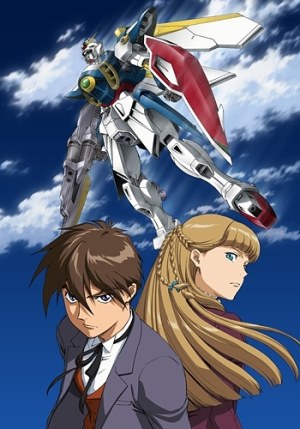
Mobile Suit Gundam Wing
View anime detail →