
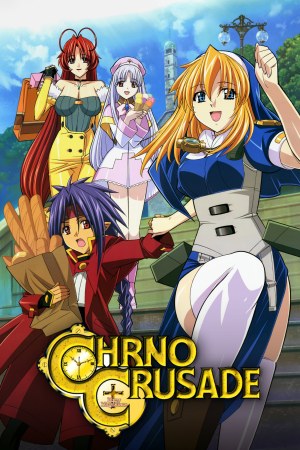
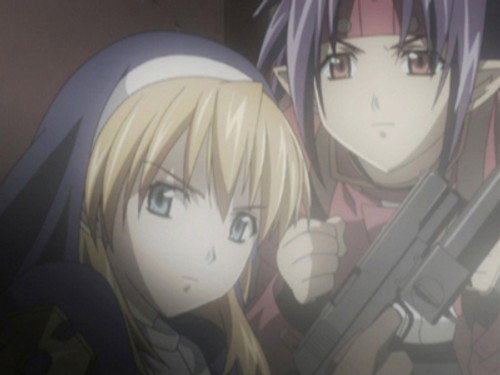
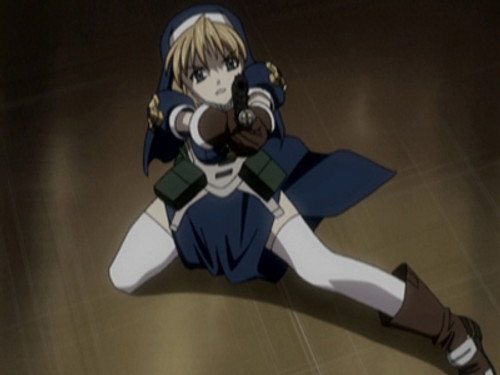
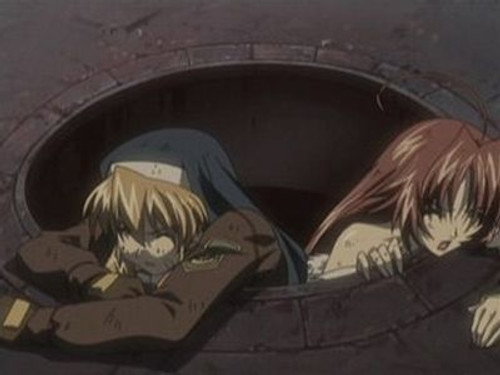

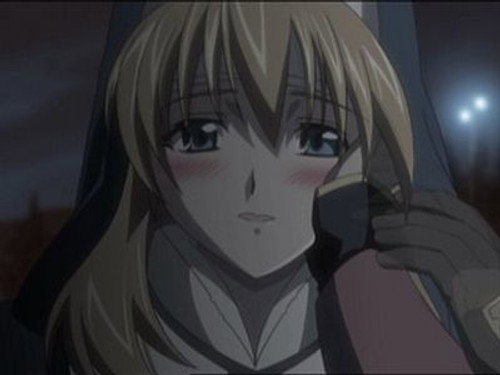
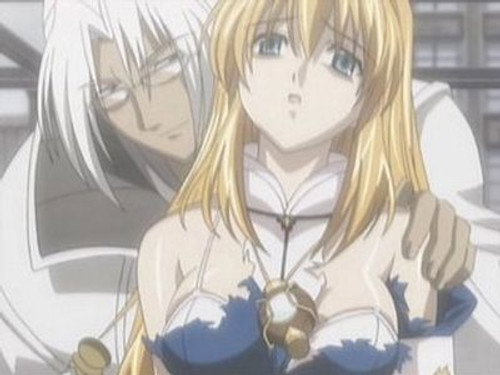
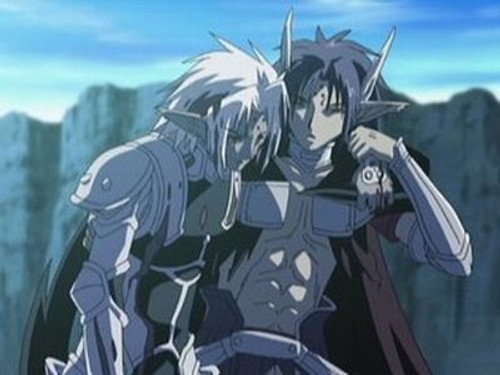
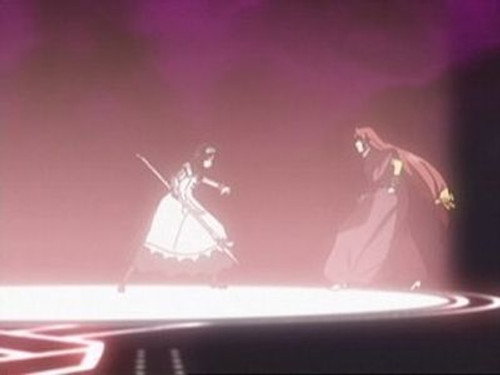
Canon. 1920s New York. Sister Rosette Christopher and her demon partner Chrono are introduced. It’s loud, it’s destructive, and the property damage is high. The "nuns with guns" era starts here.
Canon. The nature of the contract is explained: Rosette is literally trading her life for Chrono’s power. Every bullet has a price in years. Gonzo is establishing the stakes early.
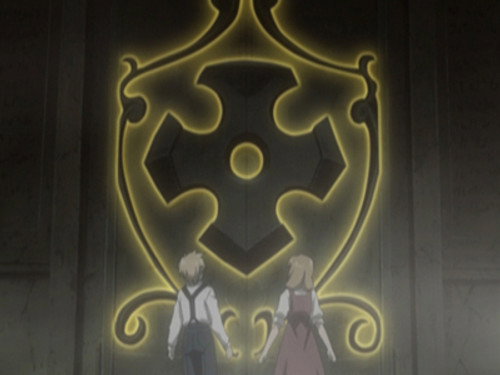
Canon. Azmaria is introduced. The "Divine Child" trope is used as a lens to show the Order of Magdalene’s darker, more bureaucratic side.
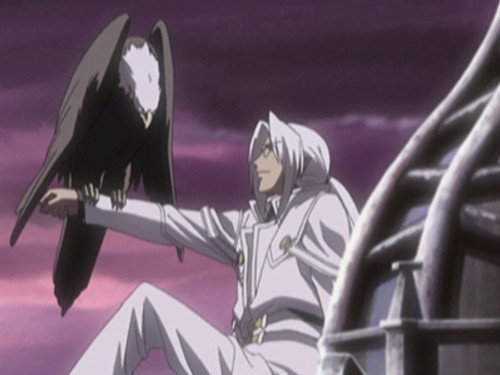
Canon. Aion, the antagonist, finally steps out of the shadows. He is the ultimate 2000s goth villain—manipulative, powerful, and impeccably dressed for a war against heaven.
Canon. The Order prepares for an escalating threat. This episode deepens the world-building of a paranormal 1920s that feels just as dangerous as the Great Depression.
Canon. Satella Harvenheit is introduced. She is the professional "Jewel Summoner" who makes the Order look like amateurs. Her rivalry with Rosette is peak early-2000s banter.
Canon. Chrono’s demonic nature is pushed to the forefront. We see the gap between the small, helpful boy and the being that once laid waste to legions.
Canon. Aion begins using his "Sinners" to dismantle the Order’s influence. The horror elements start to outweigh the action comedy as the show settles into its true tone.
Canon. The search for Rosette’s brother Joshua reaches a turning point. The trauma that drives Rosette is given a face, and it’s a lot more complicated than she hoped.
Canon. The significance of Chrono’s missing horns is revealed. It’s a metaphor for lost power and a literal weapon used against them by Aion.
Canon. A desperate battle where Chrono is forced to release his full form. The cost to Rosette’s lifespan is visible now. The clock is ticking.
Canon. A rare moment of quiet before the end. The Christmas setting highlights the isolation of being a contractor whose life is burning out while the world celebrates.
Canon. The arc shifts to the endgame. Rosette finally confronts Joshua, but he isn’t the boy she remembers. Aion’s corruption is total.
Canon. The Order is under siege. Faith vs. raw power. It’s the philosophical core of the show—praying for a miracle when you already know the answer is "no."
Canon. Satella’s past and her connection to Aion’s Sinners are fleshed out. Everyone in this show is running away from a ghost, and the ghosts are winning.
Canon. The tension within the Order reaches a breaking point. Institutional faith is tested against personal sacrifice. It’s getting dark.
Canon. Rosette and Chrono have to decide how much further they are willing to go. The answer, as always, is "everything."
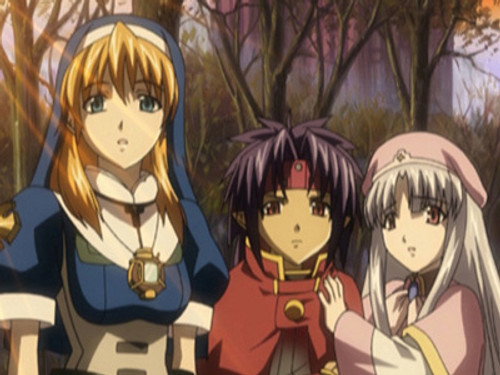
Canon. The main cast—Rosette, Chrono, Satella, and Azmaria—are isolated. It’s a character-driven deep dive into why they keep fighting a war they can't win.
Canon. The final confrontation with the Sinners begins. The action is high, but the underlying feeling is one of inevitable loss.
Canon. Aion reveals his ultimate plan. It’s not just a war on heaven; it’s a plan to break the concept of destiny itself. Rosette is caught in the gears.
Canon. The history of the original Mary Magdalene and Chrono is revealed. The cycle of sacrifice has happened before. Rosette isn’t special; she’s just next.
Canon. Exactly what it says on the tin. The first of the "goodbyes." If you haven’t started crying yet, this is where Gonzo makes you start.
Canon. The penultimate chaos. The world is falling apart, the Order is gone, and Rosette’s time has almost run out. The silence at the center of the storm.
Canon. The finale. Notoriously one of the most heartbreaking endings in anime history. A sunset, a porch, and a refusal to look away from the cost of the contract. End of an era.