Oniwabanshu Arc
12 eps
12 canon 📷 12
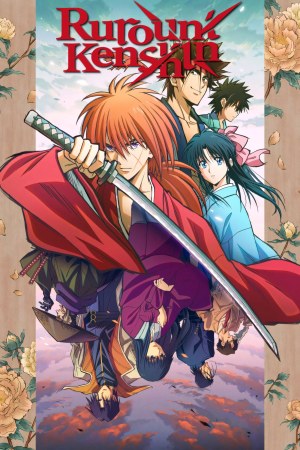
Tokyo, Meiji era. A wandering swordsman with a cross-shaped scar and a reversed-blade sword arrives in the city and saves a dojo master named Kaoru Kamiya from a man impersonating the legendary assassin Hitokiri Battosai. He is Himura Kenshin - the original Battosai, who has spent the ten years since the revolution vowing never to kill again. The show opens with a man defined by his past choosing his future. The scar stays. The sword stays reversed. He stays.
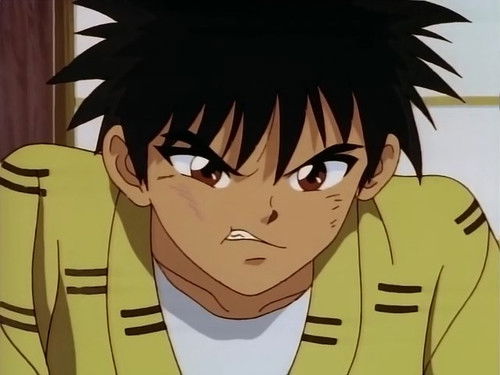
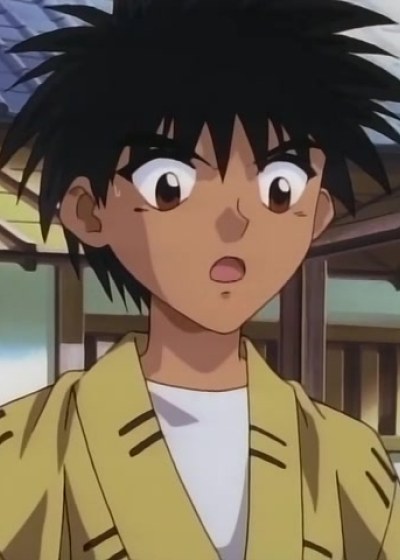
Yahiko Myojin - a kid from a samurai family reduced to picking pockets for a gang of criminals, furious about it, and determined to reclaim something he cannot yet name. Kenshin and Kaoru encounter him and the situation resolves with Yahiko joining the Kamiya dojo as a student. The show adds its third main character by making him earn the position through sheer stubbornness rather than talent, which is exactly the right choice.
Kenshin's past catches up with him in a much more ordinary way: former Imperial Army officer Yamagata recognizes the legendary Batt?sai and offers him a position in the new government. Kenshin refuses. He did not stop killing in order to be rewarded by the state he helped create, and he has no interest in turning the wanderer back into a government weapon.
The episode establishes something the series will keep testing: Kenshin does not reject the Meiji era, but he refuses to let the government decide what his life after the revolution is for.
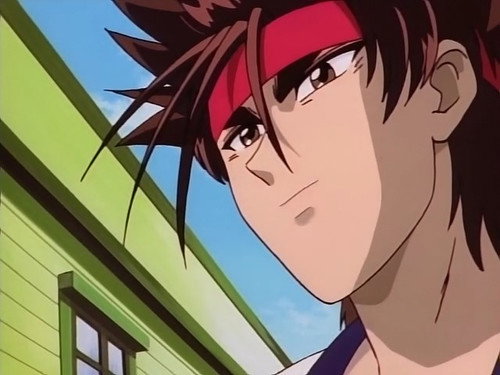
Sanosuke Sagara is introduced as a fighter for hire carrying an enormous zanbat? and a very specific hatred of the Meiji government. When he learns that Kenshin was Hitokiri Batt?sai, fighting Kenshin becomes more than another paid job: Sanosuke sees a chance to hit somebody connected to the revolution that destroyed the Sekiho Army.
The episode starts their confrontation rather than resolving it. What looks like a simple hired fight is already about two men carrying very different debts from the same revolution.
The fight between Kenshin and Sanosuke concludes. The Zanbato - Sanosuke's enormous weapon - against the Hiten Mitsurugi style. The episode is the show's first real demonstration of how Kenshin fights: not by being the strongest, but by reading his opponent completely and responding to what is actually there rather than what should theoretically win. He wins. He does not gloat. He offers Sanosuke his hand. Sanosuke takes it.
A man named Jin-e Udo - Kurogasa, the Black Hat - begins targeting former government officials. He is a former manslayer from the revolution era who fought for the Imperialists but chose the killing above the cause. The episode introduces the show's first serious villain and draws the distinction clearly: Jin-e kills because he loves it. Kenshin killed because he believed in something. That distinction is everything to Kenshin. It does not make the dead any less dead.
Jin-e kidnaps Kaoru using a paralysis technique to force Kenshin into fighting as the Battosai. It works. The episode shows you what Kenshin looks like when the restraint drops - cold, precise, terrifying. He nearly kills Jin-e. He stops because Kaoru calls him back by name. The first time the show demonstrates that Kenshin's pacifism is not weakness but discipline, and that the cost of that discipline is having to hold something very large very still at all times.
Megumi Takani arrives - a doctor who has been forced to manufacture an addictive opium product for a criminal organization called the Kanryu Takeda group. She seeks refuge at the Kamiya dojo. The Oniwabanshu, a legendary group of ninja who serve as Kanryu's enforcement arm, are introduced. The arc assembles its pieces: a woman who needs saving, an enemy worth taking seriously, and a dojo that has become a place people run toward rather than away from.
The Oniwabanshu in action. They are genuinely frightening - each member with a specific specialty, collectively the most dangerous non-government force in Tokyo. Their leader, Shinomori Aoshi, is introduced as a man who has subordinated every human quality to the pursuit of being the strongest. The episode establishes what the Oniwabanshu are before they fall apart, so that when they do, the weight of what is lost is clear.
Kenshin and Sanosuke push deeper into Kanryu's mansion while Aoshi finally steps forward as the strongest fighter of the Oniwabanshu. His calm, economical style makes him a very different opponent from the specialists Kenshin has already beaten.
The episode establishes why Aoshi's pride in his men and his own strength matter before the arc takes them away from him. His obsession with defeating Kenshin is born from what happens next, not something he already carries into this fight.
The Kanryu arc concludes. The Oniwabanshu members who died protecting Aoshi are buried. Kenshin defeats Kanryu. Megumi stays in Tokyo. The episode is the show at its most elegiac - closing one chapter of the story while leaving Aoshi's thread deliberately open and unresolved, a wound the series will not close for a long time. The strongest men are gone. The man who survives them is worse for it.
Yahiko's first real test as a student. His background - samurai family, father dead, years of humiliation - is used against him by people who want to see him fail. He does not fail. The episode is quieter than the Oniwabanshu arc but more emotionally specific: a boy learning that the point of a sword is not to hurt people but to protect something. The Kamiya dojo's philosophy, delivered through a kid who was stealing wallets six episodes ago.
Raijuta Arc
12 eps
5 canon 7 filler 📷 12
Toramaru the sumo wrestler needs Kenshin's help proving himself in a championship. Filler, and early-season filler at that - the show is stretching between manga arcs and the seams show. The characters are charming enough to carry it but the stakes are precisely zero.
Megumi saves a child's life in a medical emergency while the gang provides support. Filler, but Megumi-focused filler is always more interesting than the average - she is the character the show most often underuses and episodes that let her be a doctor rather than a love interest reminder are worth something.
A group called the Jinpuu Squad has a score to settle. Filler. The action choreography is solid and the show's fight direction is confident enough that even filler episodes without narrative stakes deliver on the kinetic level.
A swordsman carries a promise and a technique. Filler, but one that gestures at the show's central preoccupation - what it means to make a promise with a sword in your hand and whether keeping it is possible. The filler arcs of Rurouni Kenshin almost always have this quality: they understand the show's themes even when they are not advancing the plot.
A circus performer named Marimo involves Kenshin and company in an adventure. Filler and light. The show's comedic register - Kenshin's exaggerated obliviousness, Kaoru's frustration, Sanosuke's appetite - runs clean in the filler episodes because the characters are well-enough established to generate comedy without plot.
Kenshin's reverse-blade sword is stolen and Yahiko must retrieve it. Filler that does exactly what the title promises - Yahiko runs, there are obstacles, the sword is recovered. A good showcase for Yahiko's growth as a character even in a narrative that does not require it.
Isurugi Raijuta - a powerful swordsman building a criminal organization around the fantasy of returning Japan to a pre-Meiji state where sword skill means power. He uses a young boy named Yutaro as a pawn and as a student. Canon, and the episode begins the show's small but meaningful examination of what it means to teach someone to fight and whether that responsibility can be handed back once given.
Raijuta's technique - the Izuna, a sword strike that generates a shockwave without blade contact - is demonstrated. Kenshin investigates what Raijuta actually is beneath the rhetoric. The answer is smaller and sadder than the ambition: a man whose self-belief has curdled into cruelty, using a child to prove something he no longer needs proven.
The Raijuta arc concludes. Kenshin's fight with Raijuta is less about defeating him than about what happens to Yutaro, whose sword arm was damaged and who must come to terms with not being what he was trained to be. The episode is quieter than the arc suggests - its emotional conclusion is about a boy losing something and choosing what to make of that, not about the man who took it.
A runaway train, a hostage situation, and Kenshin in a confined space fighting someone. Filler. The train setting generates useful pressure - the show does well with contained environments - and the episode runs its single premise cleanly. Disposable but not embarrassing.
Sanosuke's past with the Sekihotai - the unit that fought for the Imperialists during the revolution, that were falsely branded as outlaws and executed by the government they fought for, that Sanosuke survived and has been furious about ever since - is given its full context. A man named Cho connects this past to the present. Sanosuke's anti-government rage has always been the subtext. Now it is the text.
Sanosuke is used against Kenshin as a result of the Sekihotai manipulation. They fight again - not as strangers this time but as friends who know what the other is capable of, which makes the fight both better and worse. Kenshin wins by understanding something about Sanosuke's grief that the people manipulating him missed. The friendship survives. The Sekihotai thread closes without resolution: some injustices do not get fixed by defeating someone.
Kyoto Arc
35 eps
35 canon 📷 35
Makoto Shishio. The Kyoto arc begins with his name. He was the Hitokiri who replaced Kenshin when Kenshin stopped killing - the Meiji government's shadow assassin, more ruthless than his predecessor, more effective. Then they tried to burn him alive when he became inconvenient. He survived. He has been planning for a very long time. The episode also reintroduces Saitou Hajime - former captain of the Shinsengumi, Kenshin's enemy during the revolution, now working for the Meiji government against Shishio. Two men who once tried to kill each other. The threat is large enough to require it.
Sojiro Seta arrives to deliver a message from Shishio - and to test Kenshin before delivering it. Sojiro smiles. He smiles at everything. He smiles while fighting. He fights with the Shukuchi, a technique so fast it appears to teleport him across the ground, and he is Shishio's right hand because he is Shishio's equal in everything except purpose. The episode establishes the villain's second in command and establishes the speed gap Kenshin will have to close before this arc ends.
Shishio's plan: destroy the Meiji government, take Japan, build a new order on the principle that the strong survive and the weak do not deserve to. He has the Juppongatana - ten of the most dangerous fighters in Japan. He has a warship. He has a timetable. The government knows and cannot officially act without exposing everything they did to create him. The episode lays out the scale of what Kenshin is being asked to stop alone, without sanction, without support, and without killing anyone.
Kenshin leaves for Kyoto without telling Kaoru where he is going or why. He says goodbye as if returning from a short trip. He does not look back. The episode is the most discussed in the early Kyoto arc for what it does with that departure - the show lets Kaoru realize what happened after he is gone, and her reaction is not anger or tears but something quieter and more accurate. She knows who he is. She knew he would go. The Kyoto arc's emotional anchor is set here and everything that follows hangs from this moment.
Kaoru's episode. How she processes Kenshin's departure - not passively but through the act of choosing to remain who she is rather than diminishing in his absence. The dojo continues. Yahiko trains. Sanosuke disappears toward his own business. Megumi observes. The show is doing something unusual for a shonen series: taking the woman who stays behind seriously enough to examine what staying behind actually means when the person you are waiting for might not come back.
Aoshi Shinomori emerges from whatever he has become since the Oniwabanshu died. He has descended into obsession - he will defeat Kenshin, he will dedicate that victory to his dead comrades, and nothing between here and that goal exists for him. He begins eliminating fighters to build toward it. The episode is the show acknowledging that grief without structure becomes something monstrous, and that Aoshi's version of loyalty to the dead is destroying whatever they died protecting.
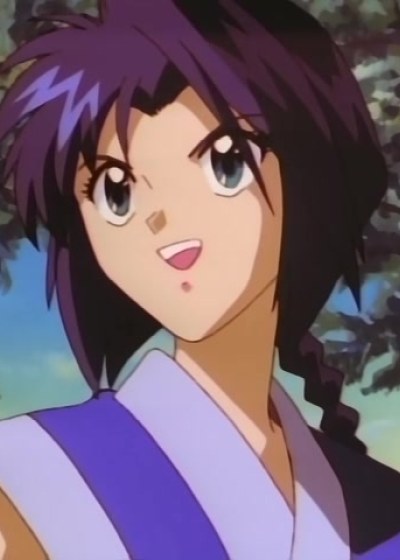
Misao Makimachi - sixteen years old, Oniwabanshu trained, carrying kunai and opinions in equal quantities, searching across Japan for Aoshi whom she idolizes with the specific devotion of someone who loves a person they cannot reach. She encounters Kenshin on the road to Kyoto. He will not tell her about Aoshi. She follows him anyway. The show's third major female character is introduced and she is the most energetic thing to arrive in a while - the Kyoto arc needed exactly this before it got any heavier.
Shingetsu-mura - a village under Shishio's direct control. Its residents live under his protection at the cost of his will being absolute law. The episode is the show translating Shishio's ideology from abstract declaration to concrete consequence: a man who believes the strong deserve everything has built a place where strength is the only currency and the weak pay for it with everything else. Kenshin sees it and understands for the first time what he is actually fighting.
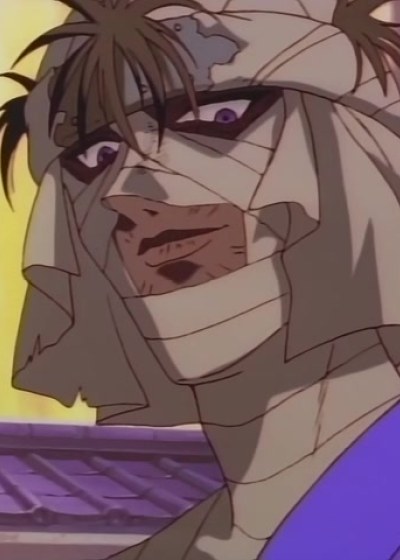
Kenshin and Shishio meet. Not yet a fight - a conversation between men who understand each other's history completely and disagree about everything it means. Shishio is wrapped in bandages over burns covering his entire body. His sweat glands were destroyed by the fire, which means his body heat accumulates when he fights - fifteen minutes of maximum effort before his own temperature could kill him. He is dying slowly. He has built an army while dying slowly. The episode establishes Shishio as a genuine peer to Kenshin and a more frightening villain because of it.
Kenshin's reverse-blade sword is broken. Sojiro's Shukuchi overwhelms him completely - the gap in speed is not something discipline can close, it requires a technique that does not exist yet. The show defeats Kenshin properly for the first time and it does it without softening the loss: the sword that was his entire fighting philosophy is in pieces, the boy who broke it is still smiling, and the Kyoto arc has its central problem. He must get faster. He must get a new sword. He must do both before the war starts.
Sanosuke goes to train with Anji - a Buddhist monk and Juppongatana member who uses the Futae no Kiwami, a technique that delivers a double-impact strike destroying the target from the inside by generating two simultaneous vibration waves through the impact point. Anji teaches Sanosuke because he sees something in him worth teaching. The training destroys Sanosuke's hands repeatedly. He continues. The arc gives every member of the ensemble something to do while Kenshin recovers, and Sanosuke's assignment is the most physically brutal.
The swordsmith Shakku Arai - the man who forged the original reverse-blade sword - is dying. Kenshin finds him. Shakku's son Seiku has rejected the sword-making tradition, choosing peaceful work instead, but Shakku has been waiting. He has one last sword to forge. He does not survive the forging. The episode is the show at its most Japanese in the best sense: a craftsman's entire life oriented toward a single final act of meaning, delivered without ceremony. The new sword is ready. Kenshin is not.
Cho - the Juppongatana's blade collector, a man who fights with an arsenal of exotic weapons and the aesthetic of someone who has made violence into connoisseurship - comes to steal the new sword. Kenshin fights with the unfinished blade against a man who has more weapons than principles. The fight is stylistically inventive and the resolution reveals something about Kenshin that the arc has been building toward: his vow to not kill is not situational. Even here. Even now.
Seijuro Hiko - Kenshin's master, the thirteenth inheritor of the Hiten Mitsurugi style, currently living as a potter in a mountain village and refusing to be impressed by anything. He is the most powerful character in the series and has no interest in using it. He agrees to teach Kenshin the ultimate technique because Kenshin's stated purpose meets the condition: he wants to save people, not win. The condition is not negotiated. It is assessed and found genuine. Hiko's arrogance is not vanity. It is accurate self-knowledge.
Aoshi formally allies with Shishio - not out of agreement with Shishio's goals but because Shishio can deliver him to Kenshin. The alliance is transactional and both parties know it. The episode is the Kyoto arc at its most structurally elegant: every major player repositioning before the final battle, the chessboard arranging itself toward inevitability. Misao discovers the truth about Aoshi and it breaks her. Not because she did not know he had changed but because she had hoped she was wrong.
The Amakakeru Ryu no Hirameki - the Dragon of Heaven Strike, the final technique of the Hiten Mitsurugi style, a drawn strike of such speed and force that it surpasses all prior techniques in the lineage. It requires the will to live over the will to kill. Kenshin masters it in his training duel with Hiko. Hiko is struck by his own student for the first time in their relationship. He does not compliment this. He does not need to. The episode is the arc's pivot - Kenshin is ready. Everything after this is the war.
The Juppongatana mobilize. Shishio's forces move toward the endgame. The heroes converge on Kyoto from different directions, each carrying what their training produced. The episode is the calm before the storm structured as a briefing: positions declared, stakes confirmed, no exits left. The show has spent sixteen episodes of the Kyoto arc building toward this and the construction has been sound. What follows is earned.
The Purgatory - Shishio's warship, a floating gun platform capable of reducing coastal cities to rubble. The heroes attempt to prevent its launch. The battle is the show at its largest scale - a naval action sequence that Rurouni Kenshin is not really an action at this scale, which makes the ambition of attempting it more interesting than the execution. The Purgatory represents everything wrong with Shishio's philosophy compressed into hardware.
The Purgatory burns. The episode closes the naval sequence and moves toward the direct confrontation - the Kyoto confrontation that the entire arc has been building toward is now imminent. Shishio's fifteen-minute fighting limit is established as the condition that makes the final battle a race as much as a fight: survive long enough and his own body destroys him. The question is whether Kenshin can survive long enough.
Sanosuke's Futae no Kiwami arrives. The double-impact technique that destroys from the inside, delivered against a Juppongatana member. The episode is Sanosuke's payoff in the Kyoto arc - months of broken hands and Anji's brutal training, condensed into a single strike that works exactly the way it was supposed to. The show is generous with its supporting cast throughout the Kyoto arc and this episode is the clearest example: Sanosuke gets his moment and the moment is genuine.
Anji's story - why a Buddhist monk became one of Shishio's ten swords, what he lost, what he chose. The episode is the Kyoto arc's most compassionate detour: a villain given enough backstory to be understood without being excused, who chooses something different at the end of his arc. The show does this repeatedly throughout the Kyoto arc - Shishio's allies are not uniformly monstrous, which makes the moral landscape more honest than most shonen series of the era attempted.
Saitou Hajime's Gatotsu in full form - the thrust technique of the former Shinsengumi captain, delivered from a zero-stance draw that generates force out of stillness. Saitou fights Juppongatana members with the efficiency of a man who has been doing this since before the Meiji era and sees no reason to change his methodology. The episode reestablishes Saitou as a genuine power on the heroes' side while making clear that his cooperation is tactical, not ideological.
Aoshi vs Kenshin. The fight the show has been building toward since the Oniwabanshu arc in season one. Aoshi fights now with the integrated techniques of all four of his dead comrades - Beshimi's needles, Hyottoko's fire, Shikijo's strength, Hannya's speed - as a memorial and a weapon simultaneously. Kenshin does not defeat him so much as reach him. The Amakakeru Ryu no Hirameki does not kill Aoshi. It was never going to. Kenshin did not learn the ultimate technique to kill Aoshi. He learned it to bring him back.
Kenshin is not finished. The episode's instruction is also the Kyoto arc's instruction to itself: ignore what it has cost, keep moving. Multiple simultaneous battles are ongoing across Kyoto - the Aoiya, the mountain, Shishio's compound - and the show begins intercutting between them with the confidence of a story that has earned its scale. Every character is exactly where their arc placed them. Every fight has meaning. This is the Kyoto arc at maximum capacity.
The Aoiya - the Oniwabanshu inn in Kyoto - is under attack by Juppongatana members while the main battle rages elsewhere. Misao and the surviving Oniwabanshu defend it. The episode is the show's gift to its secondary cast: a battle that belongs entirely to the people the story is not about centrally, and the show makes sure they win it on their own terms. Misao fights with everything Aoshi taught her before he became whatever he became. The Aoiya stands.
Fuji, the giant of the Juppongatana, reaches the Aoiya and appears impossible for its defenders to answer. Hiko Seij?r? arrives instead. Rather than treating Fuji as a monster, Hiko recognizes the swordsman inside the enormous body and gives him the first serious duel of his life.
That respect changes the fight. Hiko wins overwhelmingly, but Fuji is allowed to lose as a warrior rather than be disposed of as Shishio's living siege weapon.
Kenshin versus Sojiro. Round two. The Amakakeru Ryu no Hirameki against the Shukuchi - ultimate technique against ultimate speed. But the fight is not really about the techniques. It is about Sojiro's smile. He was beaten as a child and learned to smile through everything because emotion was dangerous. Shishio's philosophy told him this was simply the truth of the world. Kenshin's existence asks a question Sojiro cannot answer: what if surviving without feeling was not strength but a wound? The fight is the question becoming physical.
The smile breaks. Sojiro has never been able to cry. He begins to. In the middle of the fight, in the middle of the storm, the boy who survived by removing himself from his own experience is forced back into it by someone who refused to let him stay outside it. He loses. He walks away from Shishio's organization. He goes to figure out what he is when he is not what he was trained to be. It is the Kyoto arc's most quietly devastating moment and it belongs entirely to a villain. This is what the show is capable of.
Shishio and Kenshin fight. The episode opens with the two men in the same room for the first time since their first meeting and the difference between that meeting and this one is the weight of everything the Kyoto arc built between them. Shishio is operating at full capacity. His bandaged body generates heat at maximum output. The fifteen-minute clock is running. Kenshin needs to survive long enough for it to matter while fighting someone who is, in all measurable ways, his physical superior.
Kenshin falls. The Amakakeru Ryu no Hirameki connects and Shishio absorbs it. Shishio is winning. The episode confronts the possibility the arc has been carefully avoiding: that Kenshin's vow and his technique together might not be enough. The title is exact - these are two men from the revolution era fighting a war that the Meiji government pretends no longer needs fighting, and the question of which one of them the new era deserves is not rhetorical.
Saitou enters the fight. Aoshi enters the fight. Together they give Kenshin time to recover while Shishio's clock continues running. The episode is the arc's most operationally complex - three fighters rotating through a single opponent, each one buying minutes for the others - and the choreography serves the strategy. Shishio fights all of them. He is still winning. But the minutes are accumulating.
Kenshin rises. The episode's title is the arc's answer to the previous one's question. The age does not choose Shishio. Not because Kenshin is stronger but because Shishio's philosophy - that the strong deserve everything and the weak deserve nothing - produces nothing worth choosing. Kenshin fights for people. That distinction does not make him stronger. It makes him willing to get up again when stronger is not enough.
Shishio is defeated. Not killed by Kenshin's blade - his own body temperature kills him when the fifteen minutes expire. He dies laughing. The show refuses to make his death a clean moral victory: Kenshin did not kill him, but Shishio also did not simply lose to a better person. He lost to time and physics while still believing everything he believed. The episode does not celebrate this. It lets Shishio die as himself, which is the most honest thing it could do with him.
Aftermath. The surviving Juppongatana members - those who were not killed and not imprisoned - are given the choice the arc's title promised. Some choose differently than Shishio would have wanted. The episode is quieter than everything that preceded it and deliberately so: the Kyoto arc earned this exhale. Misao finds Aoshi. Kenshin is alive. The fires in Shishio's compound burn out. What's left is the question of who everyone is now.
The return to Tokyo. Kenshin walks back into the Kamiya dojo and the episode knows what that means to everyone in the audience who watched him leave in episode 31. The Kyoto arc ends here - 35 episodes of zero filler, the longest continuous canon run in the series, one of the finest extended story arcs in 1990s anime. The engraved memory of the title is what the arc has carved into these characters. Kaoru is at the gate. Kenshin has come back. The show earned this. Stop here if you want the best version of Rurouni Kenshin. Everything after episode 62 is original material.
Post-Kyoto Arc
4 eps
4 filler 📷 4
The first episode of season 3 - gentle, atmospheric, a deliberate decompression after the Kyoto arc's intensity. A story about fireflies and memory and the people the characters were before the war. Filler, and the show seems to know it needs to reintroduce a lighter register before anything else. The Kyoto arc left everyone changed. This episode gives them a moment to simply exist without being changed further.
Yahiko in the foreground - a character who has been consistently well-used throughout the series given room to carry an episode. The comedy register of season 1 returns. Filler, but Yahiko-centered filler is almost always worth watching because his arc from angry pickpocket to genuine swordsman is one of the show's most complete character journeys and any episode that remembers this uses him better than episodes that treat him as comic relief.
A treasure hunt in the spirit of season 1's lighter adventures. Filler. The show is using the post-Kyoto space to remind its audience of the version of itself that ran before episode 28 - the episodic, comedic, low-stakes Rurouni Kenshin that existed before Shishio. It is a legitimate creative choice even if it is a significant tonal shift. The treasure is less important than the warmth.
A Kaoru-focused episode with the comedic register of early season 1. Filler. The show has always been at its best with Kaoru when it remembers she is a person with her own perspective on things rather than simply Kenshin's anchor point. This episode remembers. The ecstasy of the title is small and domestic and exactly right for an episode that is asking the audience to accept that the world has gone back to normal for a while.
Shimabara Arc
12 eps
12 filler 📷 12
The Shimabara arc begins - the season 3 original story inspired by the historical Shimabara Rebellion of 1638, centered on a swordmaster named Shogo Amakusa who believes he is the reincarnation of Amakusa Shiro and that destiny has placed him at the center of a new Christian uprising. The arc is filler but it is serious filler - an attempt to give season 3 the thematic weight of the Kyoto arc without the manga foundation. The ambition exceeds the execution but the ambition is genuine.
Shogo Amakusa's mythology is established - the medallion, the prophecy, the community that has organized itself around his belief. The show is doing something interesting here: a villain who is not cruel or nihilistic but sincerely believes in his own divine mission, which creates a different kind of conflict than Shishio's explicit social Darwinism. Filler, and more thoughtful filler than the standalone post-Kyoto episodes. The Shimabara arc has something to say.
Kenshin and company travel toward Shimabara. The historical resonance is deliberate - Shimabara was a massacre site, a place where faith collided with government power and the faith lost catastrophically. The arc is asking what Kenshin's vow means when the person he is fighting believes just as sincerely in something as he does. Filler, but the thematic framework is the best thing about season 3.
The Rai Ryu Sen - Shogo's lightning-channeling sword technique - is demonstrated. The action choreography in the Shimabara arc is generally solid; the filler budget does not reach Kyoto arc levels but the fight direction is competent and Shogo is a physically interesting opponent. The episode establishes his technique set before the arc's confrontations begin in earnest.
Kaiou's real agenda comes into view as he maneuvers the Christian rebellion around Shogo for his own political purpose. Shogo's authority rests on sincere faith and the trust of the people around him; Kaiou is willing to turn that faith into leverage.
The conspiracy changes the Shimabara arc from a simple Kenshin-versus-Shogo contest into a struggle over who is using the persecuted community and what they expect to gain from its desperation.
The arc examines what Kenshin's past looks like through the lens of faith - specifically, whether a man who killed as many people as Kenshin did can be redeemed by a vow, or whether the arithmetic of the dead simply does not balance. Shogo's challenge to Kenshin is religious in structure: a sinner cannot protect the innocent, only the righteous can. Kenshin's answer is not theological. It is practical. He protects people because they need protecting, not because he has earned the right.
A demon figure within the Shimabara arc forces a confrontation. The arc is escalating toward its inevitable clash between Kenshin's pacifism and Shogo's conviction. Filler. The demon of the title is less interesting than the theological framework around it, which continues to be the Shimabara arc's genuine contribution: a season 3 that could have been purely episodic chose to build something thematically coherent instead.
Sanosuke's emotional response to the Shimabara arc's human cost. He does not cry easily. The episode earns the title. The show has always understood Sanosuke best when it ties his anger to something specific - the Sekihotai, the people who cannot protect themselves - and the Shimabara situation gives him something specific enough to make the tears make sense. Filler, but Sanosuke at his most human.
The Shimabara arc approaches its climax. Shogo's faith and Kenshin's vow are on a collision course - the last crusade of the title is both Shogo's and, in a sense, the season 3's attempt to justify its own existence. The filler arc that took the show off the manga track after episode 62 has built toward something. Whether that something lands is a matter of record. But the attempt is sincere.
The Shimabara arc is over and the group departs. The episode is exactly what its title says - a farewell, a moment of lightness after the arc's sustained moral weight, the show giving its characters permission to move again. Filler. The Shimabara arc was the best thing season 3 produced and "Bon Voyage" is the appropriate close: not triumphant, not devastating, just done.
Traveling through Shimonoseki, the group encounters a case of mistaken identity - someone operating a makeshift dojo under Kenshin's name. Filler, and the lightest of the post-Shimabara filler. The impostor is using the Battosai reputation for good, which creates a moral situation the show handles with more generosity than most. Kenshin lets the name go. The name was never his anyway.
An accident costs Kenshin the group's travel money. They work at an inn to pay the bill. The episode is the show returning to the comedy register of season 1 - domestic mishaps, Sanosuke eating too much, Yahiko complaining - and the cast handles it with the ease of characters who have been living together long enough to generate situation comedy naturally. Filler. Comfortable filler. A rest episode the audience needed.
Black Knights Arc
6 eps
6 filler 📷 6
Yutaro Tsukayama - the boy from the Raijuta arc in season 1, the one whose sword arm was damaged, who left Japan for Germany to receive medical treatment - returns. His arm has healed. He has brought a European doctor named Hans with him. He has also brought the Black Knights arc's premise: a notebook containing information about a cure-all elixir that very dangerous people want. The episode is the show rewarding long-term viewers by returning to a minor character and discovering there was more story there.
The Sanada Ninja - the Black Knights arc's primary antagonists alongside their European allies - are introduced. The combination of Western industrialism and Japanese ninja tradition as a villain archetype is one of the arc's more interesting ideas: a group that has decided the Meiji era's opening to the West can be weaponized by the right people. Filler, but the villain faction is more conceptually interesting than most of season 3's antagonist groups.
Following the clues in Dr. Hans's notebook leads the group through a series of misdirections and obstacles. A trap using Shinto sacred sites is involved. Filler. The puzzle structure of this episode - following evidence, encountering false leads, adjusting - is something the show does rarely and pulls off adequately. The Black Knights arc is the most plot-mechanically constructed of the season 3 original arcs.
A volcano. The group survives a fall and encounters a defecting Sanada Ninja who offers to assist against his former allies. The defection-of-a-villain-adjacent-character move is one the show has used well in the past - Anji in the Kyoto arc - and this episode attempts a smaller version of it. Filler. The volcanic setting is visually memorable even when the story around it is not.
Schneider - the Black Knights' European leader - places his bet on controlling Japan through the elixir. The episode clarifies the arc's stakes: not just a cure being stolen but a plan to use dependency on that cure as leverage over an entire country's health infrastructure. The colonialism subtext is less subtle than the show usually manages its themes. Filler, but filler that is trying to say something about Meiji-era anxieties regarding Western influence.
The Black Knights arc concludes. Kenshin defeats the arc's villain using strategy rather than pure sword technique - the show has always been more interesting when Kenshin has to think rather than simply execute - and the elixir is recovered. The Sanada Ninja defector's arc resolves. The last major filler arc of the series closes cleanly, which is more than some of the season 3 arcs managed. Filler that knew its own ending.
Jinchu Arc
7 eps
7 filler 📷 7
Aoshi arrives to bring Misao home to Kyoto. Before she goes, she and Kaoru have a final shopping expedition together. Sanosuke and Yahiko's attempt to covertly follow them ends in disaster. The episode is a character-focused farewell to the season 3 ensemble configuration before the final arc begins - lighter than what follows, a reminder of who these people are together before the show asks them to be something else one last time.
A master of feng shui diagnoses a Ki imbalance in the area following a series of accidents. Two families - the Wind clan and the Water clan - are in conflict over control of this force. The final arc's premise is the most esoteric the show has attempted: the Ki as a power system, feng shui as a martial framework, and a railroad construction project as the political subtext. Filler, and the most ambitious narrative gambit of the season's closing stretch.
The Water clan's plan to redirect the Ki to gain control of Japan moves ahead. The Kamiya dojo becomes a target - the show brings the final arc's threat home literally, to the building that has functioned as the series' emotional center since episode one. Kaoru is seriously wounded. Filler, but the show is not careless with this: Kaoru being hurt carries weight the episode uses seriously rather than as a plot device to be resolved immediately.
The Water clan's control of the Ki has destabilized Tokyo enough to require martial law. The scale of the season 3 original conclusion is the largest the filler arcs have attempted - city-wide, involving both the supernatural and the political. Filler. The ambition is real even when the execution is constrained by budget and episode count. The show is trying to end with something that feels like a finale rather than just an extended coda.
The Wind clan and Kenshin move toward Senjogahara as the final struggle over Tokyo's dragon vein closes in. Kaoru's condition and the Water clan's control of the city's feng shui make the fight personal as well as city-wide.
The episode is the penultimate chapter of the anime-original Feng Shui arc, setting the position and conditions for the final confrontation in Episode 94.
The final confrontation. Kenshin wins through intelligence rather than force alone - using his understanding of the Ki to redirect the Water clan's attack rather than simply overpowering it. The last enemy falls. Tokyo's martial law lifts. The Kamiya dojo stands. The season 3 original story ends here - not at the manga's Jinchu arc, not with Enishi, not with Tomoe's truth, but with an anime-original finale that tried to close the story the manga had not yet closed. It is not the ending the series deserved. It is the ending the series got. The last aired episode of Rurouni Kenshin.
VHS and DVD only. Never aired. Kenshin and Kaoru take a trip together - a ferry, a cemetery, an overnight stay forced by rain. Kaoru dreams that Kenshin leaves again. She wakes up frightened and finds him at the beach. He gives her a seashell. The episode has no conflict, no antagonist, no sword technique. It is twenty-five minutes of two people existing in proximity to each other after everything that happened. The show ends the way it lived: refusing to resolve the central question of whether Kenshin will stay, leaving it as a gesture instead of a declaration. He extends his hand toward her in his sleep. She holds it. That is as close to a promise as Rurouni Kenshin ever gets. The wanderings do not end. They simply pause here. For now.