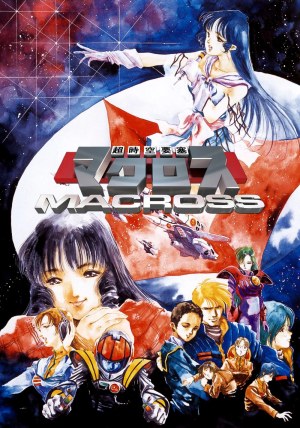
Super Dimension Fortress Macross

Super Dimension Fortress Macross

超時空要塞マクロス
1982 -1983 Tatsunoko Production / Studio Nue MBS 36 episodes Completed
Action Mecha Sci-Fi Romance Musical
Details & Synopsis
In 1999, an alien warship crashes on a remote island and humanity spends a decade reverse-engineering technology it barely understands. In 2009, the ship, rebuilt and renamed the Macross, launches on its maiden voyage. The aliens it came from show up the same day to reclaim it. What follows is a two-year war fought across the solar system, inside a city-sized battlefortress, between a civilization of giant humanoids and a species of smaller ones who discovered something the Zentradi never had: culture.

Produced by Tatsunoko Production and Studio Nue, Super Dimension Fortress Macross aired on MBS from 1982 to 1983. Thirty-six episodes that invented conventions the mecha genre is still running on today. The love triangle between ace pilot Hikaru Ichijyo, pop idol Lynn Minmay, and officer Misa Hayase is still being argued about. The variable fighters, transforming from jet to humanoid to attack mode, set a template that Transformers would borrow and Gundam would spend decades trying to answer. The moment a song stops a war is still one of the most quietly radical ideas ever animated.

In the West, Macross was chopped up, merged with two unrelated series, and released as Robotech in 1985. Harmony Gold then spent thirty years using that license to block official Macross releases outside Japan. Fans distributed fansubs of the original specifically as an act of reclamation. The history of how Westerners actually saw this show is inseparable from the history of fansub culture itself.

Watch the original. Watch Do You Remember Love? immediately after. Then watch Macross Plus and understand why Shinichiro Watanabe made Cowboy Bebop the way he did.
Alt Title 超時空要塞マクロス
Studio Tatsunoko Production / Studio Nue
Network MBS
Aired 1982 - 1983
Episodes 36
Genre Action, Mecha, Sci-Fi, Romance, Musical
Status Completed

Fansub & Scanlation History

W_B's Release Is the Standout

Complete, January 2008 · 7.23 from 39 Votes, 16 Hits
W_B completed a full 36-episode DVD-sourced release in January 2008, the strongest combined rating and hit count of any Macross fan release on record, real, active demand right in the middle of the years the wider franchise sat legally frozen out of the West.

Nobody Ever Finished a Fan Translation, 1982 to 2001

Confirmed by AnimEigo Founder Robert Woodhead

Unlike almost every other series on this site, the original Macross has essentially no VHS-era fansub history. Streamline Pictures attempted a commercial subtitled release, Robotech Perfect Collection: Macross, and went out of business before finishing, stopping at episode 16. AnimEigo founder Robert Woodhead stated directly that even period VHS fansub catalogues show no evidence of anyone completing a fan translation during the 1980s or 1990s. When AnimEigo finally released the complete series subtitled in 2001, it wasn't just the first official release, it was effectively the first complete English translation of any kind the show had ever gotten, nineteen years after it originally aired.

Harmony Gold Turned It Into Robotech, 1985

Licensed From Tatsunoko, Spliced With Two Unrelated Shows

Harmony Gold licensed the original Super Dimension Fortress Macross from Tatsunoko in the mid-1980s and combined it with two unrelated series, Southern Cross and Genesis Climber Mospeada, into the 85-episode Robotech for American syndication in 1985.

"Fuck Harmony Gold" Is a Real, Named Fandom Meme

Resentment at Being Blocked, Not Defiance of an Active License

Fan sentiment around Harmony Gold wasn't the usual fansub ethic of stepping aside once a real license existed, it was documented anger at a company perceived as sitting on rights and delivering little itself while blocking other distributors. The specific phrase became enough of a recognized fandom sentiment to be catalogued as its own entry on fan wikis, a rare case of a licensor's own reputation becoming part of the franchise's history.

Big West Sued in 1998, and a 2003 Ruling Split the Franchise in Two

Tatsunoko Could License It · Big West Owned the Designs

When Harmony Gold renewed its Macross trademark directly with Tatsunoko in 1998, Big West, the production committee partner actually behind the original series, sued, arguing Tatsunoko never held sole rights to make that deal. A 2003 Japanese court ruling split the difference: Tatsunoko did have the right to license Macross, including sequels, to Harmony Gold, but Big West owned the franchise itself, including the rights to the original 41 character and mecha designs. Harmony Gold could keep making Robotech sequels, just never with the actual original designs.

Harmony Gold and AnimEigo Actually Delivered a Real Release of the Original

Official Statement, March 2002

For the original 1982 series specifically, Harmony Gold partnered with AnimEigo, giving fans a genuinely faithful subtitled release in its original, unedited format, confirmed in an official March 2002 statement from Harmony Gold's own VP of Business Development. The original series was never the actual gap; the rest of the franchise was.

Only Three Macross Titles Ever Got an Official US Release

Original Macross, Macross II, and Macross Plus Only

The ongoing dispute meant most of the Macross franchise legally could not release in the West at all for two decades, not delayed, not licensed to a smaller company, genuinely unavailable. Only the original 1982 series, Macross II, and Macross Plus ever received official US releases. For most of the franchise, unofficial fan distribution was not a faster alternative to a legal option, it was the only option that existed.

Big West and Harmony Gold Finally Settled, March 2021

Landmark Agreement Signed March 1, 2021

Big West, Studio Nue, and Harmony Gold signed a settlement on March 1, 2021, ending over two decades of legal conflict. The agreement opened the door for most of the Macross television series and films to finally release internationally, while confirming Harmony Gold's perpetual rights to the Robotech brand itself.