
SHISHIO MAKOTO
SM
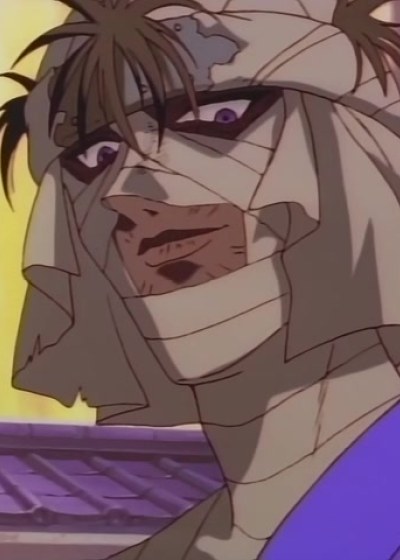
The man who replaced Kenshin as the government's assassin when the Battosai became a liability. When Shishio in turn became a liability, the government burned him alive and left him in a ditch. He did not die. He came back wrapped in bandages soaked in his own blood and fat, carrying a blade whose edge is saturated with the flesh of his victims and ignites on contact, commanding a private army, and operating on a philosophy about the strong consuming the weak that the government's own actions proved correct. Shishio is one of the great anime villains because his grievance is legitimate. The Meiji government did exactly what he says they did. His response to that truth is monstrous. The truth itself is not wrong. The show does not flinch from that distinction and it is what elevates him above most antagonists the genre produces.
SHISHIO THROUGH THE ARCHIVE //
JUPPONGATANA & KYOTO FACTION //
Open page →Assassins · Fighters · Saboteurs · Different Reasons for Serving
Shishio assembles the Juppongatana because a revolution needs more than one unbeatable swordsman. The group includes direct combat specialists, infiltrators, ideological followers and people whose usefulness comes from a very specific ability rather than rank.
Why it matters
That is why the Kyoto endgame splits into separate fights. Kenshin cannot solve Shishio by simply reaching him first. The people around Kenshin have to answer the different kinds of power Shishio collected around himself.
Juppongatana · Weak Government · Strength as Law
Shishio's argument begins with something the series knows is true: the Meiji government used killers to win the revolution and discarded them when they became inconvenient. His answer is to replace the government with a society where strength openly determines who deserves power.
Why it matters
The Juppongatana are not frightening because ten people independently read the same political pamphlet. Many arrive through grief, alienation, ambition or simple appetite for violence. Shishio gives those separate wounds one political direction and calls the result natural law.
Devotion · Access · The Person Closest to Shishio
Yumi does not need a Juppongatana title to matter inside Shishio's organization. She is the person allowed closest to him, understands the physical limits created by his burns and remains committed even when those limits make the final battle suicidal.
Why it matters
The Kyoto faction is not held together by one kind of loyalty. Yumi's devotion is personal rather than tactical or ideological, and the finale makes that distinction matter.
