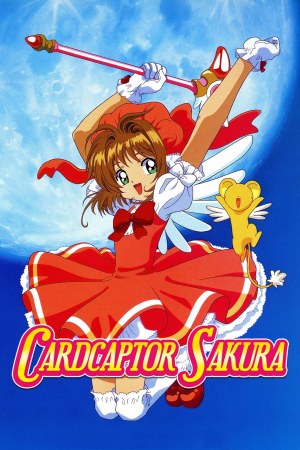
Cardcaptor Sakura

Cardcaptor Sakura

Card Captor Sakura / Cardcaptors
1998 -2000 Madhouse NHK BS2 70 episodes Completed
Magical Girl Fantasy Adventure Romance Comedy
Details & Synopsis
Sakura Kinomoto is an ordinary fourth-grade student until she opens a mysterious book in her father's library and accidentally releases the magical Clow Cards across Tomoeda. The book's guardian, Cerberus, awakens in the form of a tiny winged creature Sakura quickly calls Kero and gives her an impossible responsibility: find the cards before their powers cause real harm.

Sakura's search begins with escaped magic appearing inside otherwise ordinary childhood experiences. A school trip can become a battle with living water, a sports day can disappear beneath a storm of flower petals, and a quiet visit with friends can expose another card hiding in plain sight. Tomoyo Daidouji becomes Sakura's closest confidante, costume designer, and enthusiastic camerawoman, while transfer student Syaoran Li arrives from Hong Kong convinced that Sakura has no business controlling magic created by Clow Reed.

What starts as a card-catching adventure gradually becomes a story about Sakura growing into power she never asked for. The mystery surrounding Kaho Mizuki, Yukito, and the second guardian Yue pushes Sakura toward the Final Judgment and forces her to prove that kindness is not a weakness. After the Clow Cards finally recognize her as their master, a new transfer student named Eriol Hiiragizawa brings another wave of magical incidents and Sakura discovers that possessing the cards is not the same thing as making their power truly her own.

Cardcaptor Sakura aired on NHK BS2 from 1998 to 2000 and became one of the defining magical-girl anime of its era. Western audiences encountered it in dramatically different forms. Nelvana's Cardcaptors dub was edited, reordered, and reframed for television, while Pioneer also released the original Japanese series uncut with English subtitles on VHS and DVD. For a generation of fans, the contrast between those releases became part of the experience of discovering what anime localization could change.
Alt Title Card Captor Sakura / Cardcaptors
Studio Madhouse
Network NHK BS2
Aired 1998 - 2000
Episodes 70
Genre Magical Girl, Fantasy, Adventure, Romance, Comedy
Status Completed

Fansub & Scanlation History

Sakura Reaches Fans Before Cardcaptors

April 1998–March 2000 · Original 70-episode TV series

When Cardcaptor Sakura premiered in Japan in April 1998, English-speaking fans did not have an official television edition to follow. The early route was familiar to anyone who traded anime in the late 1990s: a copy of a copied VHS tape, a club screening and sometimes a translation script passed from one subtitler to another. Those tapes followed Sakura, Tomoyo and Kero through the original episode order, long before the name Cardcaptors was familiar to American television viewers.

The two theatrical films have their own release history. The tapes discussed here belong to the 70-episode 1998–2000 television series.

MIT Shows Sakura in May 1999

May 14 and September 3, 1999 · University anime-club screenings

MIT Anime Club scheduled Card Captor Sakura episodes 1–3 for May 14, 1999, and episodes 1–2 again on September 3. Both screenings came while the Japanese series was still airing, before the edited American television version appeared. Club schedules do not identify the subtitling group or explicitly describe the language of those particular prints, but they put the original series in American anime-club circulation at a definite time.

SOURCE: https://anime.mit.edu/showings/history

Studio Hooseki Starts Its Own Sakura Edition

April 28, 1999 · Eleven scripts and two finished volumes

In Jyväskylä, Finland, Studio Hooseki was working on Cardcaptor Sakura while the show was still airing. Its April 28, 1999 project page reported subtitle scripts finished through episode 11 and two completed volumes of what it called the Hooseki version. The plan was to subtitle the entire first season. Four people were named on the page: Spazum, Miwa, Kuromaku and Momopi.

That contemporary project page matters more than an undated tape credit. It records a real production effort, the people involved and how far the work had advanced in spring 1999.

SOURCE: https://web.archive.org/web/19990428173534/http://www.anime.jyu.fi/greyhawk/hooseki/Projects/Card_Captor/card_captor.html

Hooseki Reaches Five Volumes, Then Stops

December 12, 2000 · Scripts through episode 19

By a December 2000 snapshot, Hooseki reported scripts through episode 19 and five finished volumes. The project's status had changed to TERMINATED. The page did not translate those five volumes into a confirmed number of broadcast episodes, so their coverage cannot safely be counted as five episodes or nineteen released episodes. A separate collector inventory credits Studio Hooseki on a VHS tape of episodes 4–7.

Hooseki never claimed a seventy-episode set on those pages. Its own record captures how much work went into the project before it ended.

SOURCE: https://web.archive.org/web/20001212230700/http://www.anime.jyu.fi/greyhawk/hooseki/Projects/Card_Captor/card_captor.html

Temple of Yokyun Puts Sakura on S-VHS

1999 · Original tapes and working subtitle scripts

Across the Pacific, Temple of Yokyun was creating another English-subtitled Sakura run. Gamera's surviving personal tape inventory names Yokyun on S-VHS volumes covering episodes 1–4, 5–8 and 9–12, with the first volume even identified as the group's own work. The collection places those tapes among many other fansubbed anime rather than in a later digital release list.

This is a second named production trail, with actual tape blocks and an original producer credit. Nothing about the matching early episodes means Hooseki and Yokyun issued one joint edition.

SOURCE: https://web.archive.org/web/20010406091501/http://wasabi-anime.com/Gamera_List.htm

Axia, Gamera and the Work Behind the Subtitles

November 3, 1999 · Original Wasabi Anime production report

Wasabi Anime's own news page catches the team mid-production. On November 3, 1999, Gamera reported that Axia had completed the translation for episode 20 and had translated episodes 21 and 22 earlier from television sources. Gamera still needed to time episode 20. The account is a rare reminder that translation, editing, timing and mastering were different jobs, even when viewers encountered the result as one tape.

Wasabi Anime was a nonprofit club meeting at San Diego State University, and its historical website is the same operation linked from AniDB's [WA] entry. AniDB's later update stamp does not move this original translation work into 2004.

SOURCE: http://wasabi-anime.com/ (archived news pages, 1999–2001)

The Original Script Names the People

Episodes 5–7 · SSA subtitle credits preserved by Hooseki

An original SubStation Alpha script credits Temple of Yokyun as the production, Axia translating for Wasabi Anime, Yas contributing additional translation and kuromaku handling original editing and timing. It also says Gamera retimed the work for LaserDisc. Later credits inside the same three-episode script name Axia and Gamera again. These are the fansubbers identifying their own work, not collectors trying to reconstruct it decades later.

Kuromaku also appears on Studio Hooseki's staff list. That establishes a connection through a person, while the Hooseki server's surviving Yokyun files establish that the scripts were shared or preserved across those circles. Neither fact alone makes the Hooseki edition and the Yokyun edition a formally joint release.

SOURCE: https://web.archive.org/web/20021018121216/http://anime.jyu.fi/greyhawk/hooseki/downloads/CardCaptorSakura/yokyun/

Twenty-Four Yokyun Episodes, Then a Change of Distribution

October 3, 2000 · Six four-episode subtitled tape volumes

A Wasabi Anime distribution page archived October 3, 2000 names six Temple of Yokyun subtitle volumes, covering Cardcaptor Sakura episodes 1–4, 5–8, 9–12, 13–16, 17–20 and 21–24. All six appeared under retired titles, no longer available through the public request list.

But the explanation underneath changes the story: the team said it was still translating and subtitling the whole series for its club screenings. Twenty-four episodes have a clear history as completed tape volumes; how much farther the private club project ultimately progressed remains unknown. Retiring the request service was not an announcement that translation had stopped.

SOURCE: https://web.archive.org/web/20001003102417/http://wasabi-anime.com/wasabi.html

A Sakura Movie on the Side

March–April 2000 · Separate theatrical production

The same team was active beyond the television tapes. On March 25, 2000, Gamera announced that the group had translated, edited, timed and subtitled Cardcaptor Sakura: The Motion Picture; in April he wrote that requests for it were keeping him busy. This shows how a club could work on new material even while a long television project continued.

The film is not part of the television series' 70-episode count, and its release belongs to the movie's separate history.

Studio Hooseki Was Not the Only VHS Credit

1990s · Studio Hooseki, Yokyun and other tape lineages

A surviving Senshi Fansubs tape list attributes episodes 4–7 to Studio Hooseki, while the Temple of Yokyun records show a different named credit covering those episodes within a larger run. The overlap is a useful warning about the period: tape catalog credits, subtitler credits and the people who remastered a script are not always the same thing. Without comparing the actual masters, a shared episode range is not proof that two VHS copies carry unrelated translations.

The Complete Series Survives in Eighteen VHS Blocks

Collector inventory · Episodes 1–70

Creech42's preserved tape inventory lists all 70 television episodes as fan-subtitled VHS copies, arranged in eighteen blocks. A second early-web collector maintained a similar full-series list. The surviving inventory documents the scale of physical circulation, including the final Sakura Card episodes, but it does not name who originally translated each block.

That distinction is part of the history. A collector could own a complete fansub set assembled from several producers. No single group gains a seventy-episode translation credit merely because someone owned the whole show on tape.

SOURCE: https://www.oocities.org/creech42/

Jimaku Animation and the British Tape Network

UK fansub group · Exact Sakura coverage unknown

Jimaku Animation, a British fansub group that worked in NTSC despite being based in the United Kingdom, is named retrospectively among the groups that worked on Cardcaptor Sakura. Its exact Sakura episodes have not been recovered from an original tape or release list in this investigation. The credit still belongs in the history of the show's circulation, without turning it into a completed seventy-episode project.

Sakura Anime in Houston

Contemporary group documented · CCS episode credits unresolved

Another Sakura-related VHS name is Sakura Anime, a Houston operation identified by later tape-preservation research. The group's existence is independently visible in contemporary Usenet discussion from August 2000 and archived group webpages. Those sources establish a real fansub and tape-distribution operation, but they do not pin down a precise Cardcaptor Sakura TV episode list.

Sakura Anime should not be confused with the title of the television series or treated as a partner of Yokyun merely because both names recur in tape-era collections.

Nelvana Takes Sakura to American Television

1999 licensing · Cardcaptors premieres June 2000

Nelvana acquired North American rights in 1999, setting the stage for Cardcaptors on American television in June 2000. The American presentation changed names, music and dialogue and rearranged the original episode sequence. Fans who had seen the Japanese series through clubs and subtitled tapes recognized they were receiving a different version of Sakura's story.

An immediate June 2000 fan reaction survives criticizing those edits. It documents what viewers were arguing about as the show arrived, rather than reconstructing the controversy years later.

Pioneer Offers the Uncut Japanese Edition

2000–2003 · Official English subtitled VHS and DVD

Pioneer offered an alternative to the edited Cardcaptors release: the original Japanese television series with English subtitles, uncut and in its original episode order. Fred Patten described the different English-market editions in March 2001. Fans arguing about the television edits could now point to an uncut commercial edition that viewers could own, rather than only tapes circulating between clubs.

The original-language Pioneer releases matter to the history of fansubs because they changed what fans could buy, copy and compare. They are commercial releases, not productions by a fan group.

The Earliest DVD and TV Encodes Appear

2002–2003 · Anime or Die, ASpot and afriends

Once computer video began replacing cassette trading, several small release lines appeared for Cardcaptor Sakura. AniDB records an English-inclusive Anime or Die DVD-source project with a November 2002 catalog update and later entries for ASpot and afriends in 2003. The statuses are incomplete, and the highest episode number shown for each project cannot be treated as a count of all episodes released.

These groups document the changing format rather than a second first broadcast. The scene had moved from sending VHS copies through the mail to making video files that could circulate from one machine to another.

Asian-Anime Reaches the Final Episode, with Gaps

2004 · AniDB finished status is not 70/70

AniDB labels Asian-Anime's Sakura project finished and shows activity at episode 70, but its episode bar contains gaps. That is not the same evidence as a confirmed seventy-episode complete batch. It is a snapshot of a release line reaching the end of the TV series without proving that every earlier episode was issued under that name.

EngelGroup Delivers a Complete Digital Set

2007 catalog record · DVD-sourced 70-episode edition

EngelGroup is among the later release names with a complete English-inclusive 70-episode Cardcaptor Sakura edition in AniDB. Its DVD-sourced files belong to the period when fans could find a whole uncut show without building a stack of VHS tapes or chasing gaps in older digital releases. The database date records the latest update to the entry, not necessarily the day the complete edition first went out.

OmegaAnime Keeps All Seventy Episodes Circulating

2008 catalog record · Complete digital edition

OmegaAnime's complete seventy-episode edition is listed in AniDB and corroborated by a separate collector's index naming CardCaptor Sakura 01–70 [Omega-Anime]. It belongs to the modernizing side of this history: maintaining an accessible digital copy of the original television run. The records do not establish that OmegaAnime created an entirely new translation, so the credit is for its complete release rather than an invented original VHS lineage.

Coalgirls and the Blu-ray Era

2010s · HD restoration and subtitle inheritance

Later Blu-ray-based editions gave Sakura another life in the download era. Coalgirls produced a full-series release, and contemporary commentary describes the edition as using the earlier Pioneer English subtitles with changes such as restored honorifics. That is still preservation work, but it is a different job from translating the series for an English audience for the first time.

The route from Axia's 1999 scripts to later HD editions is not one uninterrupted master. It is a sequence of translations, editions and preservation efforts that kept Sakura available in its original form.

CLAMP Reaches English Shelves Without a Confirmed Scanlation Trail

2000 · Mixx/Tokyopop publishes the original manga

CLAMP's manga began in Japan before the anime. Mixx, soon known as Tokyopop, started releasing English volumes in 2000 and eventually published all twelve. That official manga history sits beside the VHS fansubbing story, but no specific pre-license English scanlation group has been reliably identified in the records assembled here. There is no reason to assign one without evidence.