Fullmetal Alchemist

Fullmetal Alchemist

鋼の錬金術師
2003 -2004 Bones MBS 51 episodes Completed
Action Adventure Drama
Details & Synopsis
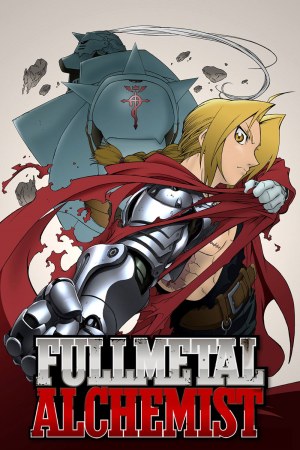
The year is 1910, approximately. The country is Amestris, approximately. Two boys in a rural town teach themselves alchemy from their absent father's books and decide to do the one thing every alchemical text agrees cannot be done, human transmutation, the resurrection of the dead. Their mother. They are children. They do not survive the attempt intact.
Edward Elric loses his right arm and left leg. Alphonse Elric loses everything, his entire body, seized by the Gate, leaving behind only a soul that Ed binds to a suit of armour in the seconds before he loses consciousness. The exchange is the series' foundation and its recurring nightmare: the law of equivalent exchange, the principle that underpins all alchemy, applied to the thing it was never meant to touch. They paid. They did not get what they paid for.
Produced by Bones and directed by Seiji Mizushima, Fullmetal Alchemist aired on MBS from 2003 to 2004. Fifty-one episodes. It began adapting Hiromu Arakawa's manga faithfully and then, as the weekly production overtook the still-running manga, gradually moved into an original storyline. What followed is one of the most remarkable pivots in anime history: the production team, with Arakawa's blessing and a handful of her discarded plot threads, invented their own story. Their own villain. Their own ending.
The ending they arrived at is darker than Brotherhood's. More ambiguous. More interested in the cost of the boys' choices than in the resolution of the world's politics. Dante. The Gate. What is on the other side of it. A finale that refuses the comfort of restoration and insists that some debts cannot be paid back, they can only be carried forward.
Brotherhood is the manga. Faithful, complete, structurally confident, the story Arakawa intended. This is something else. A parallel history. A what-if that the people who made it took entirely seriously. Both versions are essential. They are not the same show wearing the same premise. They are two writers asking the same question and arriving at different answers about what human beings owe each other and what alchemy, the science of transformation, of making one thing into another, actually costs when the thing being transformed is a person.
Watch both. Then argue about which one broke you worse.
Alt Title 鋼の錬金術師
Studio Bones
Network MBS
Aired 2003 - 2004
Episodes 51
Genre Action, Adventure, Drama
Status Completed

Fansub & Scanlation History

Keep & ANBU Were There Two Days After the Premiere

October 6, 2003 · Episode 1

AnimeSuki preserves Fullmetal Alchemist episode 1 from Keep & ANBU on October 6, 2003, two days after the Japanese premiere. The same period page shows a sustained Keep & ANBU line through at least episode 25 while AnimeForever, Seichi & S-Ai, A-Wolves/TnH and later Sonchou competed beside them. That changes the early FMA story from a list of group names into a live broadcast race.

Over a Hundred Groups Touched This Show

Almost None of Them Are the One People Actually Remember

A Genuinely Crowded Release History

Few shows on this site have as long a fansub paper trail as FMA 2003, well over a hundred groups have put out some version of it since the show started airing in October 2003, ranging from single-episode drops to full 51-episode Blu-ray remuxes released as recently as this year. Most of that traffic never mattered much. A small handful of releases are the ones people actually sought out.

KickAssAnime

Complete, July 2005 · 8.87 from 263 votes
The most-voted-on, highest-rated FMA 2003 release in the archive, and it isn't close. KAA built their reputation on Japanese-only audio and a refusal to chase new formats for their own sake, and this release is the clearest proof that philosophy worked for a real audience.

Keep-ANBU Never Finished, and People Loved It Anyway

Keep-ANBU dropped the show at episode 31 of 51 back in 2004, and still walked away with 173 votes and an 8.65 rating, both numbers most complete releases on this list never come close to. THE BREAKDOWN: the same lesson shows up here that showed up on DB and DBZ's pages, finishing and being good are two different achievements, and this fanbase clearly valued the second one on its own terms.

Spoon and Sonchou-SHS Rounded Out the Field

Two other releases pulled real community engagement without touching KAA's numbers: Spoon finished all 51 episodes with 169 votes at a 7.62 rating, and Sonchou-SHS landed 87 votes at 4.74. Between these three releases and Keep-ANBU's unfinished run, the vast majority of everyone who actually watched a fansubbed version of this show in the mid-2000s was watching one of these four.

Anime-Keep Subbed FMA Jointly With ANBU

Anime-Keep's FMA coverage wasn't a solo effort. Period fan documentation credits the group's subtitles as an "Anime-Keep/ANBU" joint translation, the same ANBU already documented elsewhere on this site for its Naruto work. [UNCONFIRMED]: the commonly repeated claim that Anime-Keep specifically dropped the series at episode 31 following Funimation's license announcement is plausible on timing (episode 31 aired May 8, 2004, days before the announcement) but isn't confirmed here by a primary source, only by the joint-credit itself.

KickAssAnime Came Later With the Complete DVD Set

51 Episodes · DVD Source · July 2005

The original broadcast-era FMA story belongs to groups such as Anime-Keep and ANBU, whose joint release is documented elsewhere on this page. KickAssAnime belongs to the next stage. AniDB records KAA completing all 51 episodes from DVD sources in July 2005, after the Japanese television run had ended. That makes KAA important here as a later archival release rather than as the weekly group carrying FMA through its original broadcast.

From Broadcast Captures to Blu-ray Remuxes

The Same Show, Twenty Years of Groups Later

Anime-Supreme's FMA Release, 2019

The same modern-era Anime-Supreme documented on DB and DBZ's pages put out a Blu-ray and DVD sourced FMA 2003 release in January 2019, rated 8.11 from 8 votes, a smaller but still well-regarded footprint compared to their DBZ and DB work.

The Show Is Still Getting New Releases in 2026

As recently as May 2026, a group called momokinou put out a complete release of the show. Two decades on from KAA's original 2005 release, people are still actively re-encoding and re-releasing FMA 2003 for a modern audience. Some shows on this list finish their fansub history. This one apparently hasn't stopped.

Funimation Named FMA Directly in Its Shinsen-Subs Crackdown

December 2005 · Joker.com Domain Freeze

While KickAssAnime and other groups on this page kept releasing after Funimation's 2004 license, Shinsen-Subs became the group that actually got hit for it. In December 2005, Funimation sent an IP enforcement letter naming Fullmetal Alchemist directly, along with Dragon Ball, Trinity Blood, Speed Grapher, and several other titles Shinsen was still distributing. The group's domain registrar, Joker.com, froze the domain as a result, one of the earlier domain-level enforcement actions against post-license fansubbing in the Western scene.

Harder to Find Than the Anime, On Purpose

The Manga Scene Ran on a Handful of Committed Translators

One Translator Made This Happen: YuuOminae

Toriyama's World, translator

FMA wasn't handed to Toriyama's World as an obvious pick, it happened because a translator named YuuOminae specifically pushed the group to take it on, and then did the bulk of the translation work himself. That's worth sitting with: the reason a huge number of Western fans could read this manga at all traces back to one person insisting a specific group cover it.

Evil-Genius, the Rougher Alternative

Not every group covering FMA had Toriyama's World's reputation. Evil-Genius built an early name for itself scanlating a wide range of already-popular series at lower quality, which caused real tension with the groups who'd been doing the work properly. By the time the group narrowed its focus down to just a few committed titles, FMA and Berserk among them, some of that reputation had softened, but it's an honest part of the scene's history, not every group people relied on was well-liked while they were doing it.

Viz Caught Up Fast, May 2005 Onward

Volume 1: May 3, 2005 · New Volume Roughly Every Two Months

Viz released English Volume 1 in May 2005, and then kept a pace of roughly one new volume every two months, catching up to the ongoing Japanese release far faster than Naruto, Bleach, or Dragon Ball Z ever did with their own English editions. Volume 1 ended up the best-selling graphic novel of 2005 by Nielsen BookScan. That speed is part of why the scanlation window covered elsewhere on this page stayed as narrow and contested as it did, there wasn't years of demand to fill, there was maybe a year.

Why It Actually Was Harder to Get

This lines up with what longtime fans remember: FMA was a genuinely in-demand scanlation, covered by fewer committed groups than a Naruto or Bleach, and led by specific individuals pushing it forward rather than an obvious, crowded field. Getting your hands on a clean, complete scanlated run meant knowing which of a small number of groups was actually still active on it.