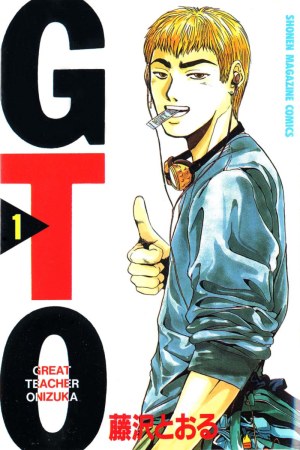
Great Teacher Onizuka

Great Teacher Onizuka

GTO グレート・ティーチャー・オニヅカ
1999 -2000 Studio Pierrot Fuji TV 43 episodes Completed
Comedy Drama School
Details & Synopsis
Eikichi Onizuka is twenty-two years old, an ex-biker gang member, a virgin by circumstance rather than choice, and the greatest teacher Japan has ever produced.

He decides to become a teacher to meet high school girls. This is his stated goal. He announces it openly. Within approximately four episodes he has forgotten this completely because the job has got him by the throat and he cannot let go.

Based on Tohru Fujisawa's manga and produced by Studio Pierrot, Great Teacher Onizuka aired on Fuji TV in 1999. Forty-three episodes built around a premise that should produce a comedy and instead produces something considerably more complicated, a show about a man with no qualifications, no social graces, and no conventional wisdom who turns out to be exactly what a generation of traumatized, cynical, system-broken teenagers needed. Not because he is wise. Because he refuses to give up on them when the system already has.

The comedy is real and it is frequently unhinged. The drama is also real and it earns every moment. The balance between them is the achievement, GTO never lets either mode undercut the other. When it is funny it is genuinely funny. When it lands an emotional beat it has set that beat up across multiple episodes and you did not see it coming.

The live action drama with Takashi Sorimachi aired the year before and was enormous in Japan. The anime is better. This is the version that circulated through fansub networks. This is the version people kept passing around, and the version worth preserving.

Forty-three episodes. One of the most beloved series of the entire late-90s fansub era. If you have not seen it, this is why the archive exists.
Alt Title GTO グレート・ティーチャー・オニヅカ
Studio Studio Pierrot
Network Fuji TV
Aired 1999 - 2000
Episodes 43
Genre Comedy, Drama, School
Status Completed

Bōsōzoku Biker Subculture

The 1970s–90s Bōsōzoku (Violent Run Tribes)

Originating in post-war Japan, Bōsōzoku were youth motorcycle subcultures famous for customized loud bikes, modified exhaust pipes, driving in formation, and anti-establishment rebellion. By the 1990s, Shonan (Kanagawa) was the undisputed spiritual capital of bōsōzoku rivalry.

Tokko-fuku (Special Attack Uniforms)

Kanji Embroidery · Working-Class Pride
Bōsōzoku members wore "Tokko-fuku", heavy boiler suits or jumpsuit jackets embroidered with aggressive kanji slogans, gang crests, and nationalistic poetry. For working-class youth like Onizuka and Ryuji, the Tokko-fuku represented brotherhood, territory, and refusal to conform to white-collar expectations.

The Bōsōzoku Honor Code vs. Criminal Yakuza

Delinquent Loyalty · The Adult Boundary
While media portrayed bōsōzoku as mere thugs, real-world groups operated under strict internal loyalty, protecting their own members and territory. Onizuka's background gives him a clear moral boundary: he respects youth rebellion, but despises adult corruption and Yakuza exploitation.