Death Note

Death Note

デスノート
2006 -2007 Madhouse NTV 37 episodes Completed
Psychological Thriller Mystery Supernatural Drama
Details & Synopsis
Light Yagami is seventeen, top of his class, and bored. Not restless-teenager bored. Philosophically bored, convinced that the world is irredeemably rotten and that the people running it are not equal to the task. Then a notebook falls from the sky. Any human whose name is written in it dies. Light picks it up, reads the instructions, and within forty-eight hours has decided he is God.

This is not a villain origin story. Light does not become the thing he becomes through corruption or trauma or a single catastrophic choice. He becomes it because the notebook revealed what was already there. The horror of Death Note is not what the notebook does. It is what Light does with it, calmly, methodically, with genuine conviction that he is correct.

Produced by Madhouse and directed by Tetsuro Araki, Death Note aired on NTV from October 2006 to June 2007. Thirty-seven episodes adapted from Tsugumi Ohba and Takeshi Obata's manga. The first twenty-five are as close to perfect television as the medium produced in the mid-2000s. The remainder are contested in ways that are worth understanding before you arrive at them.

The contest is L. An anonymous detective. No last name. No visible biography. A man who sits in hotel rooms eating cake and stacking sugar cubes and holds the single largest sustained record of solved cases in the world. He is assigned to find Kira, the name the internet gives to the unknown killer who appears to be executing criminals globally through untraceable cardiac arrest. L deduces within the first episode that Kira is in Japan. By the third he has narrowed it further. Death Note's first arc is a sustained cat-and-mouse between two people who are the most intelligent persons either of them has ever encountered, operating with incomplete information, neither willing to move without certainty and both moving constantly. It is one of the great dramatic constructions of its era.

In 2006 this show was downloaded faster than Conclave-Mendoi could release it. Not by the anime community. By everyone. Death Note crossed into spaces that had never heard of fansubs, had no context for seasonal anime, had no prior investment in the medium. It crossed because the premise translated instantly, because Light Yagami is a protagonist who works on people who have never watched anime in their lives, and because L is the kind of character who produces the specific obsession that makes people talk about a show to people who were not going to watch it. The mid-2000s fansub era had no larger single crossover event.

The second arc arrives. Near. Mello. The Wammy's House succession. Whether what follows L is adequate to what preceded him is the argument Death Note fans have been having since 2007 and have not resolved. Watch and form your own position. The first arc alone justifies every minute.
Alt Title デスノート
Studio Madhouse
Network NTV
Aired 2006 - 2007
Episodes 37
Genre Psychological Thriller, Mystery, Supernatural, Drama
Status Completed

Kira Strategy & Information War

Light's First Advantage Is Knowing the Weapon L Cannot Imagine

Light Knows the Rules · L Has to Discover That Rules Exist

At the beginning, Light knows exactly what causes the deaths while L does not even know what kind of weapon he is investigating. Light understands the Name & Face Requirement, the timing windows and how much control the notebook gives him. L has only behavior, geography and patterns.
Why it matters
L's early victories come from forcing Kira to reveal limits one reaction at a time. He cannot investigate the Death Note directly because he does not yet know a Death Note exists.

L Wins Information by Forcing Kira to React

Lind L. Tailor · Surveillance · Controlled Tests

L rarely begins with proof. He begins with a question he can force Kira to answer. The Lind L. Tailor broadcast asks whether Kira can kill at a distance and where he is watching from. Surveillance asks whether Light can keep killing while watched. Every trap is designed so Kira's response becomes evidence.
Why it worked
L turns Light's confidence into a source of information. The more Light tries to prove he cannot be contained, the more of the invisible weapon he reveals.

Light's Yotsuba Plan Works Because His Future Self Does Not Know the Plan

SPOILER!

The Alibi Is Real Because the Memory Loss Is Real

Light's most dangerous trick is not pretending to be innocent. He gives up ownership and lets Ownership Relinquishment & Memory Erasure remove the information that makes him Kira. The Light who works beside L during the Yotsuba investigation genuinely wants to catch Kira because he no longer knows that his earlier self designed the situation.
Why it worked
L is trying to detect deception in a person who, at that moment, is not deceiving him. The manipulation happens across versions of Light separated by memory.

L Never Fully Accepts the Thirteen-Day Rule

SPOILER!

The Rule Clears Light and Misa · L Still Wants It Tested

The false thirteen-day rule gives the task force the answer it wants: Light and Misa appear unable to have been Kira because neither died during confinement. L does not treat that answer as final. Once he considers testing the rule on a condemned prisoner, the temporary alibi becomes dangerous again.
What changed
Light no longer needs to convince L. He needs to remove the one investigator who refuses to stop asking whether the evidence itself was manufactured.

Misa Understands Light Is Using Her and Chooses Him Anyway

SPOILER!

Devotion Is Not the Same Thing as Ignorance

Misa is impulsive around Light, but she is not unaware that the relationship is unequal. She offers the Shinigami Eyes, accepts being useful to Kira and repeatedly puts her own safety behind what she thinks will help him. Light reads that devotion as something he can manage.
Why it matters
Misa is easiest to manipulate precisely because she keeps making the choice Light wants. Her loyalty gives Light access to abilities he refused to pay for himself.

Rem Knows Light Is Using Misa but Cannot Abandon Her

SPOILER!

Rem Distrusts Light · Misa Still Chooses Light

Rem sees the relationship more clearly than Misa does. She knows Light is willing to use Misa, warns him that she will kill him if Misa dies because of him, and stays close because protecting Misa matters more to her than winning any contest with Kira.
Why it matters
Rem understands the manipulation and is still trapped by it. Light does not need Rem to trust him. He only needs to know what Rem will always choose when Misa is in danger.

Light Beats Rem by Making Protection Self-Destructive

SPOILER!

He Cannot Order Rem to Die · He Can Make Saving Misa Require It

Light cannot threaten Rem into loyalty and cannot safely kill her himself. Instead he arranges the investigation so L's next move puts Misa in danger. Rem then faces a choice whose outcome Light can predict: allow Misa to be condemned, or use the Death Note to save her.
What changed
The trap turns Rem's strongest independent motive into Light's weapon. The Protection Paradox: How a Shinigami Can Die for a Human supplies the rule; Light supplies the situation that makes Rem trigger it.

Near Investigates the Man Calling Himself L

SPOILER!

Light Inherits L's Position · Near Does Not Inherit the Task Force's Trust

After L dies, Light gains the title and the investigation around it. That protects him from people who already know him. Near begins outside that trust. He is willing to ask the question the Japanese task force resists: whether the new L and Kira could be the same person.
Why it matters
Light's victory over L gives him institutional control, but it also gives Near a suspect with unusual access to every move the investigation makes.

Mello Forces Information Near Cannot Obtain Safely

SPOILER!

Kidnapping and Theft Change the Board

Near works by accumulating evidence. Mello is willing to create a crisis just to force hidden information into motion. Kidnapping Sayu and taking possession of a real Death Note expose facts that a purely observational investigation might never reach.
Why it matters
Mello's recklessness is not separate from solving the case. He keeps breaking open pieces of the board that Light wants everyone else to leave untouched.

Near and Mello Solve Different Halves of L's Problem

SPOILER!

They Compete With Each Other · Their Pressure Still Combines

Near and Mello never become a clean investigative partnership. Near builds the logical case while Mello keeps forcing Kira's network to react under pressure. Neither man has to know everything the other knows for their actions to become useful to the same end.
Why it matters
Light prepares for one successor to L. What reaches him instead is two incomplete successors attacking different weaknesses, with each man creating evidence the other can use.

Mikami Is Useful Because He Thinks Like Kira

SPOILER!

Light Does Not Need Constant Instructions From Him

Teru Mikami is valuable to Light because his worldview is already close to Kira's. He does not need every target individually justified. He can continue the killings, maintain Kira's public judgment and make decisions that usually match what Light wants.
Why it matters
Delegation works only because Light believes Mikami will predict the same move Light would make. That belief turns independence from an advantage into the final risk.

Takada Is a Communication Layer, Not Light's Partner

SPOILER!

Public Voice · Secret Messenger · Disposable Link

Kiyomi Takada believes she has been chosen to stand beside Kira, but Light uses her primarily as a protected communications layer between himself and Mikami. She carries messages, presents Kira's public voice and lets Light keep distance from the person doing the killings.
Why it matters
The arrangement protects Light only while every link behaves exactly as expected. Once Takada is threatened, both Light and Mikami have reasons to act without being able to coordinate first.

Mikami Acting Without Light Is the Fatal Break

SPOILER!

Takada Is Kidnapped · Two People Solve the Same Problem

When Mello kidnaps Takada, Light kills her with the hidden Death Note piece he carries. Mikami does not know Light has already acted. Convinced Kira needs him, he goes to the real notebook and writes Takada's name himself. That unauthorized visit exposes the notebook Near's team needs to find.
What changed
Mikami does not betray Light. He makes the same decision Light makes. The plan fails because Light delegated authority to someone whose initiative had previously been the reason he was useful.

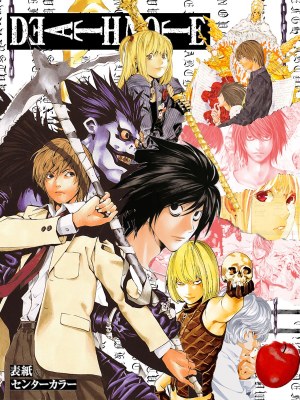
Ryuk Is the Only Major Player Who Never Needs Light to Win

SPOILER!

He Is Interested · He Is Not Loyal

Light spends the series turning other people's motives into pieces of his plan. Ryuk is different. Apples, boredom and curiosity keep him nearby, but he never accepts Light's cause as his own. He explains rules when it amuses him, refuses the Eye Deal unless Light pays the price, and never promises to rescue him.
Why it matters
Light can predict Ryuk's personality but never convert it into loyalty. At the end, Ryuk does exactly what he told Light he would do from the beginning: when the game is over, he writes Light's name himself.