Naruto: Shippuden

Naruto: Shippuden

NARUTO -ナルト- 疾風伝
2007 -2017 Studio Pierrot TV Tokyo 500 episodes Completed
Action Adventure Martial Arts
Details & Synopsis
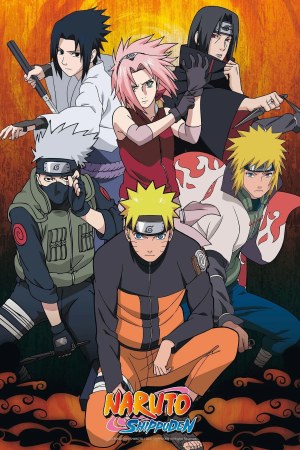
Naruto returns to Konoha after two and a half years of training with Jiraiya. He is taller, a little less reckless, and still nowhere near ready for what has been moving while he was gone. The Akatsuki are collecting tailed beasts. Sasuke has chosen Orochimaru. Every promise Naruto made as a child is about to become an adult problem.

Naruto: Shippuden ran from 2007 to 2017 for 500 episodes, which is long enough to contain some of the best material in the franchise and enough filler to make episode guides a basic survival tool. Both things are true. The Kazekage Rescue arc announces the scale. Pain turns the entire story back toward the loneliness Naruto started with. Itachi changes meaning every time the series tells you one more thing. The Fourth Shinobi World War eventually becomes bigger than the show can comfortably hold, but when Shippuden lands, it lands with ten years of accumulated weight behind it.

This was also the point where the old fansub rhythm collided with legal simulcasting. Dattebayo had been part of weekly Naruto life for years, then stopped when official same-week access finally became real. That transition is part of the history. The community did not vanish overnight, but the way people watched together changed permanently.

Five hundred episodes. Use a filler guide. Nobody gives out medals for pretending you did not.
Alt Title NARUTO -ナルト- 疾風伝
Studio Studio Pierrot
Network TV Tokyo
Aired 2007 - 2017
Episodes 500
Genre Action, Adventure, Martial Arts
Status Completed

Mangekyō & Susanoo Mechanics

Mangekyō Is Not Just a Stronger Sharingan

SPOILER!

Personal Dōjutsu · Extreme Chakra Cost · Vision Begins to Fail

Awakening the Mangekyō changes more than the eye pattern. Its users gain exceptionally powerful techniques that are tied to their individual eyes, but repeated use carries a physical price the ordinary Sharingan does not: strain, bleeding, worsening vision and eventually blindness. The eye becomes stronger at the same time that using it makes keeping that power harder.
Why it matters
Mangekyō is one of Naruto's clearest power systems built around deterioration. Itachi and Sasuke are not simply deciding when to spend chakra; every major use pushes an already limited resource closer to permanent failure.

Each Eye Can Carry Its Own Technique

SPOILER!

Left / Right Eye Functions · User-Specific Abilities · One Pair, More Than One Power

Mangekyō abilities are not one universal technique package. The powers attached to a user's eyes can differ between the left and right eye and differ completely between users. Itachi's pair expresses Tsukuyomi and Amaterasu, Sasuke develops Amaterasu and Kagutsuchi, while Obito's two Kamui eyes apply the same space-time principle at different ranges.
How you can tell
When an ability is genuinely tied to one Mangekyō eye, the story consistently treats possession and condition of that specific eye as meaningful. Susanoo behaves differently because it is unlocked through the pair but manifests from the user's chakra rather than firing from one eye.

Eternal Mangekyō Solves the Blindness Problem

SPOILER!

Close-Blood Transplant · Vision Restored · Mangekyō Use Stabilized

The Eternal Mangekyō Sharingan is created when a Mangekyō user successfully receives the eyes of a close blood relative who also awakened Mangekyō. Madara and Sasuke reach the state through their brothers' eyes. The new pattern combines traits of both Mangekyō designs, and the progressive blindness that made sustained use self-destructive is removed.
What changed
Sasuke before the transplant can feel his vision collapsing under repeated Amaterasu and Susanoo use. After receiving Itachi's eyes, those same classes of techniques stop carrying the countdown toward blindness that defined his original Mangekyō.

Susanoo Is a Progression, Not Four Universal Levels

Partial Manifestation → Humanoid Avatar → Armored / Complete Forms

The anime makes Susanoo look like a transformation ladder, but the useful rule is looser: users can manifest different amounts of the avatar depending on need, mastery and stamina. Ribcages, skeletal torsos, humanoid forms, armor and complete-body manifestations describe recognizable levels of development, not four identical forms every Uchiha must unlock in exactly the same way.

Partial Susanoo: Ribcage & Skeletal Defense

SPOILER!

Fast Manifestation · Localized Protection · Limbs Without a Full Body

A user does not need to summon the entire avatar to benefit from Susanoo. Ribs can appear around the body as an emergency shield, while skeletal arms or a partial torso can attack and defend without the enormous scale of later forms. Sasuke repeatedly uses these partial manifestations because they can be brought out quickly as the situation changes.
How you can tell
The user remains clearly visible inside an incomplete cage of chakra ribs or bones. There is no fully enclosed humanoid body yet, and individual arms or sections may manifest independently.

Humanoid Susanoo: The Avatar Takes Shape

SPOILER!

Skeleton Gains Form · Greater Reach · User-Specific Weapons Appear

As more chakra is committed, the skeletal frame gains a recognizable humanoid body and much greater offensive reach. This is also where the differences between users become impossible to treat as one universal moveset: Itachi's Susanoo carries the Totsuka Blade and Yata Mirror, while Sasuke's develops ranged weapons and attacks suited to his own fighting style.
How you can tell
The construct is no longer only exposed ribs and bones. A shaped torso, head and arms surround the user, but it has not yet become the enormous free-standing complete-body warrior associated with the highest manifestations.

Armored Susanoo: Protection Moves Outward

SPOILER!

Outer Armor · Larger Avatar · Greater Cost & Battlefield Presence

Further development adds heavy outer layers and armor around the humanoid construct, increasing the amount of chakra standing between the user and an opponent. Sasuke's rapid progression through these forms during the Five Kage Summit is also a warning about the original Mangekyō: the stronger and more continuously he forces Susanoo to become, the faster his eyes deteriorate.
What changed
Susanoo stops functioning like a shield wrapped tightly around one shinobi and begins occupying the battlefield as a combatant in its own right.

Complete-Body / Perfect Susanoo

SPOILER!

Full-Scale Warrior · Independent Mobility · Landscape-Level Strikes

At its highest complete manifestation, Susanoo becomes a colossal full-bodied warrior rather than an enlarged shell around the caster. Madara demonstrates the scale brutally: unsheathing the avatar's sword is enough to reshape the battlefield. Sasuke later develops his own complete form as his ocular power continues to evolve.
How you can tell
The user occupies a protected position inside a gigantic, fully formed humanoid avatar that can stand and move as a complete body. Wings and exact armor design vary by manifestation, so silhouette and scale are more reliable identifiers than one universal costume.

Myth: Susanoo Is Simply a Technique Fired From the Eyes

SPOILER!

The eyes are required to awaken it; the manifested avatar is a different kind of ability.

Susanoo is associated with awakening Mangekyō in both eyes, but once that ability has been acquired it does not behave like Amaterasu, Tsukuyomi or Kamui, which depend on the particular eye carrying the technique. Madara can manifest Susanoo after resurrection while he has no eyes in his sockets, demonstrating that losing access to the physical eyes does not automatically erase an already-awakened Susanoo.
Why it matters
This is why "Madara had no eyes" is not evidence that the story forgot its own rule. The important distinction is between the condition for awakening Susanoo and the condition for using an eye-specific Mangekyō technique afterward.

Myth: You Have to Kill Your Best Friend to Awaken Mangekyō

SPOILER!

Traumatic Loss Is the Pattern; deliberate murder is not a universal ritual.

The Uchiha history around Mangekyō turns grief into a dangerous instruction manual. Characters come to believe that killing someone close is the route to power, but the actual awakenings shown in the story are tied to overwhelming emotional trauma and loss, not a standardized requirement that the future user personally murder a best friend.
Why it matters
That misconception is part of the clan's tragedy. A power awakened through grief becomes something later generations can misread as requiring violence, helping the pursuit of the eye create exactly the kind of loss that awakens it.

Kakashi Is the Exception That Explains the Rule

SPOILER!

Transplanted Mangekyō · No Uchiha Body · Kamui Costs More to Sustain

Kakashi can use Obito's Mangekyō because the transplanted eye retains its ocular ability, but his body is not naturally built around the Sharingan. The result is a version of Mangekyō use defined by unusually severe chakra cost and limited endurance. During the war, the brief return of both of Obito's Mangekyō and his chakra allows Kakashi to demonstrate what the complete pair can do at a level he could never sustain with the single transplanted eye alone.
Why it matters
Kakashi separates possession of a Mangekyō technique from being an Uchiha. The eye carries the ability, but the body using it still determines how practical that power is.