
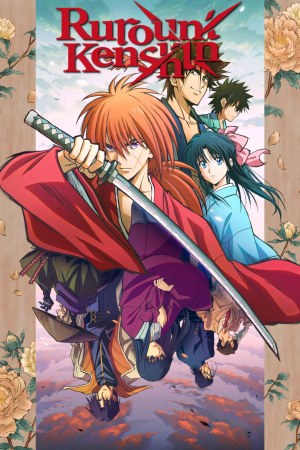
Rurouni Kenshin

Rurouni Kenshin

るろうに剣心 -明治剣客浪漫譚-
1996 -1998 Studio Gallop Fuji TV 94 episodes Completed
Action Historical Drama Romance
Details & Synopsis
The Meiji era is eleven years old. The samurai age is over. Swords are illegal. And Himura Kenshin, once the most feared assassin of the Bakumatsu, a shadow killer known as Hitokiri Battōsai whose blade helped topple a government, is wandering Japan with a reverse-blade sword and a vow never to kill again.

He is also, somehow, kind of a goofball.

Produced by Studio Gallop and directed by Kazuhiro Furuhashi, Rurouni Kenshin aired on Fuji TV from 1996 to 1998. Ninety-four episodes built around one of the great premises in shonen anime: a man defined entirely by violence trying to build a life around its opposite. The Kyoto arc, Kenshin versus Shishio Makoto, a man burned alive by the same government Kenshin killed for and left for dead, is one of the finest extended story arcs of the 1990s. Shishio is one of the greatest villains the genre has produced. The final duel delivers.

In the West it was packaged and sold as Samurai X, a marketing decision that aged about as well as you would expect. The fansub community knew it as Rurouni Kenshin. That is what people were downloading. That is the version people kept alive.

The Trust & Betrayal OVA, four episodes depicting Kenshin's origin as the Battōsai, is a separate and devastating masterpiece. Watch the series first. Watch the OVA after the Kyoto arc. Do not watch the Reflection OVA without emotional preparation.

Note: avoid the filler arc that closes the TV run. The manga never finished it. The anime invented an ending that goes nowhere. Stop after episode 62. Everything you need is there.
Alt Title るろうに剣心 -明治剣客浪漫譚-
Studio Studio Gallop
Network Fuji TV
Aired 1996 - 1998
Episodes 94
Genre Action, Historical, Drama, Romance
Status Completed

Kenshin's Vow & the Battōsai

Kenshin Does Not Swear Never to Fight Again

The Vow Is Against Killing, Not Violence

Kenshin continues to carry a sword, accepts dangerous fights and uses techniques developed for battlefield killing. His vow is narrower and therefore harder: he will protect people without taking another life.
Why it matters
The series never gets to solve Kenshin by removing him from violence. It keeps placing him in situations where killing would be faster, safer or easier to justify and asks whether the difference between Battōsai and the wanderer survives the decision.

Kaoru Gives the Wanderer a Place Where the Vow Can Be Ordinary

Kamiya Dojo · Home · A Life Not Built Around Atonement

Before the Kamiya dojo, Kenshin's answer to his past is wandering: help whoever is in front of him, refuse reward and keep moving. Kaoru offers something much more difficult. He can stay.
Why it matters
Home changes the vow from an endless sentence into a way of living with other people. That is why departures from the dojo matter so much. Kenshin does not only risk becoming Battōsai again. He risks convincing himself that he never deserved the ordinary life he found there.

Kaoru's Life Is the First Time the Vow Almost Loses

Episode 7 · Jin-e · Battōsai Returns Before Kenshin Stops Him

Jin-e does not try to prove he is stronger than peaceful Kenshin. He puts Kaoru in immediate danger because he wants the assassin underneath the wanderer to come back. It works. Kenshin's speech, posture and intent change, and for a moment killing Jin-e becomes an acceptable solution again.
What changed
Kaoru stops that return by calling Kenshin back before he finishes it. The vow survives its first major test because another person can still reach him when he no longer trusts himself.

Saitō Does Not Care Whether Kenshin Likes Who He Used to Be

SPOILER!

Old Rival · Government Test · The Battōsai Reflex

Saitō attacks the life Kenshin has built in Tokyo because the government needs to know whether the former Battōsai can survive Shishio. He has no interest in protecting Kenshin's self-image. If the old killer is the only version capable of surviving, Saitō is willing to drag that version back out.
Why it matters
Their dojo fight makes the Kyoto decision unavoidable. Kenshin cannot defeat Shishio merely by insisting the past is over, because somebody from that past can still force his body and instincts to remember it.

Kenshin Values Everyone's Life Except His Own

SPOILER!

Succession Training · Self-Sacrifice · The Missing Will to Live

Kenshin enters Hiko's final training prepared to die if dying is what protecting other people requires. Hiko recognizes that as the problem. A man who treats his own life as expendable has not actually escaped the logic that produced Battōsai.
What changed
The lesson behind Amakakeru Ryū no Hirameki is not a bigger attack. Kenshin has to choose to live. Only then can his refusal to kill become something more than lifelong punishment for the people he already killed.

Shishio Is the Argument That Kenshin's Vow Should Fail

SPOILER!

Same Government · Same Assassin Job · Opposite Conclusion

Kenshin and Shishio were both used as assassins by the movement that created the Meiji government. Kenshin responds by refusing to kill again. Shishio responds by deciding that the government proved strength is the only honest law.
Why it matters
Their final fight is not "good assassin versus evil assassin." Shishio is the version of Kenshin's history that accepts every ugly lesson the government taught them and refuses the possibility that anyone has an obligation to become better than the system that made them.