
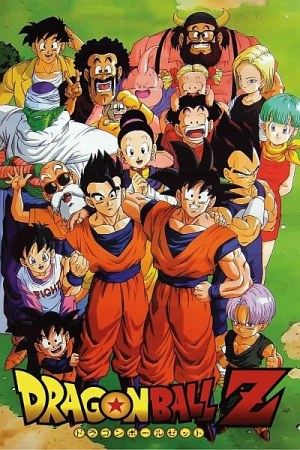
Details & Synopsis
Before Naruto. Before Bleach. Before the Big Three had a name. There was Dragon Ball Z, and for an entire generation of Western kids in the 1990s, Dragon Ball Z was simply anime. The category and the example were the same thing.
Produced by Toei Animation and directed by Daisuke Nishio, Dragon Ball Z aired on Fuji TV from 1989 to 1996, 291 episodes following the adult Goku and his allies across four escalating sagas: the Saiyan invasion, Frieza on Namek, the androids and Cell, and the decade-spanning weight of Majin Buu. Akira Toriyama's power scaling, once a comedy mechanic in the original Dragon Ball, became mythology here. Transformations as revelation. The Super Saiyan moment. Gohan vs. Cell in a fight still being argued about. The power level debate started here, and it has never actually ended.
In the West the story gets more complicated, and more interesting. Ocean Productions dubbed it first, a version truncated, edited, scored by Bruce Faulconer's electric guitar-driven replacement soundtrack that an entire generation now considers inseparable from the show itself. Cartoon Network ran it in syndication. Toonami ran it in the afternoon slot that trained a demographic to expect anime at 4pm. Kids who had never heard the word fansub knew every Kamehameha, every Spirit Bomb, every moment of dead air in a Frieza fight that took four episodes to cover forty five seconds.
Funimation eventually acquired full rights and started over: the uncut version, the original Kikuchi score, the complete run. Then came Dragon Ball Z Kai, the remaster that trimmed the series to its canonical bones, cutting the extended powering up sequences that had always been the show's most honest flaw.
The Seed of Might project sits apart from all of it. 291 episodes, fully color and audio graded, built as a preservation effort rather than a rebroadcast or a resale. It exists because the complete series deserved that kind of treatment while the actual licensing rights were still tangled up in dispute, not because it was ever meant to compete with an official release. This site documents that project's history as part of the record, the same way it documents every other chapter of how this show reached the West.
The power level arguments are still happening. The show is still here.
Alt Title
ドラゴンボールZ
Studio
Toei Animation
Network
Fuji TV
Aired
1989 - 1996
Episodes
291
Genre
Action, Adventure, Martial Arts
Status
Completed
Guides and reference pages for this series. More coming.
