BADRINATH HARCHAND SPOILER!
BH
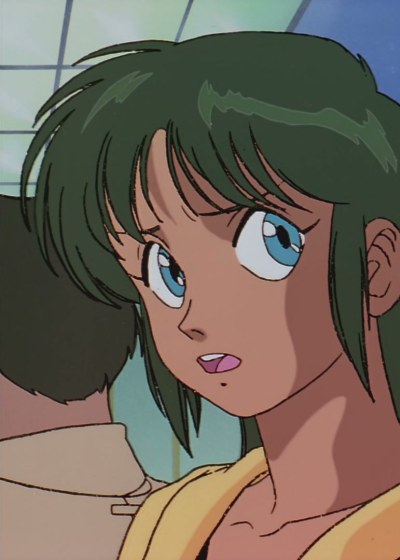
Usually called Bud, Badrinath Harchand is the young pilot chosen to make the Type J9 Griffon perform like something out of a video game. He has extraordinary reflexes and an instinctive feel for Labor control, but not the adult sense of consequence that should accompany a machine capable of tearing through a city block. Bud becomes fascinated with Noa after facing her Ingram and treats her as both an older-sister figure and the opponent he most wants to beat. That combination makes the Griffon fights stranger than a normal hero-versus-villain rivalry: to Bud, this really is a game.
BADRINATH THROUGH THE ARCHIVE //
SCHAFT, PHANTOM & GRIFFON GUIDE //
Open page →At the Tokyo International Labor Show, Division 2 is already being pressured by questions about replacement machines when the Griffon arrives. Asuma has borrowed Noa's movement disc, leaving her unable to respond immediately, and Ohta is forced into the first major confrontation.
The Griffin defeats both Ingrams and escapes after revealing flight capability. It is the rare moment when a superior machine gets to look superior without the episode immediately taking the achievement away.
The Griffin defeats both Ingrams and escapes after revealing flight capability. It is the rare moment when a superior machine gets to look superior without the episode immediately taking the achievement away.
What changed
The argument about whether the Ingram is outdated stops being theoretical. Division 2 has now been beaten in public by the machine Schaft built to surpass it.
Badrinath Harchand is a gifted young pilot whose reflexes make the Griffin frighteningly effective. The problem is that Bud approaches the machine with the emotional distance of someone playing a game.
His casual meeting with Noa and Asuma at an arcade makes that connection explicit before either side knows who the other really is. Once he begins fighting Noa, rivalry and play blur together in a machine capable of causing real destruction.
His casual meeting with Noa and Asuma at an arcade makes that connection explicit before either side knows who the other really is. Once he begins fighting Noa, rivalry and play blur together in a machine capable of causing real destruction.
Why it matters
Bud is not frightening because he hates Noa. He is frightening because he likes the contest and does not fully carry the adult sense of consequence that should come with it.
Utsumi is dangerous because his attitude never matches the scale of the damage around him. He treats Project 7, illegal Labor development and confrontations with Division 2 like an entertaining technical challenge.
The Griffin is not simply a corporate weapon to him. It is a machine he wants to see tested against worthy opposition, and Noa's Ingram becomes valuable because it gives Bud the rival and data the project needs.
The Griffin is not simply a corporate weapon to him. It is a machine he wants to see tested against worthy opposition, and Noa's Ingram becomes valuable because it gives Bud the rival and data the project needs.
Why it matters
The Griffon arc is partly about technology escaping institutional control because one person finds the experiment more interesting than the consequences.
The Griffin reaches the Babylon Project's Castle Gate with Schaft Security, Division 2 and television crews converging on the same space. Noa has the opponent she has been preparing for, but she does not get a clean arena.
Explosives, reporters and other armed units repeatedly make obvious attacks unsafe. The fight eventually leaves both machines badly damaged, forcing the contest toward close-range control and judgment rather than untouched specifications.
Explosives, reporters and other armed units repeatedly make obvious attacks unsafe. The fight eventually leaves both machines badly damaged, forcing the contest toward close-range control and judgment rather than untouched specifications.
The Breakdown
The Griffin is the more spectacular machine. Noa survives by fighting inside the limits of an actual police scene where collateral damage still counts.
Noa and the Griffin continue after both machines have taken serious damage. Ohta supports from a distance, Asuma guides Noa through the last exchanges and Utsumi eventually orders Bud to retreat.
The Griffin escapes by air but crashes into Tokyo Bay. Division 2 survives the immediate threat, yet the machine has already demonstrated what Utsumi wanted to prove: it can challenge and defeat established police hardware.
The Griffin escapes by air but crashes into Tokyo Bay. Division 2 survives the immediate threat, yet the machine has already demonstrated what Utsumi wanted to prove: it can challenge and defeat established police hardware.
Why it matters
The police win the situation without proving the Griffon was a bad design. Patlabor separates defeating the project from disproving the technology.
PATLABOR COMBAT & CASE LEDGER //
Open page →Ohta gets the first direct fight with the Griffin at the Tokyo International Labor Show because Noa cannot immediately deploy with her movement disc unavailable.
The Breakdown
Ohta's aggression finally meets a machine fast and capable enough to punish every reckless commitment. The Griffin defeats him, then goes on to defeat the other Ingram as well. The loss matters because the series lets Ohta's usual flaw and the Griffin's technical superiority reinforce each other.
The Griffon fight works because the machine really is better at several things Division 2 cares about.
At Castle Gate, Noa does not get a clean duel. Schaft Security wants the Griffon destroyed, television crews keep occupying dangerous space, explosives damage both machines and Ohta has to support from a distance. By the continuation, both pilots are working through broken sensors and damaged hardware while Asuma talks Noa through what she cannot see.
At Castle Gate, Noa does not get a clean duel. Schaft Security wants the Griffon destroyed, television crews keep occupying dangerous space, explosives damage both machines and Ohta has to support from a distance. By the continuation, both pilots are working through broken sensors and damaged hardware while Asuma talks Noa through what she cannot see.
The Breakdown
Noa's advantage is not a hidden Ingram power-up. It is that the police scene keeps rewarding restraint, communication and the ability to keep making decisions after the perfect plan is gone.
Why it matters
The Griffon can be technically superior and still lose the situation. Patlabor is much more interested in that distinction than in proving Alphonse has the bigger number.
PATLABOR TV CONTINUITY & WATCH ORDER //
Open page →Episodes 26-35 Pull Closer to the Manga Without Becoming the Manga
Open →Kumagami, Utsumi, Bud and the Griffon bring the television series closer to material and relationships from Masami Yuki's manga, especially across episodes 26-35.
That still does not make the TV run a one-for-one manga adaptation. Character timing, individual cases, machinery and the path into the Griffon conflict differ.
That still does not make the TV run a one-for-one manga adaptation. Character timing, individual cases, machinery and the path into the Griffon conflict differ.
Why it matters
This is the section where 'manga-based' becomes useful context, not a reason to label every earlier anime-original case fake. The TV series remains its own continuity while borrowing more heavily from another Patlabor version.
Episode 35 ends the television series' first major Griffon confrontation, but it does not permanently close Project 7.
The New Files OVA belongs to the television timeline and later returns to the Griffon story for its actual continuation. The rest of New Files also drops side stories into different points around the TV chronology.
The New Files OVA belongs to the television timeline and later returns to the Griffon story for its actual continuation. The rest of New Files also drops side stories into different points around the TV chronology.
Why it matters
If episode 35 feels like Patlabor deliberately left Utsumi and the Griffon with unfinished business, it did. AnimeHistory should not describe the TV battle as the franchise-wide end of the Griffon.
