
UKYOU SPOILER!
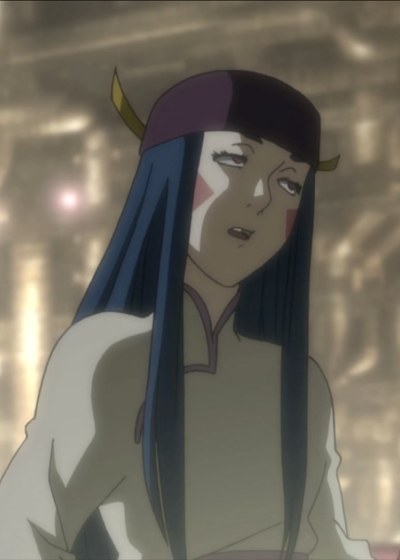
UK
The primary antagonist and the absolute definition of a flamboyant, manipulative, and deeply unsettled spoiled brat. The adoptive heir of the corrupt merchant Ayamaro, Ukyou starts as an eccentric nobleman obsessed with amusement but rapidly evolves into a terrifying, highly intelligent tyrant who aims to conquer the Emperor's throne. His theatrical, wildly unpredictable villainy makes him a brilliant, unforgettable foil to the stoic, honorable samurai.
UKYOU THROUGH THE ARCHIVE //
SAMURAI 7 WATCH GUIDE //
Open page →Ukyo is selected as the old ruler's successor and takes control of the Capital.
What changed
The antagonist the group met as a merchant heir now has imperial authority. The personal nuisance from Kogakyo becomes the person capable of rewriting the relationship between villages, samurai and Nobuseri.
UKYO, THE CAPITAL & IMPERIAL POWER //
Open page →Kanna first experiences the world as a problem of bandits and harvests. The later episodes reveal that the Nobuseri, merchant power and imperial authority overlap far more than the villagers could see from the fields.
Why it matters
The Capital is not a random second villain introduced after Kanna wins. It is where the systems feeding on villages become visible in one place.
After becoming Amanushi, Ukyo begins changing the relationship between villages, samurai and Nobuseri rather than simply continuing the previous ruler's habits.
Why it matters
His danger comes from understanding that every group in the existing order resents another group. He does not need everybody to love him if he can make everybody depend on the rules he writes.
Ukyo orders samurai placed in villages and publicly presents the defense of Kanna as a model that the new regime can reproduce.
At the same time, the Nobuseri raids have not simply stopped.
At the same time, the Nobuseri raids have not simply stopped.
What changed
A rebellion against the old order is converted into state branding. Ukyo takes the thing Kambei built to protect one village and tries to make it proof that his rule protects everyone.
Ukyo understands that villages, samurai, merchants and Nobuseri do not need to hear the same promise.
Villages can be told samurai will protect them. Samurai can be told society needs them again. Nobuseri can keep receiving orders. Merchants can keep imagining they understand the new ruler they helped create.
Villages can be told samurai will protect them. Samurai can be told society needs them again. Nobuseri can keep receiving orders. Merchants can keep imagining they understand the new ruler they helped create.
Why it worked
Ukyo's policy is not consistency. It is timing. Each group only has to believe its version of the future long enough for him to stop needing it.
